
Art of Living event is violence on environment: Bharati Chaturvedi

Activist decries violation of Rio Declaration and Cartagena Protocol

pujab

Puja Bhattacharjee | March 9, 2016 | New Delhi

##OccupyYamuna   #Delhi   #Art of Living   #Environment   #Religion   #Yamuna   #Sri Sri Ravi Shankar  


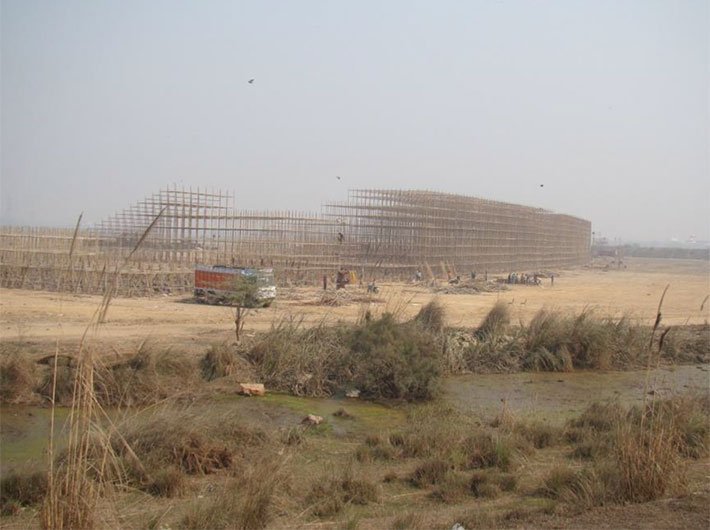
Noted environmental activist Bharati Chaturvedi has said that she considers the construction activities in preparation for the world culture festival in the Yamuna river plains, an act of violence against the river. "River beds, forests etc. are not private property. They are governed by the law of commons under the Rio declaration. The government violated the fundamental duty to protect the commons by leasing it for a private event,” she says. The Art of Living (AoL) foundation is holding its three-day World Culture Festival from March 11 to 13 on the flood plains of the Yamuna.

“Even if the government was naïve enough to grant permission, the AoL foundation with its enormous green credentials should have shown some moral fibre,” she adds.

“How can such an evolved bunch of people (AoL) not show any moral responsibility?” she says.

Bharti rues that most people do not understand the concept of ecology. “For most of us, ecology is a dense forest. There are various kinds of ecology- riverine, wetlands, floodplains etc.,” she says.

She points out that the Okhla bird sanctuary is very close by and some bird species like yellow bellied prinia, striated babbler, and brown crake are unique to Yamuna flood plains ecology. She says that this is the season of reverse migration of birds and the flood plains where the construction activity for the world culture festival is ongoing lies in the migration path of the birds. “The construction activity has destroyed the habitat and food chain of birds,” she says.

When the flood water in Yamuna receeds, it deposits rich alluvial soil on its banks which aids in farming. Once the plains are levelled, the earth loses all its porous quality which absorbs excess water. Activists allege that trees have also been uprooted, which Chaturvedi says has destroyed the carbon sink.

“We live in an era of climate change where freak events like cloud burst or heavy downpour lead to massive disasters. East Delhi is densely populated and more prone to such disasters. Moreover majority of marginalised and economically weaker sections reside in this part,” she says. “Chennai was proof that if you mess with the environment, you will be punished,” she adds.

On March 3, Sri Sri Ravishankar had tweeted, "Villagers have said that buffaloes who never ventured near the water are now entering the water. Even the buffaloes recognize!"

 
“Buffalo drinking water is not a sign of purity of the river. Every year many buffalos die after drinking polluted waters,” she says.

Sri Sri had also tweeted about enzymes prepared by volunteers to clean the polluted river.

"Thanks to the efforts of over 100,000 Delhi households who for three months prepared enzymes to clean nallahs, methane emission has reduced."


“Nobody has the right to put enzymes into the river. Cartagena agreement clearly says that alien species if introduced takes over and destroys the indigenous species. Moreover some ecology produces methane by natural processes,” she says.


Comments


Other News

AI: Code, Control, Conquer

India today stands at a critical juncture in the area of artificial intelligence. While the country is among the fastest adopters of AI in the world, it remains heavily reliant on technologies developed elsewhere. This paradox, experts warn, cannot persist if India seeks technological sovereignty.

RBI pauses to assess inflation risks, policy transmission

The Reserve Bank of India (RBI) has begun the new fiscal year with a calibrated pause, keeping the repo rate unchanged at 5.25 per cent in its April Monetary Policy Committee (MPC) meeting. The decision, taken unanimously, reflects a shift from aggressive policy action to cautious observation after a signi

New pathways for tourism growth

Traditionally, India’s tourism policy has been based on three main components: the number of visitors, building tourist attractions and providing facilities for tourists. Due to the increase in climate-related issues and environmental destruction that occurred over previous years, policymakers have b

Is the US a superpower anymore?

On April 8, hours after warning that “a whole civilisation will die tonight,” US president Donald Trump, exhibiting his unique style of retreating from high-voltage brinkmanship, announced that he agreed to a two-week ceasefire with Iran. The weekend talks in Islamabad have failed and the futur

Machines communicate, humans connect

There is a moment every event professional knows—the kind that arrives without warning, usually an hour before the curtain rises. Months of meticulous planning are in place. And then comes the call: “We’ll also need a projector. For the slides.”   No email

Why India is entering a ‘stagflation lite’ phase

India’s macroeconomic narrative is quietly shifting—from a rare “Goldilocks” equilibrium of stable growth and contained inflation to a more fragile phase where external shocks are beginning to dominate domestic policy outcomes. The numbers still look reassuring at first glance: GDP


Archives

Current Issue

Opinion

Facebook Twitter Google Plus Linkedin Subscribe Newsletter

Twitter
