
Why everyone should wear mask

Health ministry issues advisory, precautionary measure for asympromatic people

geetanjali

Geetanjali Minhas | April 5, 2020 | Mumbai

#mask   #healthcare   #epidemic   #coronavirus   #COVID-19   #health ministry  
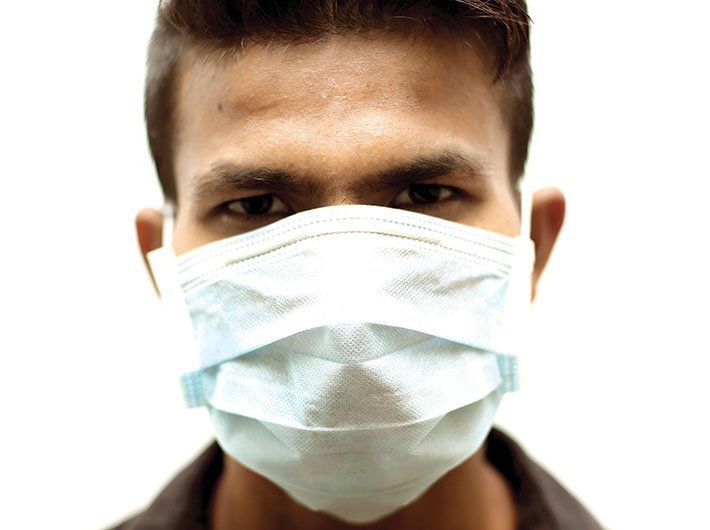
(Representational image: GN Photo)

In view of the increasing number of COVID -19 cases in the country, the ministry of health and family welfare (MoHFW) has now advised that everyone must voluntarily wear a mask and especially those living in densely populated areas.
 
Not just as a matter of maintaining personal hygiene but also looking at overall health conditions, the ministry has advised that general public while stepping out of the homes must wear a cloth mask. “It is suggested that such people who are not suffering from medical conditions or having breathing difficulties may use the handmade reusable face cover (mask) particularly when they step out of their house. This will help in protecting the community at large,” says the advisory issued on Saturday.

These face covers could be made out of any clean cotton cloth available at home which must be thoroughly cleaned and washed before stitching or preparing them. The mask should be prepared in such a manner that it covers the mouth and nose completely and can be easily tied around the face.

India has been facing acute shortage of medical masks and PPE for doctors, healthcare workers and others on the frontline since the outbreak of coronavirus. These cloth masks however are not to be worn by health workers, those in close contact with COVID-19 workers or patients.

“Wearing homemade reusable face covers (masks) is a preventive measure to reduce the chances of inhaling droplets in the air from an infected person and do not give full protection.”

Homemade reusable face covers must be washed and cleaned every day as instructed in the ministry manual on Homemade Protective Cover for Face and Mouth, should be never reused without washing nor shared with anyone. The manual has step by step guidelines for making face covers for curbing the spread of SARS- COV-2 Coronavirus.   

Social distancing must still be maintained. Besides frequently washing hands with soap and water for 20 seconds, the guidelines emphasize repeating the same before wearing and after removing the mask besides strictly maintain social distancing.
     
A  recent study, titled ‘Presymptomatic  Transmission of SARS -COV-2-Singapore, January 23-March 16, 2020’, published in CDC’s Morbidity and Mortality Weekly Report, has documented seven clusters of COVID-19 cases in Singapore that were fueled by infected people who showed no signs of illness thus making it clear that asymptomatic people are spreading the virus. Regions like Singapore and Taiwan where people wear masks on a routine basis have not witnessed uncontrolled spread of the virus.  


Comments


Other News

Study flags accessibility and last-mile challenges on Mumbai Metro Aqua Line

Mumbai Metro Line 3 (Aqua Line), the city`s first fully underground metro corridor and one of its largest public transport investments, represents a major engineering achievement and has been widely welcomed by commuters. However, the overall commuter experience continues to be constrained by accessibili

Centre intensifies preparedness as El Niño threat looms

Amid uncertainty in the southwest monsoon due to the potential impact of El Niño, the government is addressing the situation with comprehensive preparedness, a clear strategy, and strong ground-level action. While challenges remain, the entire system has been activated in advance and is working proa

India is crossing a climate threshold

On June 28, Delhi recorded a maximum temperature of 41.3°C, four degrees above the seasonal normal. But the “feels like” temperature, which factors in humidity, showed more than 51°C. What the body experienced was very different from what the thermometer recorded.  India`

The Geography of India’s inflation

India today finds itself in an unusual position. At a time when geopolitical conflicts, trade fragmentation, and supply-chain disruptions are reshaping the global economy, the country`s macroeconomic fundamentals remain relatively upwards. Growth remains among the highest in the world, inflation has larg

How to listen to the great storytellers that the trees are

The Trees of My Country: A Natural History of India in 50 Trees By T. R. Shankar Raman, with illustrations by Manali Patil Aleph Book Company, 284 pages, Rs 1,499  

This tree in Bihar turns out to be the oldest accurately dated banyan

A banyan tree in Munger, Bihar, estimated to be around 700 years old, has been identified as the oldest accurately dated banyan tree, Ficus benghalensis, using radiocarbon dating, a method that relies exclusively on scientific evidence rather than historical records or local lore. Banyan


Archives

Current Issue

Opinion

Facebook Twitter Google Plus Linkedin Subscribe Newsletter

Twitter
