Read an excerpt: Mithi Mukherjee’s ‘Asianism and the Fall of Empire’ offers a fresh understanding of the forces that contributed to the eventual fall of the British Empire in India
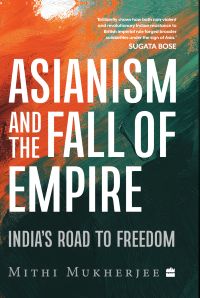 As we mark 80th anniversary of independence, ‘Asianism and the Fall of Empire’ (HarperCollins India) by historian Mithi Mukherjee offers a new perspective on India’s freedom struggle by placing it within the wider history of Asia. Mukherjee explores Asianism as a powerful political and intellectual force that connected anti-colonial movements across the continent and examines how these ideas and networks shaped the resistance to British imperial rule in India. Moving beyond a purely national account of the freedom movement, Mukherjee traces the connections between Indian and wider Asian political thought and resistance, offering a fresh understanding of the forces that contributed to the eventual fall of the British Empire in India.
Here is an excerpt from the book:
Racism and the Asian Immigrant: Gandhi in South Africa
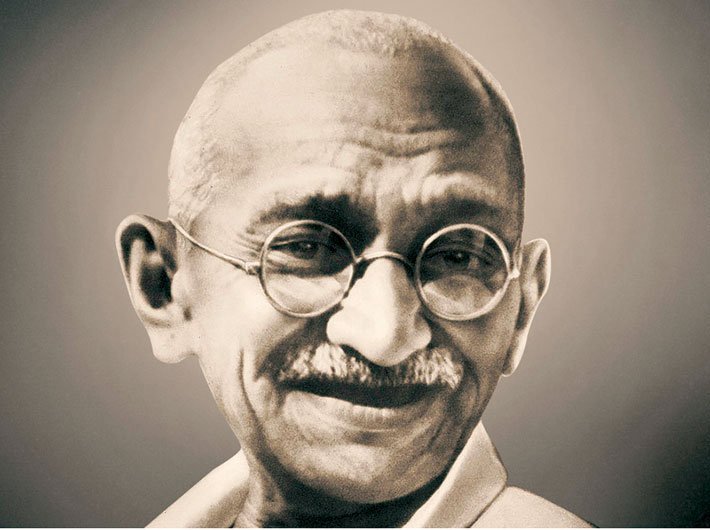
When Mohandas K. Gandhi arrived in colonial South Africa as an immigrant in 1893, the young ambitious Indian lawyer was imbued with the values of “Western civilization” that anchored British colonial rule in India. Like other English-educated upper-class Indian men trained in the law at that time, he believed in the promise of England’s “civilizing mission” and saw it as a gateway to the world of equality and justice for all Indians and other subjects of the British Empire.
When Gandhi left South African shores in July 1914 at the end of two decades, however, he was a transformed man. From a lawyer representing the English-educated upper and middle classes, he had now become the representative and leader of the most dispossessed and disenfranchised among Indians. From a conviction in the discourse and promise of Western civilization, he had now turned to a new and abiding commitment to the values of Indian civilization. Indeed, it was this changed Gandhi who returned to India in 1914 to start peasants’ and workers’ movements in Champaran, Kheda, and Ahmedabad. A few years later, in 1920, Gandhi would start the first and most extensive anticolonial mass movement of nonviolent resistance against British rule, anchored in what he described as the values of Indian and, more broadly, Asian civilizations.
What explains this radical transformation in Gandhi’s approach to British rule and the discourse of Western civilization? What was it about his immigrant experience in South Africa that made him abandon this discourse so completely and revert to what he described as the values of “Indian civilization” as the ground of his anticolonial movement in India? How did his new understanding of the British Empire transform the nature of the anticolonial movement in India? Finally, what light can Gandhi’s experience throw on the discourse of Asianism and its relation to anticolonialism in the twentieth century?
In dominant historiography on Gandhi, his years in South Africa have been seen merely as the first phase in Gandhi’s development as a political leader, and important only insofar as it laid the background for his unprec-edented nonviolent mass movements in India. If historians have given Gandhi’s experience of racism any importance at all, it is only in relation to its impact on him as a person and not its implications for the Indian anticolonial movement. As a corollary, the anticolonial movement in India has been studied in terms of its separate national trajectory determined entirely by evolving British colonial policies in India and unaffected by events in other parts of the British Commonwealth. Gandhi’s personal leadership qualities and his exceptional charisma that could sway the masses are seen as his unique contribution to the Indian anticolonial movement after his arrival in India.
Departing from this historiography, this chapter argues that it was in fact Gandhi’s experience as an Asian immigrant in South Africa, leading a community largely of indentured laborers, the most impoverished and underprivileged of Indians, against racist exclusive laws, that revealed to him the true nature of the British Empire and provoked him to start a mass anticolonial movement to end British rule in India. Indeed, Gandhi became Indian in South Africa as an “Asiatic.”
Gandhi’s South African experience transformed his discourse in two critical ways. First, compelled to fight on behalf of Asians against white racism based on biological exclusivism, he understood that the Western universalist discourse of civilization and the promise of inclusion and assimilation that it held out to colonial subjects in India was nothing more than a political strategy to trap India, and more broadly Asia, in an endless cycle of colonialism. In white racism, Gandhi encountered the failure of the Western discourse of civilization and its promise of inclusion. Second, his experience of racial exclusion and humiliation as a leader of thousands of indentured laborers, most of whom were uneducated and even illiterate and therefore untouched by the discourse of Western civilization, led him toward the civilizational difference that would ground his anticolonial politics. Rejected and humiliated in his quest for equality, Gandhi would eventually rediscover Indian and Asian civilization and make it the ground of his nonviolent mass movement after his return to India.
Gandhi’s movement to oust the British from India was a counter to the rejection and exclusion of Asians from British Dominions, and it would finally result in the end of empire. Thus, what proved decisive in shaping the larger anticolonial movements Gandhi led in India was the anti-imperial discourse that he developed in South Africa in response to white racism, and not the specific variant of anticolonialism based on a discourse of imperial justice and faith in Britain’s “civilizing mission,” developed by Indian political leaders in colonial India.
In what follows, I discuss Mahatma Gandhi’s experience of racial exclusion and humiliation as an Asian in South Africa, his leadership of the nonviolent movement against immigration laws there, and the implications of his time in South Africa on the larger anticolonial movement he led in India against the British Empire for the next four decades.
Asian Immigration and Imperial Racism in South Africa
At the heart of the battle over race in the newly emerging state of South Africa in the late nineteenth and early twentieth century was the question of Asian immigration, which threatened the British and Boer vision of a “white” state. This vision of a race-based empire was first developed in Cape Colony by Cecil Rhodes, an English immigrant who, by the 1890s, had systematically bought out all the diamond mines in South Africa, gaining a near-complete monopoly of the world diamond market. He served as the prime minister of the Cape Colony from 1890 to 1896.
For Rhodes, South Africa, separated by thousands of miles from Britain and its settler colonies on the one hand, and India on the other, offered an ideal location to construct and experiment with grand visions of empire based on race. His ambition of a railroad that would connect South Africa with Egypt without leaving British territory was part of his larger goal of bringing as much of the world as possible under the Anglo-Saxon race, which he described as a “master race.” During his time as prime minister, Rhodes used his political power to expropriate land from Africans by passing the Glen Grey Act. He also changed the existing no-racial franchise, which allowed everyone to vote, to effectively barring Africans from taking part in elections by tripling the wealth requirement for voting.
Even as Rhodes was developing his vision in the Cape Colony of a world empire ruled by Anglo-Saxons as a “superior” race, the British imperial government was trying to solve the problem of labor shortage in the sugarcane plantations and save the Natal economy from ruin by systematizing the flow of Indian indentured labor from India to Natal. Given that Indian indentured labor had already been deployed in Mauritius, Trinidad, St. Lucia, and Grenada, when those regions had faced a shortage of labor, Natal planters turned to British India to solve the same problem.
[The excerpt reproduced with the permission of the publishers.]