
Avoid activities that don’t serve public purpose: Niti Aayog to govt

There has been a neglect of some activities that only the government can undertake and are of great public value, said three year action agenda

GN Bureau | August 30, 2017

#NIti Aayog   #Ashwani Lohani   #Air India  
GN Photo
GN Photo

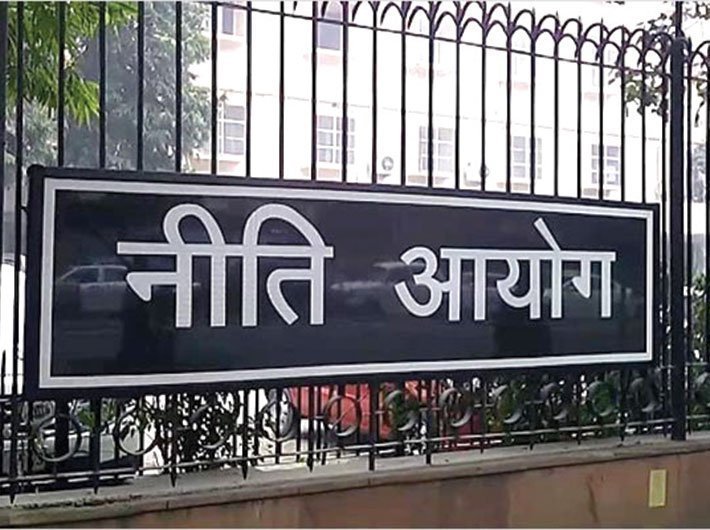
Niti Aayog has suggested that the government should avoid activities that don’t serve any public purpose.
 
“India’s choice to build a socialist pattern of production during several post-independence decades has resulted in the government entering many activities that do not serve any public purpose and are best performed by the private sector,” said the Three Year Action Agenda, a NITI Aayog document
 
“At the same time, there has been a neglect of some activities that only the government can undertake and are of great public value. Manufacture of products such as parachutes and three wheelers falls in the first category while the provision of public health in the second,” said the document.
 
The turbulence being faced by Air India is an example that is often cited to highlight the government’s participation in an activity that is not necessary.
 
Things have only been downhill for the national carrier. It is inefficient and nowhere close to putting up a fight to the private airlines. The gross mismanagement has only added to its misery.
 
Ashwani Lohani, a turnaround specialist, was brought in improve the airline, but he too was moved as the chairman of the railway board.
 
 
Jamie Whyte, research director of London based Institute of Economic Affairs, has made an interesting observation.
 
“The state does not exist to provide what people cannot provide. The idea is ridiculous, since anything the state provides will in fact be provided by people. No, the state exists to make people provide what they will not provide voluntarily,” he wrote
 
“That may sometimes be OK. Perhaps people should be forced to contribute to the cost of national defense, for example. If we weren’t forced to, each of us might try to free-ride on the voluntary contributions of others and, in the end, less would be spent on national defense than even we free-riders would want,” Whyte added.


Comments


Other News

Startup India initiative: A decade of building India’s innovation backbone

* With over 2 lakh DPIIT-recognised startups as of December 2025, India stands firmly as one of the world’s largest startup ecosystems. * A decade of Startup India has built a full-lifecycle support system spanning ideation, funding, mentorship, and scale-up. * Around 50% of DPIIT-r

How toll policies are redefining the highway journeys

With the phenomenal growth in National Highways, queues at toll plazas used to affect commuters. However, over the last decade, tolling has undergone a major technological transformation, bringing faster movement and significant ease for road users. Building on this progress, year 2025 saw further people-c

From vulnerabilities to empowerment: Building resilience for small and marginal farmers

India’s small and marginal farmers are at the centre of a paradox in agrarian economy. They are the backbone of the food economy, but they are the most vulnerable stakeholders within agricultural economy. Among the 126 million farmers in India today, nearly makes 86% operate on small and marginal hol

Concerns over Mumbai air pollution ahead of Marathon

Environmental organisation Awaaz Foundation has flagged serious concerns over deteriorating air quality in Mumbai and the potential health risks it poses to participants of the Tata Mumbai Marathon scheduled for January 18. It has urged civic and pollution control authorities to conduct advance air quality

From darkness to demand: India’s power sector at a policy crossroads

India’s progress in electricity access over the past two decades represents one of the most consequential public infrastructure transformations globally. Yet, as policymakers now confront issues of reliability, financial sustainability, and grid stability, experts argue that the next phase of reform

2026: How AI is transforming everyday life and work in India

Artificial Intelligence is driving a new wave of innovation that touches every part of daily life, from healthcare and farming to education, governance, and climate prediction. It helps doctors diagnose diseases faster, assists farmers in making data-driven decisions, improves learning outcomes for student


Archives

Current Issue

Opinion

Facebook Twitter Google Plus Linkedin Subscribe Newsletter

Twitter






