
All you need to know about anti-trafficking bill

Anti-trafficking units will be set up in every district headed by a state nodal officer

GN Bureau | August 1, 2018

#trafficking bill   #anti trafficking bill   #Trafficking of persons bill   #Maneka Gandhi   #human trafficking  
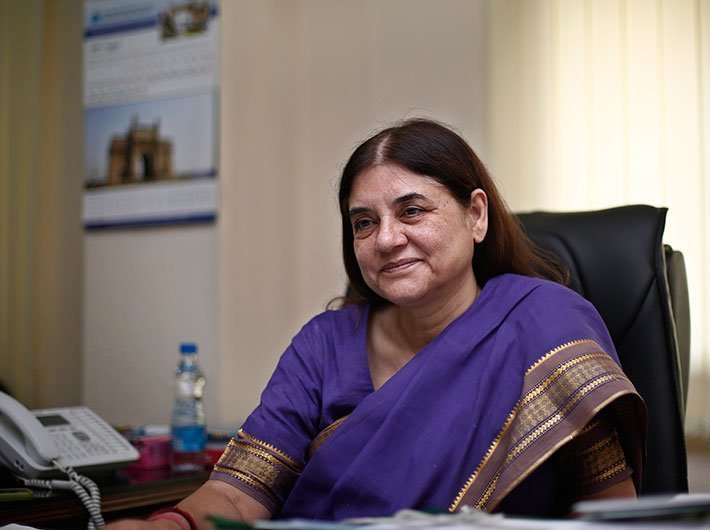
Union WCD Minister Maneka Gandhi

“Thousands of children are transported through railways. Last year only we received more than four crore calls in our childcare helpline… How can we stay silent when children and women are sold like goods?” This is how women and child development minister Maneka Gandhi on concluded her speech while asking other members to vote in favour of the anti-trafficking bill.
The Lok Sabha on July 26, 2018, passed the Trafficking of Persons (Prevention, Protection and Rehabilitation) Bill, 2018, making all form of trafficking of children and women, with provision for prevention and rehabilitation.

The bill resolutely affirms that ours is a nation that espouses, in letter and spirit, the motto of “zero tolerance” to any human trafficking, including forced marriage, bonded labour, organ trafficking, sexual exploitation

At a time when, National Crime Record Bureau data of 2016 says that total of 19,223 women and children rescued in compare to 15,448 in 2015, the country needs a stronger and trafficking bill. On an average, 63 people are rescued every day in 2016 from the countrywide racket that knows no frontiers.

The bill provides for the prevention, rescue, and rehabilitation of trafficked persons. Key features of the bill include: 
 

  • The establishment of a national anti-trafficking bureau, it can request the state government to co-operate or transfer the case under the union government.
  • Anti-Trafficking Relief and Rehabilitation Committee at the national, state, and district levels. These committees will be responsible for, providing compensation, repatriation of victims, and re-integration of victims in society.
  • Search and rescue: An anti-trafficking police officer can rescue persons if there is an imminent danger to them.
  • Protection and rehabilitation: The bill requires the central or state government to set up Protection Homes. The government will maintain Rehabilitation Homes in each district, to provide long-term rehabilitation to the victims. Rehabilitation of victims will not be dependent on criminal proceedings being initiated against the accused, or the outcome of the proceedings.
  • The bill provides for setting up designated courts in each district, which will seek to complete the trial within a year.
  • Penalties: The bill specifies the penalties for various offences including for (i) trafficking of persons, (ii) promoting trafficking, (iii) disclosing the identity of the victim, and (iv) aggravated trafficking (such as trafficking for bonded labour and begging). The bill proposes setting up of a National Anti-Trafficking Bureau to investigate trafficking cases.
  • The state government will appoint a state nodal officer, while anti-trafficking units will be set up in every district.

Comments


Other News

When police data becomes the algorithm

For decades, policing has followed a familiar sequence: a crime occurs, the police respond, an investigation produces records and those records become part of the institutional memory of the criminal justice system. Artificial intelligence is beginning to alter that sequence. Instead of merely recording

Before India voted, the framers worried about the referee

“We are making a Constitution forever and not only for today.” Shibban Lal Saksena said this in the Constituent Assembly on June 15, 1949. He was warning that a ruling party might one day choose a loyalist to run India’s elections. Seventy-seven years later, the Supreme Court is wrestli

Delhi moves to real-time traffic management

The Cabinet Committee on Economic Affairs (CCEA), chaired by prime minister Narendra Modi, has approved implementation of the ITMS Project by Delhi Police at an estimated cost of Rs.1,789.52 crore, inclusive of taxes. The project will cover 42 identified traffic corridors and will be implemented in three

MDR on UPI: Can sustainability come without weakening the network?

The extraordinary transaction volumes and value (₹29.82 Lakh crore in August 2026 alone) of the Unified Payments Interface (UPI) have made it not only an Indian success story, but a global one. In 2024, UPI accounted for nearly 49% of the world’s real-time payment transaction volume, with more th

The Xi-Trump summit: The unending rivalry

Diplomacy is akin to an art, wherein the summitry, conflict resolution and negotiations form apt constituents of the entire context of deal making and “playing for keeps” in the international arena. The Xi-Trump summit in Washington last week, in which the American president broke all conside

“Indians, yet treated like outsiders”

Moving to Delhi-NCR for education can be an exciting experience for students from Northeast India. It gives us a chance to meet new people, experience a different culture and become more independent. But living away from home also comes with challenges that people who have not experienced them may not al


Upcoming Conferences


-->

Archives

Current Issue

Opinion

Facebook Twitter Google Plus Linkedin Subscribe Newsletter

Twitter





