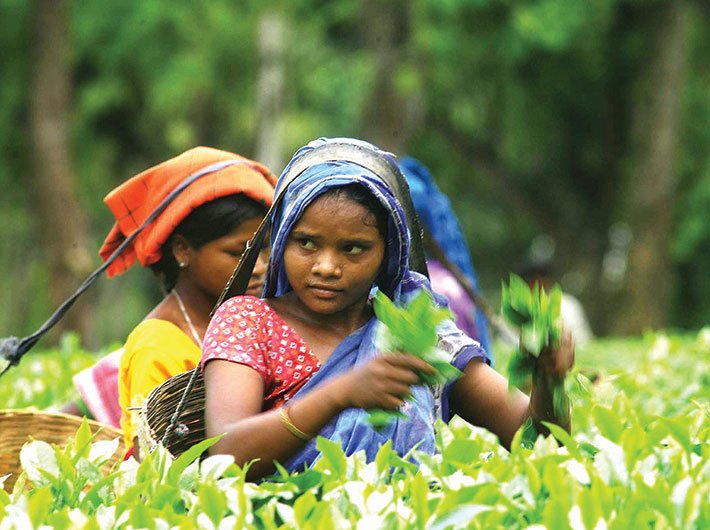
At the crack of dawn, tea pluckers get ready to go to work at a well-known tea estate in Baksa in lower Assam. There is an uneasy silence in the air. As the workers file into the garden to begin the day’s work, they wonder about the 25 children that have been missing from several houses here in the last few years. Despite the tea garden making headlines in the tea business, the news of the missing children failed to be a part of ‘chai pe charcha’ anywhere in the country.
A similar kind of hush, helplessness and anguish has descended on various tea gardens in lower Assam. Children from these tea gardens have been missing or have failed to return home after being taken away by strangers on the promise of a better life in the metros.
With an average of one lakh children missing in the country annually, this year’s figure, till April, is an astounding 15,988 children, out of which 6,921 have been traced, according to the ministry of women and child development. The missing children from the tea estates of lower Assam and parts of West Bengal make up a large chunk of the total figure of those who have vanished without a trace. NGOs like Shakti Vahini and Nobel laureate Kailash Satyarthi’s Bachpan Bachao Andolan (BBA) have been working in these areas to arrest the depredations of traffickers.
Complaints about missing children, filed by parents with the district office of BBA, point fingers to a woman named Sophiya who operates from Baksa and has reportedly sent out over 1,000 children from 7 to 16 years of age to different placement agencies in Delhi, Mumbai and Bengaluru in the last few years. According to BBA, though Sophiya is no longer seen in the area her family members continue to ensnare gullible tea labourers with promise of a better life for their minor children. The police have no complaints from the parents of children who are poor, illiterate and easily intimidated.
The NGO has identified 25 complaints after verifying details from the parents and has forwarded five cases to the anti-trafficking unit of the Baksa district police headquarters. The hunt is on to rescue the missing children.
Why children from the tea garden?
The earning for a full day’s work in a tea garden is only around Rs 115, much below the minimum wage. Living conditions are poor and education facilities rudimentary. Traffickers take advantage of the simple, trusting ways of the workers and spin tales of good money coming to them every month if their children would work in big cities.
Niren Topno (name changed) has been working at a Baksa tea garden for 10 years to produce export quality tea. He feels tired and listless all the time since his seven-year-old son went to ‘work in Delhi’ and never returned. The traffickers posing as businessmen paid him Rs 3,000 for an assured job at a salary of Rs 6,000 per month (a sum Niren can never hope of earning as a tea labourer) for his minor son. “I toil every day and nurture these tea bushes to bring world-class tea to so many homes but this harvest brings me no joy, only pain. Had I not been so poor, my son would not have gone away. I don’t know if he is alive,” says Niren fighting back tears.
Traffickers have been very active in the districts of Udalguri, Lakhimpur and Sonitpur as reported in local media. According to Rakesh Senger of BBA, hardly any complaints have been registered with the police in Udalgiri on the missing children. According to BBA, in Lakhimpur almost 150 girls in the 12-18 year age group have been missing in the last two years.
“They keep changing the route of their operations and methods to lure young children. Rangiya, about 7 km from Guwahati, is a main transit point in Assam for trafficking from the region,” informed Senger. “On July 20, the local police received information that 12 children were to board a train from Rangiya at night. With the help of Assam police and government railway police (GRP), we began searching all trains stopping at Rangiya but drew a blank. In the morning, we saw a car packed with small children. The trafficker was trying to get away on the Bangalore Express but was finally caught. The children (11 minor boys and one girl) are from villages in Udalguri and Sonitpur. There are more cases of missing children that do not come to our notice. It is a disturbing trend and if no urgent steps are taken, things will go out of hand.”
However, the scenario in upper Assam tea gardens is very different. The Assam Branch of the Indian Tea Association (ABITA) along with the UNICEF has been running a programme since 2007 in three tea growing districts of Dibrugarh, Tinsukia and Sivasagar, covering 116 tea estates, to address child labour, child abuse, exploitation and violence. The programme so far has reached out to 10,933 adolescent girls through formation of 182 groups of adolescent girls within the tea estates. These groups watch out for any suspicious activities in the tea gardens by unknown people and also spread awareness about child labour and child marriage and the need for education. As traffickers target minor children, the adolescent groups in these regions act as a bulwark against child trafficking and child labour.
“The programme has been implemented well and the response is so good that not even a single case of trafficking has been reported from any of the tea gardens under the ABITA in the last year, while 14 out of 20 cases of trafficking have been prevented since 2007,” says Sandip Ghosh, secretary, ABITA.
The Assam government in July joined hands with Kailash Satyarthi and created a corpus fund of '2 crore for the rehabilitation and welfare of trafficked children. This is a significant move considering the fact that about 9,500 children went missing from different places in Assam between 2007 and June 2014. Only 3,840 children have been found so far.
In the Dooars region of West Bengal, traffickers have managed to whisk away 71 children from various tea estates between January and July. Shakti Vahini managed to rescue 33 victims from brothels, private homes and roadside eateries in the national capital region (NCR). The rescued girls have been enrolled under the West Bengal government’s flagship scheme for adolescent girls, ‘Kanyashree Prakalpa’, to ensure education and increase awareness on child trafficking and child marriage.
Rishi Kant, co-founder of Shakti Vahini, has partnered with Alipurduar district police to cover 55 tea gardens in order to sensitise not only the police but also educate the vulnerable tea garden workers about problems like trafficking, child labour and child marriage. Around 2,500 workers of 16 tea gardens (including Dowlajhora, Dhumsi, Gopalpur, Singhania and Rohinpur) have already been covered under it but they plan to push ahead with their outreach programme in a steady and organised manner.
The usual refrain of intellectuals, politicians and public figures is that children are our future and we must do everything to secure their interest. But we are unwilling to even debate the issue of hundreds of children missing from tea gardens, let alone push the administration for some answers. Will we let the curtains come down on our future? Do we really care?
Basu is a PR and marketing professional and a writer.