Citizens above 85 years & PwDs starts voting from home: 18th Lok Sabha Election makes history
In a path-breaking initiative, the Election Commission of India (ECI), for the first time in a Lok Sabha Election, has provided the facility of home voting for the elderly and Persons with Disabilities in the 2024 Lok Sabha elections. Voters above 85 years of age and Persons with Disabilities (PwDs) with 40% benchmark disability can avail the optional home voting facility.
Voters in this category have already begun casting their votes for phase I and II of polling, the ECI said in a release on Friday. This initiative marks a significant stride towards ensuring inclusivity and accessibility of the electoral process and in bolstering democratic participation. There are over 81 lakh 85+ aged voters and 90 lakh + PwD voters registered across the country.
Chief election commissioner Rajiv Kumar along with election commissioners Gyanesh Kumar and Dr Sukhbir Singh Sandhu had announced that by giving home voting facility to elders and PwDs, it is Commission’s expression of care and respect towards them and hoped that it would set an example for society to adopt it in day-to-day life. Voters who availed the home voting facility in Phase 1 polls have expressed gratitude and satisfaction for the ECI initiative. Voting from home takes place with involvement of a full contingent of polling staff and security personnel with secrecy of voting diligently maintained. With this, ECI has taken another decisive step towards facilitating a more equitable and representative democracy, where every citizen's voice matters, regardless of physical limitations or age.
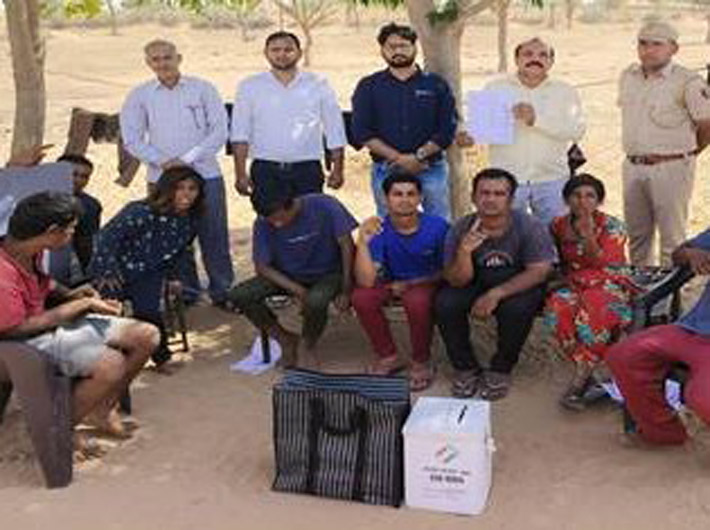
In Churu, Rajasthan eight PwD voters, all from the same family, exercised home voting facility underlining the strength of India’s electoral democracy. In Chhattisgarh, 87-year-old Indumati Pandey and 86-year-old Sonmati Baghel, from Bastar and Sukma tribal districts, exercised their franchise using the postal ballot at home and expressed their gratitude to Election Commission for the facility. In Maharashtra, ECI polling teams travelled 107 kms to provide home voting facility to two elderly voters in Sironcha town in Gadchiroli district, LWE affected area.
B R Mishra from Jaysingh Nagar, Madhya Pradesh, after availing home voting conveyed joy and appreciation and said, “The duty you have done is commendable, you have done a very good job, I can say that the way you have discharged your duties is extraordinary, if all of us work like this then we will make our country proud.”
Similar stories are being reported from other parts of the country where home voting is being conducted. These testimonials underscore the transformative impact of home voting, not just as a logistical convenience but as a symbol of inclusivity, empathy and empowerment within the democratic fabric of our society. Identifying the 85-year-olds and the Persons with Disabilities in the country’s vast electoral roll has in itself been a herculean task.
About Home Voting Facility:
The provision of home voting is a progressive measure aimed at empowering voters who encounter barriers to participating in the electoral process at the polling stations. Specifically, this facility is extended to two key demographic groups: persons with disabilities (PwDs) meeting the 40% benchmark disability criteria and senior citizens aged above 85 years. By extending this optional facility to these segments of the voters, the Election Commission recognizes the need to ensure that citizens’ right to vote is not encumbered by physical barriers and disabilities. This upholds the Commission’s motto of ensuring - No voter is left behind.
The procedure to avail this facility is simple yet thorough. Within five days of the election notification, eligible voters must complete Form 12D and submit it to the returning officer. PwD voters submit a baseline disability certificate with their applications.
The booth level officer (BLO) is responsible for retrieving Form 12D from the elector's place of residence when the required documentation has been completed. Candidates receive a list of these electors in order to maintain accountability and transparency; if they wish, they can choose a representative to supervise the process.
Following this, a dedicated team of polling officials along with security officials visits the voter's residence to collect their votes. Crucially, voters are notified ahead of time of the planned visit, allowing them to be prepared to exercise their right to vote in a safe and comfortable manner. To further expedite the procedure and improve accessibility, voters can also receive notifications via SMS about the days when their home voting facility will be active. The complete process is videographed for transparency.
This initiative underscores the ECI's dedication to leveraging technology to enhance the electoral process. From digital notifications to the deployment of videographers, the incorporation of innovative solutions facilitates a seamless and transparent voting experience for eligible individuals. As India gears up for the 2024 Lok Sabha elections, the introduction of home voting stands as a testament to the ECIs unwavering commitment to upholding participative, inclusive and accessible elections.