
E-wallet limit doubled to Rs 20,000, says Shaktikanta Das

No service charge will now be levied for use of debit cards till December 31, 2016

GN Bureau | November 23, 2016

#e-wallet   #service charge   #debit cards   #RBI   #Demonetisation  
E-wallet limit doubled to Rs 20,000, says Shaktikanta Das

The Reserve Bank of India (RBI) on Wednesday doubled the balance that can be kept in prepaid wallets and cards to Rs 20,000. Also, merchants can transfer up to Rs 50,000 per month from these so-called semi-closed prepaid payment instruments to their bank accounts. The relaxation will be applicable until December 30, the RBI said.

 
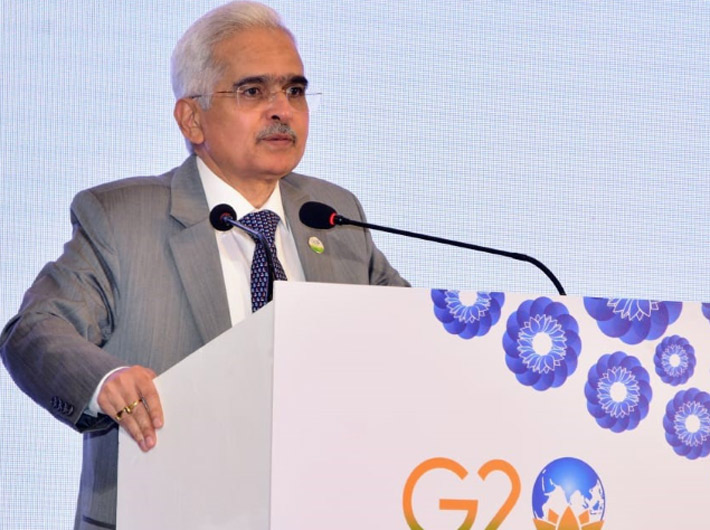
Department of economic affairs secretary Shaktikanta Das told media that the government decided that no service charge will now be levied for use of debit cards till December 31, 2016 and that the move is meant to ensure greater penetration of digital transaction. These steps have been taken in order to ease the pain of the common man.
 
Prime minister Narendra Modi had on November 8 announced the government’s decision to demonetise Rs 500 and Rs 1,000 notes. 
Das had on Sunday clarified that concession, given to farmers and to those having wedding in house, to withdraw up to Rs 25,000 per week from their bank accounts has been not been withdrawn by the government. In addition, traders who are registered with the Agricultural Produce Market Committee were allowed to withdraw up to Rs 50,000 per week for a smooth procurement process.
But the amount of money that an individual can exchange by handing over the old Rs 500 and Rs 1,000 notes in banks has been lowered to Rs 2,000 since last Friday.

Comments


Other News

Machines communicate, humans connect

There is a moment every event professional knows—the kind that arrives without warning, usually an hour before the curtain rises. Months of meticulous planning are in place. And then comes the call: “We’ll also need a projector. For the slides.”   No email

Why India is entering a ‘stagflation lite’ phase

India’s macroeconomic narrative is quietly shifting—from a rare “Goldilocks” equilibrium of stable growth and contained inflation to a more fragile phase where external shocks are beginning to dominate domestic policy outcomes. The numbers still look reassuring at first glance: GDP

Labour law in India: A decade of transition

The story of labour law in India is not just about laws and codes, but also about how the nation has continued to negotiate the position of the workforce within its economic framework. The implementation of the Labour Codes across the country in November 2025 marks a definitive endpoint in the process. Yet

Time for India to build genuine resilience in energy security

There is a strip of water barely 33 kilometres wide between Iran and Oman that connects the Persian Gulf to the rest of the world`s oceans. For most of India`s history, it was a distant geographic fact. Since late February, it has been a kitchen problem.   The Strait of Hormuz. T

Will an oil price shock crash the global economy?

As tensions rise between Iran and Israel, the potential for ongoing disruption in the Strait of Hormuz has driven global energy markets very unstable. With crude prices climbing towards $140 per barrel, the world is facing its most significant oil shock since 1973.   However,

Monetary policy at a crossroads: Growth support vs currency stability

As the Reserve Bank of India (RBI)’s Monetary Policy Committee (MPC) meets from April 6–8 — its first review in FY26 — it confronts a complex and unusually conflicting macroeconomic backdrop. Inflation has eased more sharply than expected, opening the door for further rate cuts. Yet


Archives

Current Issue

Opinion

Facebook Twitter Google Plus Linkedin Subscribe Newsletter

Twitter







