
Prime minister Narendra Modi, in his maiden Independence day speech, announced a slew of initiatives and key reforms in governance. A year later, here is a report card
GN Bureau | August 14, 2015

 “I wish to connect the poorest citizens of the country with the facility of bank accounts through Pradhan Mantri Jan-Dhan Yojana. There are millions of families who have mobile phones but no bank accounts. We have to change this scenario.”
REALITY CHECK
 “All schools in the country should have toilets... This target should be finished within one year... On next August 15, we should be in a firm position to announce that there is no school in India without separate toilets for boys and girls.”
REALITY CHECK
 “We will replace the planning commission with a new institution having a new design and structure.”
REALITY CHECK
 “Come, manufacture in India. Sell in any country of the world but manufacture here. We have got skill, talent, discipline, and determination to do something.”
REALITY CHECK
 “E-governance paves the way for good governance... Today it is the IT that has the potential to connect each and every citizen of the country and that is why we want to realise the mantra of unity with the help of digital India.”
REALITY CHECK
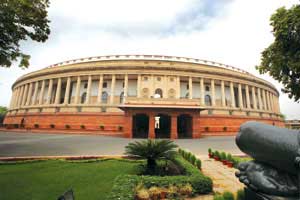 “I urge upon the members of parliament to select any one of the villages having population of three to five thousand in your constituency... each of our MPs should make one village of his or her constituency a Model Village by 2016.”
REALITY CHECK
Foundational Literacy and Numeracy (FLN) are often described as the building blocks of education. Yet, their significance goes well beyond a child’s ability to read a sentence, write a response or solve a basic mathematical problem. These foundational skills shape how children understand the world,
For decades, policing has followed a familiar sequence: a crime occurs, the police respond, an investigation produces records and those records become part of the institutional memory of the criminal justice system. Artificial intelligence is beginning to alter that sequence. Instead of merely recording
“We are making a Constitution forever and not only for today.” Shibban Lal Saksena said this in the Constituent Assembly on June 15, 1949. He was warning that a ruling party might one day choose a loyalist to run India’s elections. Seventy-seven years later, the Supreme Court is wrestli
The Cabinet Committee on Economic Affairs (CCEA), chaired by prime minister Narendra Modi, has approved implementation of the ITMS Project by Delhi Police at an estimated cost of Rs.1,789.52 crore, inclusive of taxes. The project will cover 42 identified traffic corridors and will be implemented in three
The extraordinary transaction volumes and value (₹29.82 Lakh crore in August 2026 alone) of the Unified Payments Interface (UPI) have made it not only an Indian success story, but a global one. In 2024, UPI accounted for nearly 49% of the world’s real-time payment transaction volume, with more th
Diplomacy is akin to an art, wherein the summitry, conflict resolution and negotiations form apt constituents of the entire context of deal making and “playing for keeps” in the international arena. The Xi-Trump summit in Washington last week, in which the American president broke all conside










