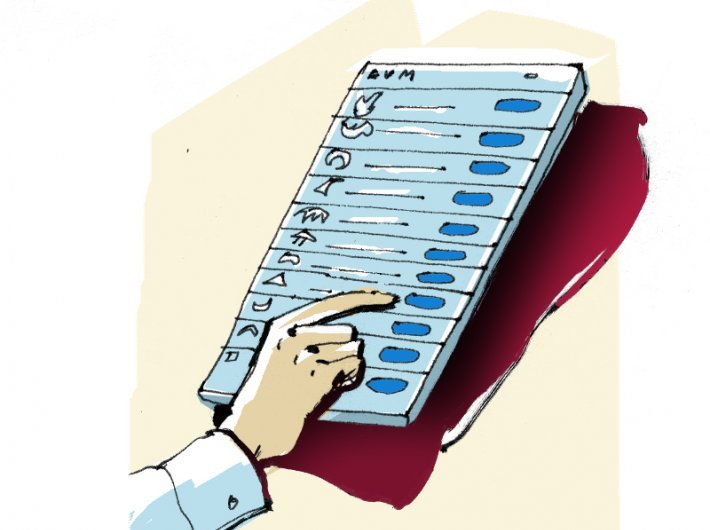
As Gujarat goes to assembly elections this month, at least 137 of the 977 candidates in the fray for the first phase have declared criminal cases against themselves.
This is a finding of the analysis carried out by the Gujarat Election Watch and Association for Democratic Reforms (ADR) of the self-sworn affidavits of 923 out of the 977 candidates, who are contesting in the first phase to be held on December 9. (There are 54 candidates who have not been analysed as the affidavits of these candidates were either badly scanned or the complete affidavits were not available on the ECI website.)
Among other highlights:
Crime
- Candidates with serious criminal cases: 78 (8%) candidates have declared serious criminal cases, including cases related to murder, attempt to murder, kidnapping, crimes against women, etc.
- Candidates with cases related to murder: One Bhartiya Tribal Party candidate namely Maheshbhai Chotubhai Vasava from Dediapadaconstituency has declared cases related to murder (IPC Section-302).
- Candidates with cases related to attempt to murder: 8 candidates have declared cases related to attempt to murder (IPC Section-307).
- Candidates with cases related to crimes against women: Two candidates have declared cases related to rape (IPC Section-376) and 1 candidate has declared case related to word, gesture or act intended to insult the modesty of a woman (IPC Section-509).
- Candidates with cases related to Kidnapping: 3 candidates have declared cases related to kidnapping or abducting with intent secretly and wrongfully to confine person (IPC Section-365).
- Party-wise candidates with criminal cases: Among the major parties, 22(25%) out of 89 candidates from BJP, 31 (36%) out of 86 candidates from the Congress, 11 (18%) out of 60 candidates from BSP, 4 (14%) out of 28 candidates from NCP, 2 (11%) out of 19 candidates from AAP, and 34 (8%)out of 416 Independent candidates analysed have declared criminal cases against themselves in their affidavits.
- Party-wise candidates with serious criminal cases: Among the major parties, 10(11%) out of 89 candidates from Bharatiya Janata Party (BJP), 20 (23%) out of 86 candidates from Indian National Congress (INC), 8 (13%) out of 60 candidates from Bahujan Samaj Party (BSP), 3 (11%) out of 28 candidates from NCP, 1 (5%) out of 19 candidates from AAP, and 15 (4%) out of 416 Independent candidates analysed have declared serious criminal cases against themselves in their affidavits.
- ‘Red alert’ constituencies: There are 21(24%) out of 89 constituencies in the first phase of Gujarat assembly elections having 3 or more candidates with declared criminal cases. [‘Red alert’ constituencies are those which have 3 or more candidates with criminal cases contesting elections].
Financial background
- Crorepati candidates: Out of the 923 candidates, 198 (21%) are crorepatis.
- Party-wise crorepati candidates: Among the major parties 76(85%) out of 89 candidates from BJP, 60(70%) out of 86 candidates from INC, 7 (25%) out of 28 candidates from NCP, 6(32%) out of 19 candidates from AAP, 2(3%) out of 60 candidates from BSP and 25 (6%) out of 416Independent candidates have declared assets worth more than Rs 1 crore.
- Average assets: The average of assets per candidate contesting in the first phase of the Gujarat Assembly Elections is Rs 2.16 Crores.
- Zero-asset candidates: 2 candidates have declared zero assets in their self-sworn affidavits. They are Prakash Unadkat from Porbandar and Rafik Chauhan from Somanth, both independent.
- Undeclared PAN: A total of 127 (14%) candidates have not declared their PAN details.
- Candidates who have not declared income tax details: 471 (51%) out of 923 candidates have not declared income tax details. (However, some candidates may be exempted from filing income tax returns)
Gender
The first phase has 57, or only 6 percent, women candidates.