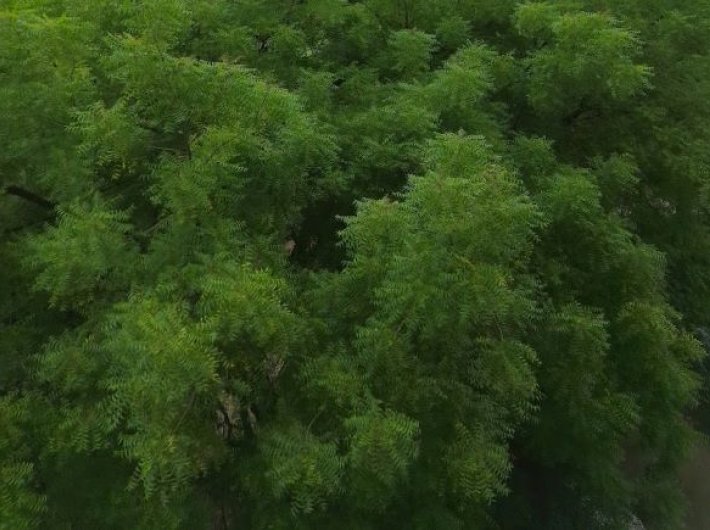
The Dehradun-based Forest Survey of India (FSI), an organization under the Ministry of Environment, Forests and Climate Change, carries out the assessment of forest cover biennially since 1987 and the findings are published in the India State of Forest Report (ISFR). As per the latest ISFR 2021, there is an overall increase in forest cover by 5,516 square kilometres over ISFR 2017.
For details: https://pib.gov.in/PressReleasePage.aspx?PRID=1909907
(The change in forest cover recorded in the hill districts of each of the 13 Himalayan States in the last ten years is given in Annexure I. The details of statewise forest cover from ISFR 2017 to ISFR 2021 are given in Annexure-II.)
Some states have shown increase in forest cover while a few others have shown decline, but on the whole, there is a significant increase in forest cover of the country. This may be attributed to conservation measures, afforestation activities, enhanced protection measures in plantation as well as in traditional forest areas, expansion of Tree Outside Forest. The decrease in forest cover may be attributed to short rotational plantation, biotic pressure, clearance in encroached area, developmental activities etc.
This information was given by Minister of State for Environment, Forest and Climate Change, Shri Ashwini Kumar Choubey in a written reply in the Rajya Sabha, according to an official statement on Thursday.
Forests are an invaluable resource to the country providing essential feeder services. Forests not only host villages in their fringe areas but neighboring villages areas are also dependent upon them as a resource base for several forest products like timber, fuel-wood, medicinal plants, food, non-timber forest products (NTFPs). Forests provide a number of products and services and contribute to the national economy.
Forests also provide services such as bio-diversity conservation, watershed protection and carbon sequestration. Decline in forest cover adversely impacts on ecology and economy of the area concerned.
In order to restore ecosystems and increase the forest cover in the country, afforestation and tree plantation activities are undertaken by States/UTs. The ministry provides financial assistance to States/UTs under various centrally sponsored schemes, namely, Green India Mission to support and supplement the efforts of states and union territories.
The ministry is implementing Nagar Van Yojana (NVY) since the year 2020 which envisages creation of 400 Nagar Vans and 200 Nagar Vatika in the country during the period 2020-21 to 2024-25 under the funds available under National Compensatory Afforestation Fund (CAMPA). The Nagar Van Yojana aims to enhance the green cover in the urban and peri-urban areas including biological diversity, provide ecological benefits and improve the quality of life of city dwellers.
The Compensatory Afforestation Fund (CAMPA fund) are being utilized by States/UTs for taking up compensatory afforestation as per approved Annual Plan of Operations for compensating the loss of forest & tree cover due to diversion of forest land for developmental projects as per provisions of Compensatory Afforestation Fund Act, 2016 (CAF Act) and CAF Rules, 2018.
Afforestation activities are also taken up under various programmes and schemes of line ministries such as Mahatma Gandhi National Rural Employment Guarantee Scheme, National Bamboo Mission, Sub-Mission on Agroforestry etc. and under schemes of state government/ut administration through different departments, NGOs, civil society, corporate bodies etc. The multi-departmental efforts have yielded good results in conserving and enhancing forest cover in the country.