
Jalan committee submits report on new bank licences

The final announcement by the RBI is likely to be made in March

GN Bureau | February 25, 2014
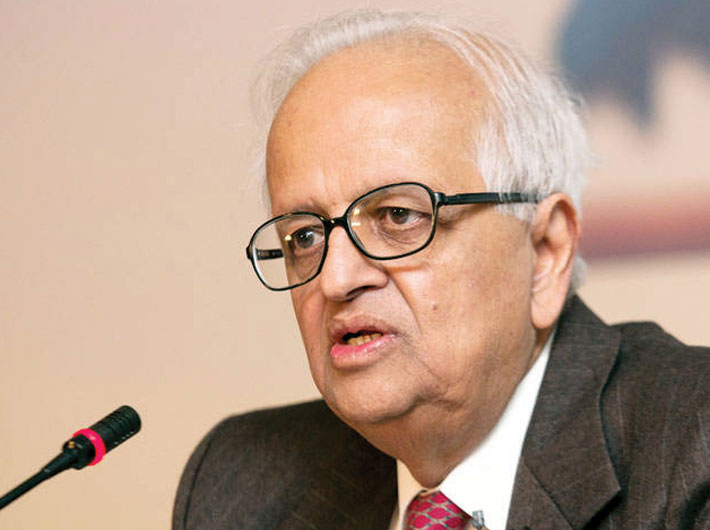


After having missed the January deadline, the Reserve Bank of India may grant licences to new banks in March as the Bimal Jalan committee submitted its recommendations to the apex bank on Tuesday.

"We have submitted report (on new bank licences) to RBI," said Jalan, who once headed the RBI in late 1990s and 2000s for two terms.

For the last four months, the committee has been scrutinising 25 applications. However, the names have not been disclosed by the committee comprising former RBI deputy governor Usha Thorat, former Securities and Exchange Board of India chairman C B Bhave and Nachiket Mor, director on the apex bank’s central board.

Speaking to Governance Now, S S Mundra, CMD Bank of Baroda, said, “It is not like we did not have enough competition already with the presence of banks, MFIs, NBFCs, etc. Also, the competition has gone up in the last two years with banks coming out with newer models and have done significant work. The newer players will definitely add more competition and this will be good for all of us to continuously improve and better ourselves.”

However, R K Dubey, CMD, Canara Bank has said that there is so much space and scope in the Indian market for everybody that the arrival of private banks will not be competition and will enhance financial inclusion only if all the players do it with passion.

The RBI had issued guidelines for the licence of new banks in February last year. IDFC, LIC Housing Finance, Anil Ambani's Reliance Group, Aditya Birla Group, Bajaj Finance, Muthoot Finance, Religare Enterprises, L&T Finance Holdings, India Bulls Housing Finance are among the companies who have applied for licences. In addition, applications were received from two public sector groups – IFCI and India Post.

According to the guidelines by RBI, the new banks will have to open 25 percent of their branches in rural areas, a move which could provide a major boost to the financial inclusion agenda.

Comments


Other News

India’s states hold the data. Can they govern it for the AI era?

In July 2021, Parliament was told that PM-KISAN had paid ₹2,992 crore to more than 42 lakh ineligible farmers, money the government then had to try to recover. That is the price of unreliable beneficiary data in just one scheme. Sadly, the cumulative number will climb as governments hand more decisions t

Agentic AI: Who controls it and who regulates it?

It may be easier to find a hacker with two hands and two legs than a voiceless, shapeless agentic AI. That question became the centre of the argument in one of the 34 sessions at the International Conference on Cyberlaw, Cybercrime & Cybersecurity, held here, Thursday.  

Architects demand permanent protection for Mumbai`s open spaces

Calling the decision to drop the proposed underground sports complex, convention facility and multilevel car park at Mahalaxmi Racecourse a welcome step, the Mumbai Architects Collective (MAC), representing 138 architects, urban designers, planners and allied professionals, has urged the Maharashtra gove

Cities are rewriting their waste rules. Waste pickers must be written in

India’s cities have until March 2027 to rewrite their waste by-laws. The Solid Waste Management Rules, 2026, in force since April 1, require every urban local body to frame by-laws incorporating them by March 31, 2027. Most of the attention has gone to the headline changes, such as four-way segrega

Coming home to build a future in fish farming

East Champaran, Bihar: For nearly a decade, Jay Kumar Sahni’s life was far removed from the ponds where his family had made a living for generations. In Bengaluru, he ran a mobile-accessories shop and earned around ₹50,000 a month. It was a stable livelihood, but in 2018–19, Jay chose

The fight over press freedom in the age of reels

When I read the Delhi Police affidavit saying that reel makers are not "press" and should not get the protection that comes with the word, my first thought wasn`t about reels. It was about those people who’ve done the job of a journalist or what they are expected to do without having the di


Upcoming Conferences


-->

Archives

Current Issue

Opinion

Facebook Twitter Google Plus Linkedin Subscribe Newsletter

Twitter





