Magna Carta, the Mahatma and India today

The 800-year old charter is the cornerstone of civil liberty in India

rahul

Rahul Dass | June 15, 2017 | Delhi


#Indian Constitution   #freedom   #civil liberty   #Mohandas Gandhi   #Mahatma Gandhi   #Magna Carta   #King John of England  
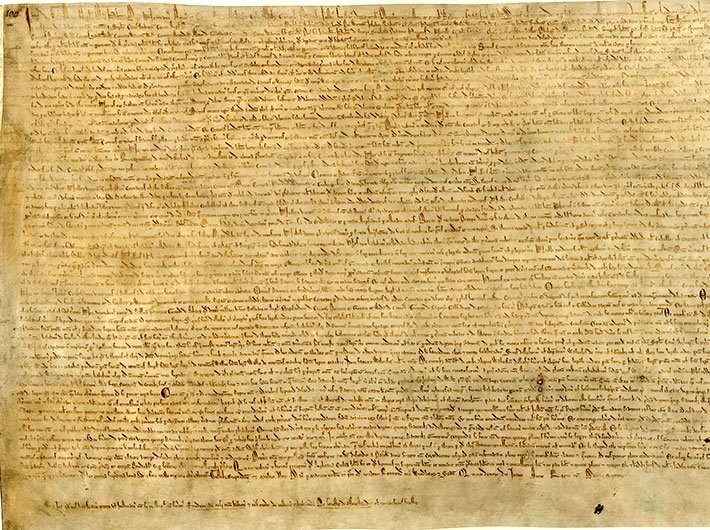
One of the four surviving copies of the 1215 Magna Carta

The Magna Carta, written on this day of June 15 over 800 years back in iron gall ink on parchment in medieval Latin, can be described as the cornerstone of individual liberty in India. It was relevant then and continues to be relevant today.

The medieval age document is singularly responsible for many countries to enjoy freedom today. This is particularly true for India, which imbibed the spirit of the document when the constitution was being penned.

“No free man shall be seized or imprisoned, or stripped of his rights or possessions, or outlawed or exiled, or deprived of his standing in any way, nor will we proceed with force against him, or send others to do so, except by the lawful judgment of his equals or by the law of the land.
 
“To no one will we sell, to no one deny or delay right or justice,” said the Magna Carta that was signed in 1215 between King John of England and rebel barons.
 
Article 21 of the Indian Constitution is quite clear -- “no person shall be deprived of his life or personal liberty except according to the procedure laid by law”.
 
Mahatma Gandhi, who fought for racial equality in South Africa, too referred to the Magna Carta on the eve of his departure to India.
 
In his “A farewell letter” in the Indian Opinion, a weekly that published in Gujarati and English, Gandhi explained about the “settlement” and what it means.
 
“In my humble opinion it is the Magna Carta of our liberty in this land. I give it the historic name, not because it gives us rights which we have never enjoyed and which are in themselves new or striking, but because it has come to us after eight years strenuous suffering that has involved the loss of material possession and of precious lives,” said Gandhi in the letter that was published on July 29, 1914.
 
Magna Carta is all about equality, freedoms and rule of law. Individual liberty, which is exceedingly precious in a democracy, is safeguarded through it.
 
The kind of freedom we enjoy today would not have been possible without democracy evolving over the decades. There were democracies before the Magna Carta, but this singular document has spawned a generation of men and women who have ceaselessly fought for civil liberty.
 
India stands out as a fine model of democracy, all thanks to the Magna Carta whose letter and spirit we have imbibed.

Comments


Other News

AI: Code, Control, Conquer

India today stands at a critical juncture in the area of artificial intelligence. While the country is among the fastest adopters of AI in the world, it remains heavily reliant on technologies developed elsewhere. This paradox, experts warn, cannot persist if India seeks technological sovereignty.

RBI pauses to assess inflation risks, policy transmission

The Reserve Bank of India (RBI) has begun the new fiscal year with a calibrated pause, keeping the repo rate unchanged at 5.25 per cent in its April Monetary Policy Committee (MPC) meeting. The decision, taken unanimously, reflects a shift from aggressive policy action to cautious observation after a signi

New pathways for tourism growth

Traditionally, India’s tourism policy has been based on three main components: the number of visitors, building tourist attractions and providing facilities for tourists. Due to the increase in climate-related issues and environmental destruction that occurred over previous years, policymakers have b

Is the US a superpower anymore?

On April 8, hours after warning that “a whole civilisation will die tonight,” US president Donald Trump, exhibiting his unique style of retreating from high-voltage brinkmanship, announced that he agreed to a two-week ceasefire with Iran. The weekend talks in Islamabad have failed and the futur

Machines communicate, humans connect

There is a moment every event professional knows—the kind that arrives without warning, usually an hour before the curtain rises. Months of meticulous planning are in place. And then comes the call: “We’ll also need a projector. For the slides.”   No email

Why India is entering a ‘stagflation lite’ phase

India’s macroeconomic narrative is quietly shifting—from a rare “Goldilocks” equilibrium of stable growth and contained inflation to a more fragile phase where external shocks are beginning to dominate domestic policy outcomes. The numbers still look reassuring at first glance: GDP


Archives

Current Issue

Opinion

Facebook Twitter Google Plus Linkedin Subscribe Newsletter

Twitter