
No clear distinction between professionals and amateurs in classical dance: Malavika Sarukkai

In conversation with Bharatanatyam dancer Malavika Sarukkai

yoshika

Yoshika Sangal | July 27, 2017 | New Delhi

#On a personal note   #Malavika Sarukkai   #bharatanatyam  
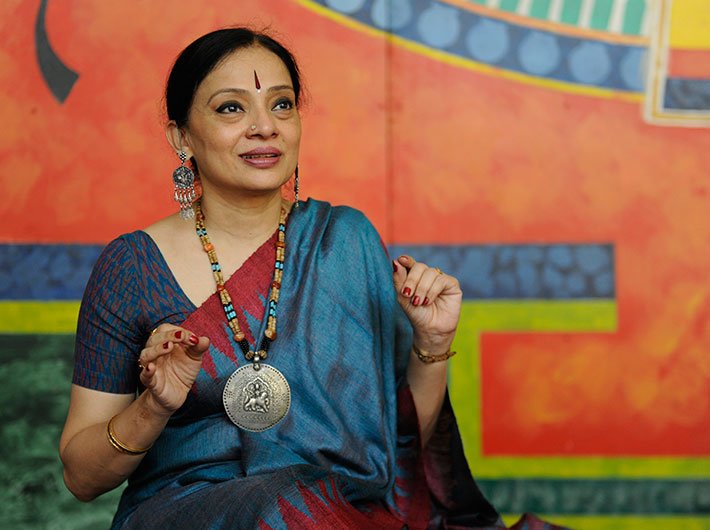
(Photo: Amey Mansabdar)

Malavika Sarrukkai is a Bharatanatyam dancer from Tamil Nadu. She began learning the dance form at the age of seven and made her stage debut at the age of 12. She was awarded the Sangeet Natak Akademi Award in 2002 and Padma Shri in 2003. Her work features in a government-commissioned documentary called Samarpanam. She also also features in Dancing, a television documentary by BBC/WNET.


Essential quality of a choreographer:

Imagination combined with a mastery of technique which enables translation of ideas into movement and visualisation. A choreographer needs to have a keen awareness of the dimensions of time and space and an appreciation for melody and silence. 

The theme of your latest production:

I am working on a production titled Thari – The Loom. It is interesting, exciting, challenging in concept and dance design. Earlier, I read an article on the Kanchipuram saree written by sociologist Aarti Kawlra. As I was going through the article, I could see the loom come to life in my mind and at that very moment the concept was born.

Experience of performing abroad:

Classical dance, when presented with authenticity, technique, imagination and excellence has the power to mesmerise audiences anywhere around the globe. I have been amazed at the spirit in classical dance time and again and this has been my experience: classical dance has the power to forge a relationship where there was none. 

Role of government in supporting classical dances:

In India, there is no clear distinction between the professionals and the amateurs in classical dance. It is therefore a completely disorganised sector. Often, the more committed among dancers are pitted against the ones with deep pockets and political connections for programme opportunities. This in turn does no justice to the bigger vision of dance because it encourages mediocrity.

The government could put in place an objective committee from the outside to plan a well-curated annual festival in metro and satellite cities at which meritocracy and excellence in dance is the main agenda. Artists should be allotted a tour of five to six cities to ensure their production reaches wider audiences. Artistes, audiences and the government will benefit by this well-envisioned arts festival. However, to succeed, this model needs sustained development.

Last time you were in a queue at a government office:

Many times post demonetisation in 2016.

Message to the youth:

Keep faith in your integrity. Herd mentality is not the only choice, find yourself. Let selfies not define you. 


(The interview appears in the July 16-31, 2017 issue of Governance Now)


Comments


Other News

AI: Code, Control, Conquer

India today stands at a critical juncture in the area of artificial intelligence. While the country is among the fastest adopters of AI in the world, it remains heavily reliant on technologies developed elsewhere. This paradox, experts warn, cannot persist if India seeks technological sovereignty.

RBI pauses to assess inflation risks, policy transmission

The Reserve Bank of India (RBI) has begun the new fiscal year with a calibrated pause, keeping the repo rate unchanged at 5.25 per cent in its April Monetary Policy Committee (MPC) meeting. The decision, taken unanimously, reflects a shift from aggressive policy action to cautious observation after a signi

New pathways for tourism growth

Traditionally, India’s tourism policy has been based on three main components: the number of visitors, building tourist attractions and providing facilities for tourists. Due to the increase in climate-related issues and environmental destruction that occurred over previous years, policymakers have b

Is the US a superpower anymore?

On April 8, hours after warning that “a whole civilisation will die tonight,” US president Donald Trump, exhibiting his unique style of retreating from high-voltage brinkmanship, announced that he agreed to a two-week ceasefire with Iran. The weekend talks in Islamabad have failed and the futur

Machines communicate, humans connect

There is a moment every event professional knows—the kind that arrives without warning, usually an hour before the curtain rises. Months of meticulous planning are in place. And then comes the call: “We’ll also need a projector. For the slides.”   No email

Why India is entering a ‘stagflation lite’ phase

India’s macroeconomic narrative is quietly shifting—from a rare “Goldilocks” equilibrium of stable growth and contained inflation to a more fragile phase where external shocks are beginning to dominate domestic policy outcomes. The numbers still look reassuring at first glance: GDP


Archives

Current Issue

Opinion

Facebook Twitter Google Plus Linkedin Subscribe Newsletter

Twitter






