
Plug the loopholes and get back black money

Panama Papers leak brings focus again on politically sensitive and economically urgent issue

rahul

Rahul Dass | April 5, 2016 | New Delhi

#Amitabh Bachchan   #Narendra Modi   #NDA   #economy   #black money   #Panama Papers  


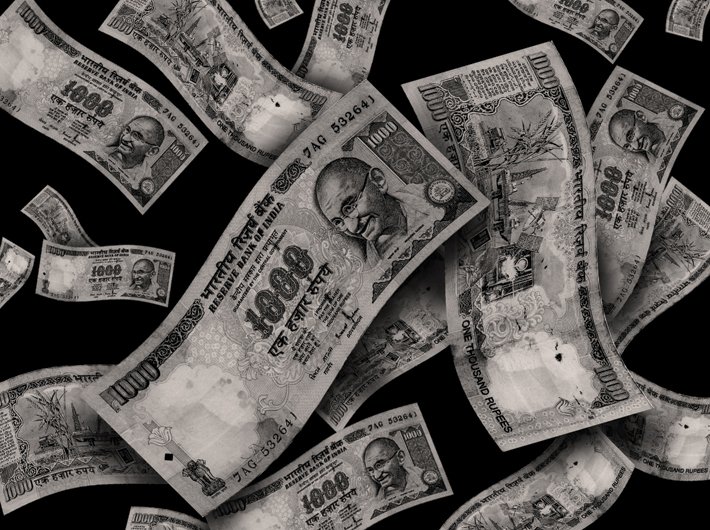
Filmstars and business tycoons are among the 500 Indian names that were revealed through the Panama Papers, which are over 11 million leaked documents – bringing into focus black money, a politically sensitive and economically urgent issue that has triggered considerable debate in the recent past.

Celebrities like Amitabh Bachchan and his daughter-in-law Aishwarya Rai as well as business tycoons like DLF founder KP Singh and IndiaBulls promoter Sameer Gehlaut feature in the huge cache of documents from Mossack Fonseca based in Panama, a country whose image is that of a haven for money laundering.

The Indian Express expose has once again shown that unaccounted-for wealth stashed abroad continues to be a bane for the country, despite promises during the heated campaign ahead of the general election that brought the NDA to power in 2014.

The Congress has repeatedly referred to prime minister Narendra Modi’s election campaign speeches in which he had said that black money to the tune of Rs 80 lakh crore was stashed abroad and his government would bring it back in 100 days of coming to power. He had also reportedly hinted that the repatriated money would be enough to deposit Rs15 lakh into the bank account of every Indian.

The NDA government did put in an effort that saw the passage of the black money bill. But that may not be enough to get black money that is hidden away from the prying eyes of tax sleuths.

Those who succeeded in avoiding taxes in India have been able to exploit the loopholes, which needs to be plugged.

The decision taken by the government to form a multi-agency group including the Financial Intelligence Unit, CBDT and RBI is a step in the right direction – with a caveat. It can also be a kneejerk reaction following the damning Panama Papers that have once again shown that all is not well without our financial system.

There are only guesstimates with regard to black money. A study by industry body Assocham says nearly $2 trillion or Rs 120 lakh crore of Indian black money is stashed overseas. That is more than the country's nominal GDP, which stood at Rs 114 lakh crore or $1.9 trillion in 2013-14. The numbers are simply mind-boggling.

Incidentally, as India struggles to bring back black money, Panama itself has not benefitted as the country has the second worst income distribution in Latin America—and about one-fourth of the population lives in poverty.


Comments


Other News

V. M. Tarkunde: A legal luminary par excellence

14 Lawyers: Portraits from The Bar By Raju Ramachandran  Juggernaut, 248 pages, Rs. 799  

The Cost of Obesity

The latest episode of Checks and Balances focuses on the ticking time bomb of obesity in India, and Geetanjali Minhas of Governance Now spoke with a panel of experts. You can watch the episode here: https://youtu.be/mH

US-Iran deal: Path to peace or prelude to deeper regional quagmire?

In the midst of deep mistrust, the US and Iran are reported to have reached a framework deal for ending the West Asian conflict. But whether it will result in any meaningful breakthrough or pave the way for any lasting peace in the region, is in the realm of speculation.   During

Lived life, philosophy, spirituality and other enigmas

The Ashes Are Warm: Memories of a Lifetime Spent with UG Krishnamurti By Mahesh Bhatt and Sunita Pant Bansal Rupa Publications, 384 pages, Rs 495  

In Varanasi, fringe expansion vs. core heritage

For centuries, the urban framework of Varanasi was defined not just by its relationship with the sacred Ganga but by its multifaceted network of urban commons. Historic kunds, seasonal talabs (ponds), and open maidans served as the city’s basic ecological infrastructure. Th

What ails India`s skill development ecosystem

India’s skill development programmes were designed with a goal to make the young population ready with market-required skills and competencies, and to provide them with better employment opportunities. Yet the outcomes have fallen short of that goal: though over 1.6 crore individuals were trained acr


Archives

Current Issue

Opinion

Facebook Twitter Google Plus Linkedin Subscribe Newsletter

Twitter







