
PM salutes armed forces on one year of Operation Sindoor

Urges citizens to change social media display pictures as a mark of respect for armed forces

GN Bureau | May 7, 2026
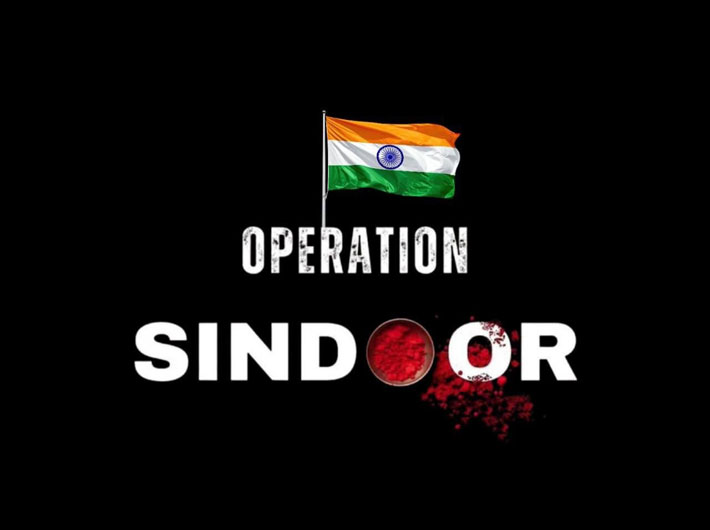

#Operation Sindoor  


Prime minister Narendra Modi on Thursday saluted the courage, precision and resolve of the armed forces on the completion of one year of Operation Sindoor.

 
The PM said that the armed forces had given a fitting response to those who dared to attack innocent Indians at Pahalgam. He said that Operation Sindoor reflected India’s firm response against terrorism and its unwavering commitment to safeguarding national security.
 
The PM noted that the operation highlighted the professionalism, preparedness and coordinated strength of the armed forces. He further said that it showcased the growing jointness among the forces and underlined the strength that India’s quest for self-reliance in the defence sector has brought to national security.
 
Modi reiterated that India remains steadfast in its resolve to defeat terrorism and destroy its enabling ecosystem.
 
He said that during Operation Sindoor, the armed forces showcased their valour and gave a firm response to those who attacked the people of India. He said that every Indian is proud of the armed forces.
 
As a mark of respect to the armed forces and their success during Operation Sindoor, the Prime Minister urged citizens to change their display pictures on social media platforms, including X, Facebook, Instagram and WhatsApp, to the picture shared by him.
 
The Prime Minister posted on X;
 
“A year ago, our armed forces displayed unparalleled courage, precision and resolve during #OperationSindoor. They gave a fitting response to those who dared to attack innocent Indians at Pahalgam. The entire nation salutes our forces for their valour.
 
Operation Sindoor reflected India’s firm response against terrorism and an unwavering commitment to safeguarding national security. It also highlighted the professionalism, preparedness and coordinated strength of our armed forces. At the same time, it showcased the growing jointness among our forces and underlined the strength that India’s quest for self-reliance in the defence sector has brought to our national security.
 
Today, a year later, we remain as steadfast as ever in our resolve to defeat terrorism and destroy its enabling ecosystem.”

Comments


Other News

The women India doesn`t count enough

She runs a tailoring shop from a single room in her house. Every morning she stitches school uniforms, answers queries on WhatsApp, collects payments through UPI and orders fabric online. Officially, she still belongs to India`s informal economy. Yet her enterprise is no longer disconnected from the formal

“Cancer is just a mind game”

Dr. Ananda Shankar Jayant, a Padma Shri awardee, inspired audiences for decades through her mastery of Bharatanatyam and Kuchipudi. But it was her journey through cancer that taught some of life`s most powerful lessons in courage and resilience.

Why Swami Vivekananda is the pathfinder for our times

Swami Vivekananda for Our Times  Edited and compiled by Rajiv Sikri, with Introduction by S. Gurumurthy Rupa Publications, 552 pages, Rs 695  

Five ways to realise the potential of India’s handicraft and handloom sector

India`s economic ambitions are increasingly defined by the industries of the future. Semiconductors, electronics, artificial intelligence and advanced manufacturing dominate policy conversations. Yet one of India`s largest employment-intensive sectors continues to occupy a surprisingly marginal place in ec

Beyond toilets: Why open defecation persists in rural India

Despite the awareness campaigns on sanitation across India, open defecation (OD) is practised openly and widely in both rural and urban areas. Research shows that rural respondents are well aware of the negative impacts of OD, yet this awareness does not lead to toilet construction or use. In rural North I

What unpaid nation builders want from policymakers

The Supreme Court recently described homemakers as “nation builders” and fixed a notional monthly income of Rs 30,000 for them in motor accident compensation cases. The judgment was not about wages. It was about compensation. Yet it inadvertently raised a larger economic question: If a homemake


Archives

Current Issue

Opinion

Facebook Twitter Google Plus Linkedin Subscribe Newsletter

Twitter






