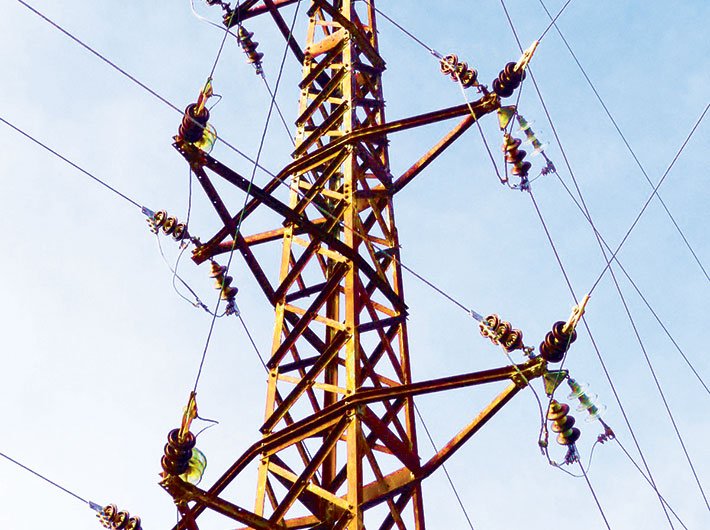
In power sector, demand aggregators will enable a shift from a producer-driven market to a consumer-driven one. Is India ready to use technology for better demand management?
With renewable energy catching up with conventional power in India due to a host of positive developments, its share in the energy mix is continuously rising. From 13 percent in 2013, it has crossed 20 percent in overall power capacity of the country. But the intermittent nature of renewable power comes with its own challenges for transmission infrastructure. Thus, balancing demand and supply pose a bigger problem for transmission and distribution entities.
One way to tackle this issue is demand side management, popularly known as DSM measures from the consumer end. Distribution entities generally employ several measures such as TOD (time-of-day) tariff, power factor penalties, efficient lighting, appliance exchange, thermal exchange and demand response measures as DSM practices. These measures help the utilities to manage the demand for electricity more effectively, manipulating it through a variety of measures to introduce more flexibility into the system and balance supply and demand of power.
Due to recent stringent regulations, distribution companies (‘discoms’) are liable for penalties if they under-procure and do not meet the consumers demand. Also, over-estimation on demand side would lead to over-procurement which would hit the bottom-line of the utilities. Therefore, discoms are making significant investments into technological enhancements and research into power demand and supply forecasting. These measures are supposed to help them in managing their finances better and help them in achieving operational efficiencies. Innovation in technology is playing a major role in these processes.
Groundbreaking innovations are happening on large scale and in quick time. Artificial intelligence (AI), machine learning and analytics are playing key roles in demand forecasting and even managing the demand supply situation better. Earlier, utilities would use simple computing techniques or do it manually but now they are switching to smart technology to anticipate the power supply load for their daily operations.
In this context, demand response (DR) is not new to the Indian power system as part of the DSM programmes but it is catching up very quickly as states are showing growing interest in adopting technology-driven solutions. The demand response techniques are encouraging several technology-savvy startups and even established players are foraying into the sector as demand aggregators to help the network and in the same time, earn profits for their timely interventions.
The role of demand aggregator
Demand aggregators help impart flexibility to the utilities by providing them options to switch on and off a considerable chunk of demand to flatten the load at peak times and stabilise the grid. The innovations and adoption of smart grid technology and smart metering systems allow the aggregator firms to control the system automatically or manually by signaling when to switch on and when to switch off.
Outside India, the demand aggregators are more aggressive in realising the potential and commercially exploiting the opportunity in hand. They find support from all the stakeholders in the value chain starting from the generators to distributors and also with the regulators. Hence, UK-based companies like Flexitricity, Open Energi and Kiwi Power are emerging as major demand aggregators in the UK market. They are also foraying into international markets with their technical knowhow and extending their services to the other parts of the world. They generally offer this service to medium-size firms that wouldn’t otherwise be able to deal directly with national grids.
How these demand aggregators work?
Demand aggregators generally enter into commercial tie-ups with small- and medium-size players having considerable loads and integrate their systems to a smart, centralised system. Thus, aggregators are able to turn on generators or turn off lighting and air-conditioning systems – usually for an hour or two at a time. Smart systems allow them to act at a moment’s notice upon instruction when the national electricity system is highly congested and requires some capacity to be freed up. In turn, they receive payments from the utilities to help balance the grid in need. The payments are then distributed to the participating players after deducting a portion to the aggregator, thus creating a win-win situation for all stakeholders.
The demand aggregators monitor the system in real time and report back to the grid the amount it can back down at the time of need in slots. It is similar to power producers providing their generation schedule to the transmission utility for corridor booking on power availability position. Such a type of systems helps the grid immensely in better planning and availability of the system corridor.
In India, Tata Power Company - Distribution (TPC-D) is working as demand aggregator on pilot basis in Mumbai and New Delhi. In Mumbai, it is operating manually while in Delhi, it has an automatic DR programme. TPC-D has a manual DR programme in which commercial and industrial consumers with a connected load above 500 kW offer voluntary load curtailment to manage peak demand. The consumers enroll in the programme and enter in a memorandum of understanding (MoU). In case of events that require load management, TPC-D calls on heavy load consumers and asks them to curtail their load in manual operations.
The consumption data during the event is compared with the baseline estimated using the load profile of four-five similar days. The events last up to two hours each and a maximum of 50 events are allowed for TPC-D in a year. The TPC-D offers an incentive of Rs 2.25/kWh for every unit curtailed. It is paid to the aggregator who in turn pays the consumers.
Demand aggregation and Indian market
These technology interventions are creating a separate market for demand management services worldwide and the trend is catching up in India too. While developed power markets welcome new participants for creation of a robust grid system and its strengthening, it is expected to face some resistant in the Indian market. It is likely to have a mix impact on the overall energy market in India.
It may have an adverse impact on the major energy suppliers. The peak time pricing is a major revenue generator for the distribution companies as they levy considerable penalty on consumption at that time. As these demand aggregation measures would wipe out the peaks in most cases, the possibility of additional earning for the discom reduces. The aggregators would benefit. As a result, profit margins would drop for the distribution companies. It would provide a major relief to the high load consumers like commercial and industrial consumers, as they do not have to resort to switch off load in peak times and can continue their operations.
Consequently, the need to keep old and expensive power stations would not arise as smart planning would create enough reserve capacity for the system. [Reserve capacities are extra generating capacity available to meet unanticipated capacity demand for power in the event of generation loss due to scheduled or unscheduled outages of regularly used generating capacity]. This will also reduce the need to establish gas-based peaking power stations to help the grid. As per EnerNOC, an Enel Group company which is the largest provider of demand response worldwide, its demand response programme has already displaced the need of 80 peaking load plants worldwide.
The way forward
Amidst all these good tidings, there exists some suspicion too. A larger part of the anticipated success would depend on the technological development and the ability of the market to adopt the system in a smooth and transparent way. Also, cost would be a deciding factor in India for quick adoption of the system as it is seen in the case of adopting smart metering solutions. It requires a friendly policy and amendments in regulations for a quick adoption of the system.
The success of TPC-D would drive other players to enter the market and also spur investments in research and development of a robust system. With the adoption of smart technology, appliances are now coming with smart features like digital displays which would enable such systems to be evolved over a period of time. Though the concept of demand aggregator has not gathered the required pace in India, one can imagine if such systems can be planned and integrated to household consumers for demand-driven solutions based on aggregator platforms. It remains to be seen how consumers would react to fluctuating energy prices in real time and the smart systems allowing them to alter their consumption in response to changing prices and demand from the grid.
Though its effect would be seen in India over next 10 to 20 years, it is a good beginning. While more and more players will come to the fore and bulk energy users see merit in the system and get themselves signed into this platform, the technology gets upgraded to handle the situation in a far better way. This will enable a market shift from producers driven to consumers driven and put consumers at the forefront of the energy economy. n
Tripathy is a senior fellow at CUTS Institute for Regulation and Competition and a PhD scholar at Rajiv Gandhi Institute for Petroleum and Technology.
(This article appears in the february 15, 2019 edition)