
Rail derailment in Raebareli: Creaky infrastructure leaves seven dead

There were 181 derailments between 2014 and 2016

vishwas

Vishwas Dass | October 10, 2018 | Railways, accidents, infrastructure

#infrastructure   #Railways   #accidents  
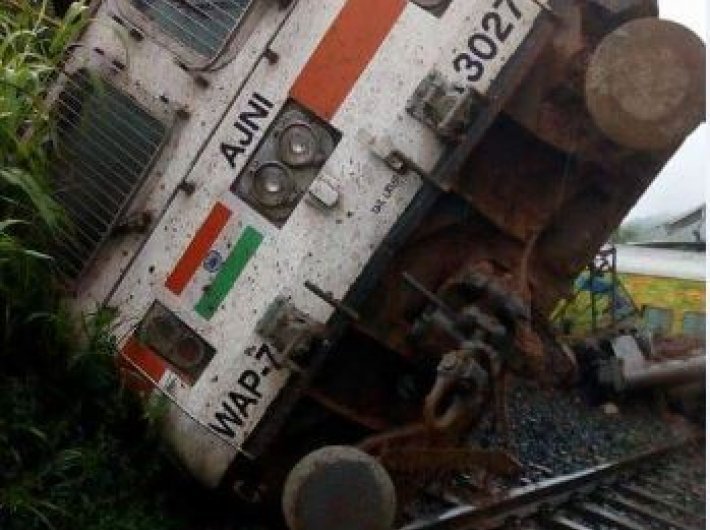
(Photo courtesy: Rajendra B. Aklekar/Mid-Day)

The derailment of nine coaches of the New Farakka Express near Raebareli, in which seven people have been killed and dozens sustained grievous injuries, has once again exposed the hollow claims of the Indian Railways of reducing fatal accidents.

The excessive traffic and tardy pace of infrastructure upgradation has once again resulted into a deadly accident. Like before, the railways showed promptness in declaring compensation for the deceased and injured but the Railway Board still struggles to put an end to derailments and offer a safe journey to people.

While the rescue operation was being carried out by the railways and Raebareli district administration, reports of the death of seven passengers was confirmed by the railways. The accident took place near Harichandpur station in Uttar Pradesh.

Scores of railway officials reached at the site and took stock of the rescue operations. Railway board chairman Ashwani Lohani left for Raebareli at around 7 am for preliminary assessment of the cause of the accident. Railways minister Piyush Goyal expressed grief over the accident and announced Rs 5 lakh compensation for the deceased, Rs 1 lakh for the injured and Rs 50,000 for those sustained minor injuries.

A total of 181 derailments happened between 2014 and 2016 and over 300 passengers died in 200 derailments in three years. At least 146 people were killed in one of the biggest derailments in the railways’ recent history in derailment at Pukhrayan in Uttar Pradesh on November 20, 2016.

Though the railways have claimed that the unmanned level crossings have been either converted to manned or eliminated on major routes, the national transport seems to have no control over derailment accidents.

After assuming the office Goyal in 2017 had asserted that he would focus on reducing accidents rather than just improving punctuality. However, the railways have not only miserably failed in bringing down accidents but also fair poor in improving punctuality.

Comments


Other News

Trump’s China setback pushes US to woo India

A week after Donald Trump’s visit to China – the first by an American president in nine years, US secretary of state Marco Rubio arrived in India on May 23 on a four-day visit aimed at resetting Washington DC’s relations with New Delhi and attending the third Quad ministerial meeting.

EU–India FTA 2026: A high‑stakes prescription for Indian pharma and healthcare

India’s pharmaceutical industry stands as one of the world’s market leaders of generic pharmacy with market valuation of USD 50 billion in 2026. Characterised by high volume, low-cost generic manufacturing, with an annual growth rate of 10-12% primarily propelled by exports and domestic demand,

Legends, vignettes and tales from the freedom movement

Robin Hood of Kathiawar and Other Extraordinary Stories from India’s Freedom Movement By The Paperclip  HarperCollins, 348 pages, Rs 499  

Solicitor General Tushar Mehta tells quirky tales from the world of law

The Lawful and the Awful: Quirky Tales from the World of Law By Tushar Mehta Rupa Publications, 336 pages, Rs 995  

Cabinet meet discussed `Ease of Living`, `Ease of Doing Business`

The Council of Ministers has deliberated upon valuable perspectives and best practices relating to boosting ‘Ease of Living’ and ‘Ease of Doing Business’, prime minister Narendra Modi said on Friday.   As he shared details of the Council meeting held the d

India should deepen energy partnerships with Africa

The vulnerability of Strait of Hormuz continues to influence energy politics globally. India is highly dependent on imported crude oil as a significant portion of its oil imports still come from the Gulf ultimately making such disruptions particularly consequential and has immediate economic ramifications


Archives

Current Issue

Opinion

Facebook Twitter Google Plus Linkedin Subscribe Newsletter

Twitter






