
City needs attention on sanitation, managing solid waste and health system

Puja Bhattacharjee | April 11, 2015
Varanasi, the oldest living town on planet, is prone to small-scale disaster as the frequency of small-scale disasters and natural ecosystem vulnerabilities has increased in five years. This was revealed in a study jointly conducted by Banaras Hindu University (BHU) and Kyoto University in partnership with the Varanasi municipal corporation under the Kyoto Varanasi Partnership agreement.
The study, Climate and Disaster Resilience of Varanasi: City, Zone and Ward profile, also disclosed that the city has not been able to secure specific budget for the disaster related issues.
The study was aimed at measuring city’s resilience to climate related hazards such as floods in the river, urban water-logging, heat wave, cold wave and water scarcity. This was measured from all the 90 wards of the city spread in five zones of the VMC. It was revealed that the natural resilience index remained at 3.08 from 2011 to 2015. It was measured in terms of intensity and frequency of natural hazards, ecosystem services, land use and environmental policies.
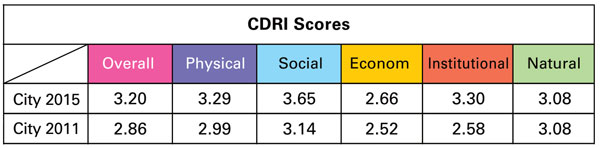
The study was conducted based on five dimensions namely, natural, physical, social, economic and institutional and these five dimensions are connected to five sets of variables.
The overall resilience of the city has increased to 2.86 in 2011 to 3.20 in 2015, on a scale of 1 to 5. Meanwhile the economic resilience was lowest among the five dimensions. It further said that city needed much attention on sanitation, solid waste management and health care system. At the same time, social capital, water supply system and household assets are the strength for the town.
Overall findings:
Issues that need attention:
Issues which need to be sustained and can be considered as an asset for Varanasi:
Success in today’s professional organisation is no longer solely determined by academic qualifications, technical expertise or years of experience. While these attributes do matter, organisations increasingly value individuals who demonstrate the right mindset and behavioural qualities. The ability
Prime minister Narendra Modi interacted with CEOs and Founders of 20 Space Startups at Seva Teerth on Friday. CEOs of leading companies in the space sector working in diverse fields ranging from building rockets and reusable semi-cryogenic launch vehicles, avionics, satelli
In 2012, Anita Dash wasn`t dreaming of building a dairy brand. She wasn`t studying business models or planning market expansion. Like countless mothers across India, her focus was on something much simpler: giving her children a better future. At the time, her most valuable
India`s crude oil consumption is estimated to be around 88.5% imported from abroad. This one single figure is also responsible for why ethanol has become both an economic strategy and fuel policy at the same time. In an economy like India, which depends so heavily on foreign oil, any increase in internat
India`s retail inflation shows a reassuring picture at first glance. According to the latest data, Consumer Price Index (CPI) inflation edged up to 4.38% in June 2026 from 3.93% in May 2026, but continued to remain within the Reserve Bank of India`s (RBI) target band of 4% (+/- 2%). However, beneath this
When a company founder opens their personal chequebook to buy shares in their own business, stock markets usually applaud. To the average retail investor, it feels like the ultimate vote of confidence, a sign that the people running the show have real skin in the game and believe brighter days are ahead.











