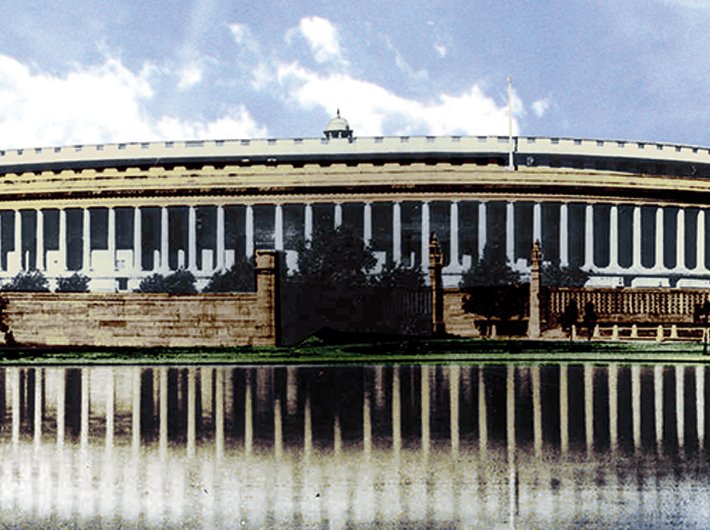
PM Modi and president Kovind have spoken about the need for holding simultaneous elections
As many as five articles of the Constitution may have to be amended so as to pave the way for holding assembly polls along with the general election.
While giving its views after getting advice on the matter from the Election Commission, an internal note of the union law ministry has spoken about the constitutional challenges to paving the way for simultaneous polls — an issue raised by prime minister Modi as also president Ram Nath Kovind, reported the Times of India.
The five Articles that may have to be amended are:
Article 83 deals with duration of houses of parliament.
“The House of the People, unless sooner dissolved, shall continue for five years from the date appointed for its first meeting and no longer and the expiration of the said period of five years shall operate as a dissolution of the House: Provided that the said period may, while a Proclamation of Emergency is in operation, be extended by Parliament by law for a period not exceeding one year as a time and not extending in any case beyond a period of six months after s the Proclamation has ceased to operate,” said the Indiankanoon.org
Article 85 is about dissolution of the Lok Sabha by the president.
“Sessions of Parliament, prorogation and dissolution (1) The President shall form time to time summon each House of Parliament to meet at such time and place as he thinks fit, but six months shall not intervene between its last sitting in one session and the date appointed for its first sitting in the next session.
(2) The President may from time to time (a) prorogue the Houses or either House; (b) dissolve the House of the People.”
Article 172 relates to duration of state legislatures.
“Every Legislative Assembly of every State, unless sooner dissolved, shall continue for five years from the date appointed for its first meeting and no longer and the expiration of the said period of five years shall operate as a dissolution of the Assembly: Provided that the said period may, while a Proclamation of Emergency is in operation, be extended by Parliament by law for a period not exceeding one year at a time and not extending in any case beyond a period of six months after the Proclamation has ceased to operate.”
Article 174 is about dissolution of state assemblies.
“The Governor shall from time to time summon the House or each House of the Legislature of the State to meet at such time and place as he thinks fit, but six months shall not intervene between its last sitting in one session and the date appointed for its first sitting in the next session.
The Governor may from time to time (a) Prorogue the House or either House; (b) dissolve the Legislative Assembly”
Article 356 deals with provisions in case of failure of constitutional machinery in State
“If the President, on receipt of report from the Governor of the State or otherwise, is satisfied that a situation has arisen in which the government of the State cannot be carried on in accordance with he provisions of this Constitution, the President may be Proclamation
(a) assume to himself all or any of the functions of the Government of the State and all or any of the powers vested in or exercisable by the Governor or any body or authority in the State other than the Legislature of the State;
(b) declare that the powers of the Legislature of the State shall be exercisable by or under the authority of Parliament;
(c) make such incidental and consequential provisions as appear to the president to be necessary or desirable for giving effect to the objects of the Proclamation, including provisions for suspending in whole or in part the operation of any provisions of this constitution relating to anybody or authority in the State provided that nothing in this clause shall authorise the President to assume to himself any of the powers vested in or exercisable by a High Court, or to suspend in whole or in part the operation of any provision of this Constitution relating to high courts.”