
World growth expected to face inflation pressures

Fitch expects world GDP to grow by 1.4% in 2023, US 2023 growth forecast also lowered to 0.2%

GN Bureau | December 6, 2022

#Economy   #business   #GDP  
(Illustration: Ashish Asthana)

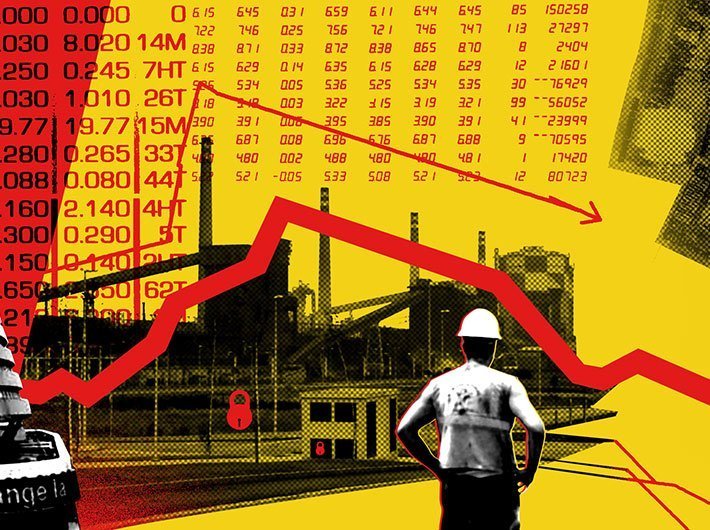
World GDP forecasts for 2023 have been revised down again as central banks intensify their fight against inflation and the outlook for China’s property market deteriorates, says Fitch Ratings in its latest Global Economic Outlook (GEO) report.

Fitch now expects world GDP to grow by 1.4% in 2023, revised down from 1.7% in the September 2022 GEO. Fitch has lowered its forecast for US 2023 growth to 0.2%, from 0.5%, as the pace of monetary policy tightening increases, it said in a release Monday.

The Report: Global Economic Outlook – December 2022: https://www.fitchratings.com/research/sovereigns/global-economic-outlook-december-2022-05-12-2022
(For India, see page 23)

Fitch has also cut our China 2023 growth forecast to 4.1%, from 4.5%, as prospects for a recovery in housebuilding fade. China’s 2022 growth forecast remains at 2.8% as the surge in Covid-19 cases weighs on activity in the near term.

It has revised upwards eurozone 2023 growth slightly to 0.2%, from -0.1%, as the European gas crisis has eased a little, but sharper ECB rate rises will weigh on demand.

“Taming inflation is proving to be harder than expected as price pressures broaden and become more entrenched. Central bankers are having to take the gloves off. That won’t be good for growth,” said Brian Coulton, the chief economist at the ratings agency.

The risk of European natural gas shortages and rationing this winter has receded as LNG imports have surged and gas consumption has fallen. But the crisis is far from over and high wholesale gas prices continue to weigh heavily on firms’ costs and household budgets, the release said.

Inflation has exceeded forecasts – recently hitting 11% in the eurozone and UK – and core inflation is rising. Increasing services inflation is offsetting the benefits of easing supply-chain pressures.

Labour market imbalances are not improving as unemployment remains low and vacancies elevated. With tight labour market conditions, wages are chasing prices and are growing at 7% in the US, 6% in the UK and, on some measures, at above 5% in the eurozone.

The agency expects headline inflation to fall significantly in 2023 as food and energy prices stabilise. But core inflation pressures are expected to be more persistent.

The Fed, ECB, and Bank of England (BOE) have recently been raising rates in outsized moves. Fitch’s latest forecasts for the peak in Fed rates - at 5% - and ECB - at 3% - have been revised up by 100bp since September. Its latest 4.75% peak forecast for the BOE has been revised up by 150bp since the previous GEO. Fitch does not anticipate a pivot to rate cuts until 2024.

The impact of monetary tightening on the economy is already visible - particularly in housing markets - but broader effects on demand and job markets will become more apparent over time. Recessions are anticipated in the eurozone and UK starting in late 2022 and in the US in 2Q23 and 3Q23. Unemployment is likely to rise to above 5% in the US and UK in 2023.

Policy tensions - as governments seek to cushion households from shocks while central banks fight inflation - could result in missteps that increase risks to growth. Hidden leverage in parts of the non-bank financial sector - as seen in the recent UK gilts crisis - could also be a wider source of risk as real interest rates rise, the release noted.

China’s economic slowdown has eased pressure on global commodity prices, but the country is a huge net supplier of goods and pandemic-related disruptions to exports could hit global manufacturing supply chains. However, the recent easing in global supply-chain tensions could provide a bigger boost to world GDP than Fitch anticipates.
 

Comments


Other News

AI: Code, Control, Conquer

India today stands at a critical juncture in the area of artificial intelligence. While the country is among the fastest adopters of AI in the world, it remains heavily reliant on technologies developed elsewhere. This paradox, experts warn, cannot persist if India seeks technological sovereignty.

RBI pauses to assess inflation risks, policy transmission

The Reserve Bank of India (RBI) has begun the new fiscal year with a calibrated pause, keeping the repo rate unchanged at 5.25 per cent in its April Monetary Policy Committee (MPC) meeting. The decision, taken unanimously, reflects a shift from aggressive policy action to cautious observation after a signi

New pathways for tourism growth

Traditionally, India’s tourism policy has been based on three main components: the number of visitors, building tourist attractions and providing facilities for tourists. Due to the increase in climate-related issues and environmental destruction that occurred over previous years, policymakers have b

Is the US a superpower anymore?

On April 8, hours after warning that “a whole civilisation will die tonight,” US president Donald Trump, exhibiting his unique style of retreating from high-voltage brinkmanship, announced that he agreed to a two-week ceasefire with Iran. The weekend talks in Islamabad have failed and the futur

Machines communicate, humans connect

There is a moment every event professional knows—the kind that arrives without warning, usually an hour before the curtain rises. Months of meticulous planning are in place. And then comes the call: “We’ll also need a projector. For the slides.”   No email

Why India is entering a ‘stagflation lite’ phase

India’s macroeconomic narrative is quietly shifting—from a rare “Goldilocks” equilibrium of stable growth and contained inflation to a more fragile phase where external shocks are beginning to dominate domestic policy outcomes. The numbers still look reassuring at first glance: GDP


Archives

Current Issue

Opinion

Facebook Twitter Google Plus Linkedin Subscribe Newsletter

Twitter






