
The making of a legend

And remapping the cinema of Bimal Roy

yoshika

Yoshika Sangal | August 29, 2017 | NEW DELHI

#Shoma A Chatterji   #The Cinema of Bimal Roy   #cinema   #Bimal Roy   #book review  


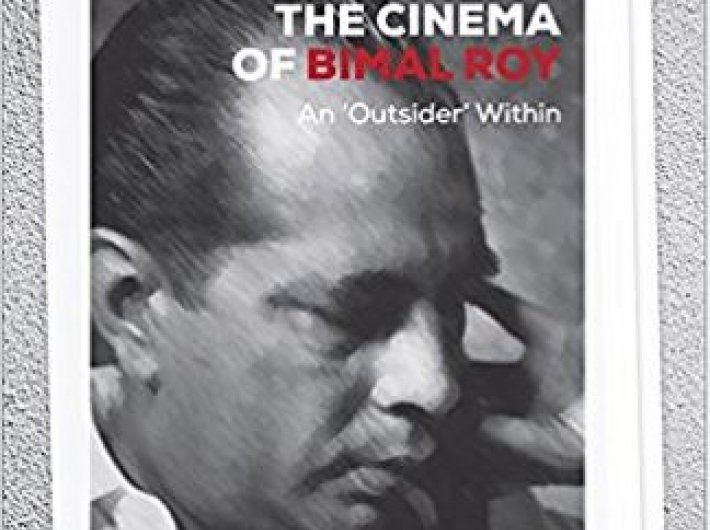
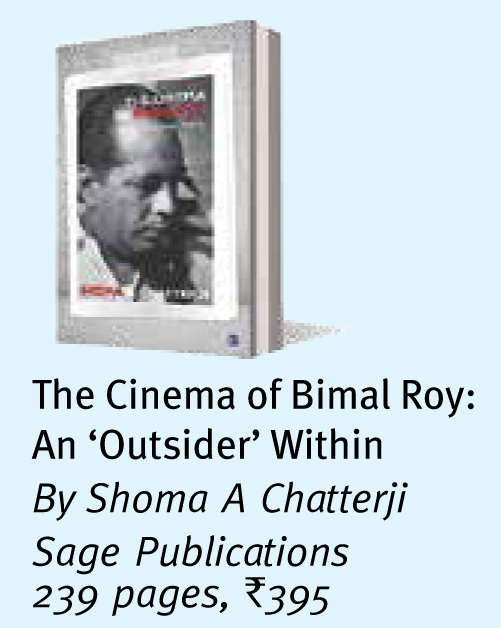
Bimal Roy – synonymous with the aesthetics of cinema… evolved into a legend in his lifetime, writes Shoma A Chatterji in her book which is an in-depth account of the great filmmaker’s work in Indian cinema. She chooses to use the word ‘cinema’ because it “encompasses an entire socio-cultural history” and so did Roy’s movies. His career span from 1944 to 1963, “overlaps the colonial cultural and political ambience and the ambience in Independent India” – major events shaping his ethos and vision. Films like Do Bigha Zamin about the displacement of peasants due to industrialisation and, Sujata and Parineeta on the tragedies of the caste system, stirred audiences far from just being films with moving images and sound effects.
It is important to the author to do a textual and contextual analysis because “there has been no ‘auteur’ critique of the cinema of Bimal Roy”. Auteurs are film directors who shape their movies to give it a “‘personal’ authorship”, just like authors give to their writing. “Roy’s stories dictated his style and approach”. The unforgettable qualities of his cinema lied in its extra-cinematic perceptions, stylistic figurations, powerful storylines, technical finesse and the fact that his “films connote unity rather than diversity and conformity rather than non-conformity”.
 
The book “remaps” the ‘Bimal Roy Era’ detailing: his direction, the history of his films and their making and, film content analysis – corroborating each with previously written books and papers on him and cinema in general.


Finally, the subtitle An ‘Outsider’ Within delineates the characters of his films who do not “belong to the mainstream” and are “outsiders” by virtue of migration, displacement or marginalisation (orphans, migrants, homeless) and its “impact on the emotions, actions and relationships on human lives”. Roy’s protagonists are mostly not rebels. “If they’re proving a point, they’re not aware of it.” Also, there is no inclination to place the victim status at stake for being any kind of martyr to any cause.
 
The ‘outsider’ also denotes Roy’s own forced displacement from now Bangladesh, to Kolkata which “culturally, politically and historically distanced” him from his hometown Suapur. “A full-blooded Bengali”, Roy established his career in Bombay even though he did not speak Hindi but directed Hindi movies.
 
However, there was always a trace of ‘Bengaliness’ in his cinema. This “auteurial signature” was absent in Madhumati, one of his last films that became his most successful one commercially.  
 
The book establishes itself as a posthumous tribute to the legend and his cinema – his “rich and informed creative discourse… which will continue to dot the history of Indian cinema forever.” 
 

(The review appears in the August 16-31, 2017 issue of Governance Now)


Comments


Other News

How toll policies are redefining the highway journeys

With the phenomenal growth in National Highways, queues at toll plazas used to affect commuters. However, over the last decade, tolling has undergone a major technological transformation, bringing faster movement and significant ease for road users. Building on this progress, year 2025 saw further people-c

From vulnerabilities to empowerment: Building resilience for small and marginal farmers

India’s small and marginal farmers are at the centre of a paradox in agrarian economy. They are the backbone of the food economy, but they are the most vulnerable stakeholders within agricultural economy. Among the 126 million farmers in India today, nearly makes 86% operate on small and marginal hol

Concerns over Mumbai air pollution ahead of Marathon

Environmental organisation Awaaz Foundation has flagged serious concerns over deteriorating air quality in Mumbai and the potential health risks it poses to participants of the Tata Mumbai Marathon scheduled for January 18. It has urged civic and pollution control authorities to conduct advance air quality

From darkness to demand: India’s power sector at a policy crossroads

India’s progress in electricity access over the past two decades represents one of the most consequential public infrastructure transformations globally. Yet, as policymakers now confront issues of reliability, financial sustainability, and grid stability, experts argue that the next phase of reform

2026: How AI is transforming everyday life and work in India

Artificial Intelligence is driving a new wave of innovation that touches every part of daily life, from healthcare and farming to education, governance, and climate prediction. It helps doctors diagnose diseases faster, assists farmers in making data-driven decisions, improves learning outcomes for student

Charting the contours of India’s Africa outreach

Prime minister Narendra Modi’s state visit at the end of the year 2025 to Ethiopia represented a notable point in the development of India-Africa relations. At a time of escalated geopolitical contest, renewed commitment to South-South cooperation and Africa’s expanding strategic prominence, th


Archives

Current Issue

Opinion

Facebook Twitter Google Plus Linkedin Subscribe Newsletter

Twitter






