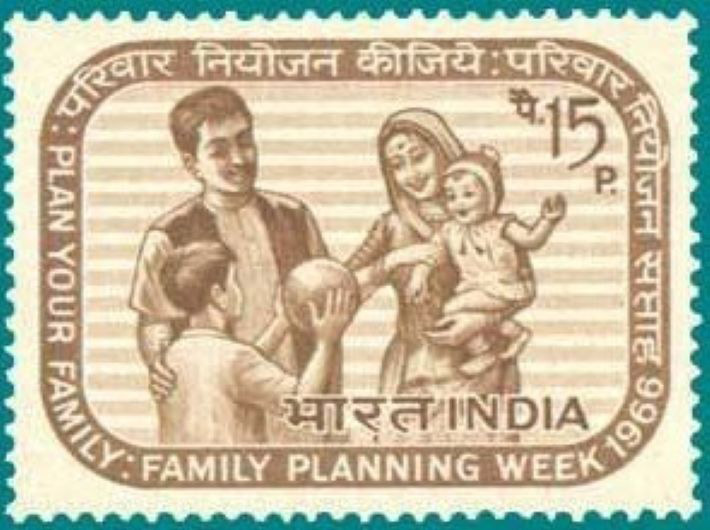
A shared reproductive decision should not become a one-sided medical responsibility
Every pregnancy requires two people. Yet India's family planning programme continues to ask only one of them to bear almost all of its medical consequences. The newly released National Family Health Survey-6 (2023-24) confirms just how entrenched this asymmetry remains: 36.5% of currently married women aged 15 to 49 have undergone female sterilization, compared to just 0.5% of men opting for male sterilization. Overall contraceptive use has risen - from 66.7% to 69.1% between NFHS-5 and NFHS-6 - and India's total fertility rate has held at the replacement level of 2.0. These are genuine achievements. But they raise an uncomfortable question: why, after three decades of programme success, does permanent contraception remain almost exclusively a woman's responsibility?
Sterilization is not an isolated statistic. It is the most visible endpoint of a lifetime of unequal reproductive responsibility.
A Continuum, Not a Single Choice
The gender gap in sterilization is easy to treat as a standalone data point, but it is better understood as the final stage of a much longer continuum. Women manage menstruation, initiate and sustain most reversible contraception, absorb the side effects of hormonal methods, and carry pregnancy, childbirth, and breastfeeding – and when a couple decides no more children are wanted, they are also the ones expected to undergo the permanent procedure. Men's involvement, by contrast, is episodic and largely confined to condom use, which the NFHS-6 data shows accounts for a modest share of the method mix. Reproduction may be biologically shared, but responsibility for preventing pregnancy has gradually become socially feminised.
Why the Gap Persists
The gap is not a reflection of vasectomy being unsafe or medically inferior to tubectomy. Global health guidance from the WHO and UNFPA has long noted that vasectomy is a simpler outpatient procedure with lower complication rates than female sterilization. The gap instead reflects the accumulated weight of programme design, social norms, and health-system behaviour.
Institutional legacy matters first: India's family planning programme, from its earliest phases, built its permanent-method infrastructure and outreach machinery predominantly around female sterilization, creating a delivery ecosystem – camps, staffing, incentive structures – oriented toward women that has proven difficult to rebalance since.
Social norms and health-system behaviour then reinforce each other. Persistent beliefs that vasectomy diminishes masculinity, that surgical intervention is something men should avoid, and that contraception is fundamentally “a woman's matter” all discourage uptake – while family planning counselling itself is overwhelmingly delivered to women, during antenatal visits, at delivery, and in postpartum care. A woman who has just given birth is a captive audience for a sterilization conversation; her husband, who is not in the ward, is not.
Why This Matters Beyond Health
The consequences extend well beyond individual medical outcomes, bearing on women's health-seeking behaviour, their participation in the labour force, and the unpaid care work they absorb. India's own Time Use Survey (MoSPI, 2019) found that women spend 299 minutes a day on unpaid domestic work for their households, compared to 97 minutes for men - a gap of roughly three times.
India's demographic dividend will depend not only on women's education and employment, but also on reducing the invisible reproductive burden that limits both. A Viksit Bharat cannot be built on a foundation where half the population continues to carry a disproportionate share of the biological and logistical costs of family planning. Gender equity in reproductive responsibility is not a side issue to economic development – it is a precondition for the full labour-force participation and productivity gains India needs from its women.
A Practical Reform Agenda
None of this warrants criticism of the family planning programme itself, which has delivered real demographic success. What it warrants is a more deliberate next phase - one that treats gender balance in contraceptive responsibility as a marker of programme success, alongside contraceptive prevalence.
This means shifting counselling from a woman-centric to a couple-centric model, so both partners are present for family planning conversations – an approach the WHO's guidance itself recommends wherever voluntary participation of both partners is feasible – with frontline workers, particularly ASHAs and ANMs, trained to bring men into these sessions rather than defaulting to women as the sole audience. It means investing in sustained behaviour-change communication that directly addresses the myths around vasectomy – its safety, simplicity, and lower complication rates relative to female sterilization – rather than assuming awareness will follow from availability alone. And it means building a new reporting metric alongside contraceptive prevalence: one that tracks the male share of permanent and modern methods over time, so policymakers can see whether the balance is actually shifting.
A Shared Beginning and End
India's family planning programme deserves recognition for helping the country reach and sustain replacement-level fertility while expanding access to contraception. But the true measure of its success is not how many couples use contraception – it is how fairly the responsibility is shared. The objective is not to shift the burden from women to men, but to ensure that family planning becomes a genuinely informed and shared choice.
Every pregnancy begins with two people. Family planning should begin and end with shared responsibility.
Surabhi Singh is Research Associate, Pahlé India Foundation & Policy Pioneers Delegate- Cohort 2026, India House. Smita Patil is Policy Pioneers Delegate- Cohort 2026, India House.