Why the digital transformation of India's informal economy could determine whether the country realises its demographic dividend
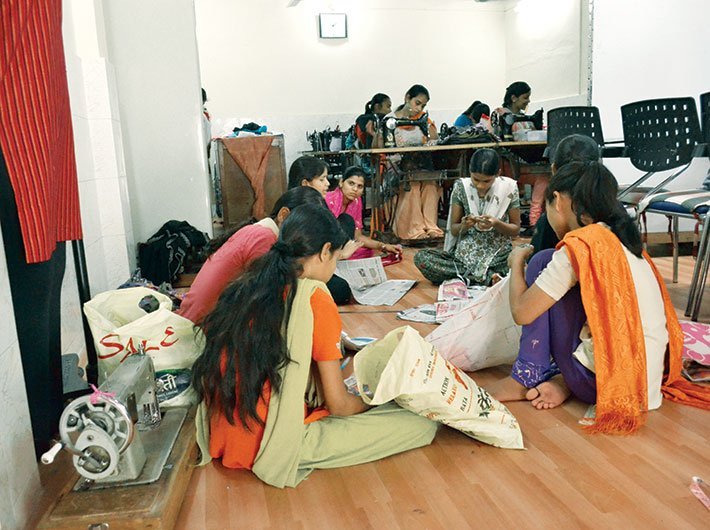
She runs a tailoring shop from a single room in her house. Every morning she stitches school uniforms, answers queries on WhatsApp, collects payments through UPI and orders fabric online. Officially, she still belongs to India's informal economy. Yet her enterprise is no longer disconnected from the formal world. Her story reflects a quiet transformation playing out across millions of kirana stores, beauty parlours, repair shops, tuition centres and home-based enterprises, businesses that rarely make headlines but collectively form the backbone of India's economy.
Perhaps the biggest surprise is not that India's informal economy continues to exist, but that it is modernising faster than our assumptions about it. The economy has changed. Our understanding of informality has not.
An Economy Reinventing Itself
For decades, the informal sector was portrayed as synonymous with low productivity, cash transactions and economic invisibility. The latest Quarterly Bulletin of Unincorporated Sector Enterprises (QBUSE) paints a remarkably different picture. During January-March 2026, India had an estimated 9.16 crore unincorporated establishments employing 15.17 crore workers, representing a 16.69 per cent rise in establishments and a 15.51 per cent expansion in employment compared with the same quarter the previous year. More striking still, nearly 81 per cent of establishments reported using the internet for business, an almost identical share accepted cashless payments, and 41.37 per cent were registered with some authority. Rural establishments grew faster than urban ones, while services recorded the strongest expansion across the board.
These are not merely statistics. They signal that India's informal economy is quietly reinventing itself.
Two Stories, One Problem
At first glance, this story appears to sit awkwardly alongside another. India continues to report one of the widest gender gaps in labour market participation anywhere in the world. But these are not two separate stories. They are different chapters of the same one.
The latest Periodic Labour Force Survey (PLFS) tells us that only 34.7 per cent of women aged 15 years and above participate in the labour force, compared with 77.3 per cent of men. In urban India, the gap is even sharper, just 25.4 per cent of women against 75 per cent of men. India's overall Worker Population Ratio stands at 52.8 per cent, but only 31.5 per cent of women are actually employed, compared with 74.1 per cent of men. Among those aged 15-29 years, female labour force participation falls further still, to 22.5 per cent, compared with 60.8 per cent for young men.
India often celebrates its demographic dividend. These numbers reveal a missing gender dividend. A young population alone guarantees nothing if millions of young women remain outside productive economic life.
Counted, But Undervalued
This is precisely where the transformation of the informal sector becomes significant. Women account for nearly 29 per cent of employment in the unincorporated sector, a figure that sounds encouraging until it is viewed in the broader context. The real issue is not simply that too few women work. It is that too much of their work remains concentrated in small, informal and chronically undervalued enterprises.
Traditionally, formalisation meant legal registration, tax compliance and entry into the corporate ecosystem. That definition no longer fits. Today, a woman entrepreneur may still operate from her home, remain legally unincorporated and employ only family members, yet receive payments through UPI, communicate via WhatsApp Business, advertise on Instagram, order raw materials online and borrow through fintech platforms. Economically, she is woven into formal systems. Legally, she remains outside them.
Call it graduated formalisation. Formalisation is no longer a binary switch between formal and informal. It has become a continuum. Digital technologies are allowing millions of micro-enterprises to access markets that were once entirely closed to them. For decades, economists viewed informality and formality as two separate worlds. India's digital revolution suggests a third possibility. Millions of enterprises now occupy the space in between. They remain legally informal but are economically connected.
The Limits of a Digital Fix
But digitalisation alone cannot deliver empowerment. Accepting a UPI payment does not automatically raise incomes, improve productivity or expand market access. Women entrepreneurs still face structural barriers that no app can dissolve: limited access to affordable credit, inadequate business training, mobility constraints, unequal care responsibilities and the absence of social security. Without addressing these constraints, digital tools risk becoming instruments of convenience rather than engines of transformation.
The growth of the unincorporated sector offers policymakers a different kind of opportunity. Rather than treating the informal economy purely as a problem requiring formalisation, it is worth recognising it as a platform for inclusive growth. Millions of women already operate within this ecosystem, as entrepreneurs, self-employed workers and contributors to family enterprises. Making these businesses more productive could generate far greater economic and social returns than focusing exclusively on creating new jobs elsewhere.
Better Work, Not Just More Work
India's demographic dividend cannot be realised simply by creating more work. It requires creating better work, work that is productive, remunerative and genuinely accessible to women. The challenge before policymakers is not merely to promote digital payments or internet connectivity, but to build an ecosystem that combines digital inclusion with affordable finance, skilling, childcare support, market linkages and social protection.
Digital payments can open doors. They cannot, by themselves, deliver the gender dividend. That will require recognising millions of women entrepreneurs not as peripheral participants in the economy, but as central architects of its next phase of growth. India's next growth story may well begin not in corporate boardrooms, but in the single room where a woman threads a needle, taps a screen and quietly builds something the data has not yet learned to see.
Dr. Vaishnavi Sharma is an economist and Visiting Faculty at Welingkar Institute of Management Development and Research (WeSchool), Mumbai.
Dr. Akash Kumar Baikar is Assistant Professor of Economics at Manav Rachna International Institute of Research and Studies, Faridabad, Haryana.