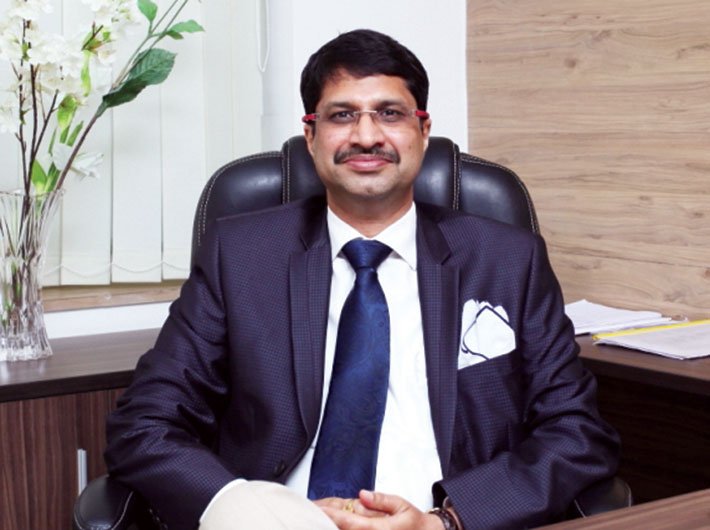
“No city habitable unless it attracts investment and creates jobs”

Pradeep Misra, chairman and MD, REPL, talks about urban planning challenges

pragya

Praggya Guptaa | May 10, 2018


#Smart City   #Smart Cities   #Urban Development   #Urban Planning  


Most of our big cities were built during the British era. They were meant to accommodate a certain size of population and last for a certain period. However, due to rapid urbanisation, these cities have become overcrowded with an unbearable pressure on civic amenities including water and sanitation. In an interaction with Governance Now, Misra talks about urban planning challenges while working on the Smart Cities project. 

What is the status of Smart City projects in Varanasi and Bhopal? Did you face any major challenge?

Challenges may arise due to absence of a master plan, environmental loss and area expansion issues. For example, the Madhya Pradesh government had to change the original location of the Bhopal Smart City project because of local resistance. Now in the new location, the Smart City project will be implemented in an area that is less than half of the original.

How do you ensure that these cities are not only smart but sustainable too?
Economic factors are crucial to the success of a smart city. So, we focus on laying out a clear plan of vibrant economic growth of the city, based on multiple growth drivers. We also identify the potential for job creation. The focus is not only on primary economic jobs but also on service jobs. The city also needs enough skilled manpower to run its services and maintain infrastructure.

A smart city must also have a reliable, affordable and sustainable transport system. Along with a robust public transport system, last-mile connectivity is necessary for optimal utilisation of mass transit systems. A new city’s mobility system must be integrated with the regional transport system.

There are cities in China that were once developed as satellite towns, but now have turned into ghost cities. Do you see such risks in India?
We should not indulge in such alarmism. But we must ensure that smart cities offer affordable houses and affordable transportation system besides economic sustainability. No city can be habitable unless it attracts investment and creates jobs. Smart cities will also have to offer a sense of security to its residents if they are to become attractive habitations.

The government has planned to transform Varanasi into a Kyoto-like city. Do you see this happening?
Varanasi is beset with problems like traffic congestion, electricity wires hanging on poles and potholed and semi-encroached roads, which are major put-offs for the local and foreign tourists. However, these will be things of the past once the city gets key facilities of a smart city project – integrated smart traffic management system, smart roads and smart buildings. The traffic system would help the city in overcoming chronic traffic congestion. The city’s major roads will have heritage lights, and its buildings [will have] murals depicting the essence of Varanasi and life history of its legendary figures.

[email protected]


(The interview appears in the May 15, 2018 issue)

Comments


Other News

India’s freedom struggle was shaped by wider Asian political thought

As we mark 80th anniversary of independence, ‘Asianism and the Fall of Empire’ (HarperCollins India) by historian Mithi Mukherjee offers a new perspective on Ind

What is colonialism? A relook at modern history

The Chromatic World Order: The Fiction That Rules Our World  By Sajid Mohamed Aakar Books  

Monsoon session of parliament adjourns sine die

The Monsoon Session, 2026 of Parliament which commenced on July 20 was adjourned sine die on Thursday. The session provided 19 sittings spread over a period of 25 days.   During the session 11 Bills were introduced in Lok Sabha and 2 Bills were introduced in Rajya Sabha. 12 B

Consumer Justice at a Crossroads

Over the past four decades, India`s consumer protection landscape has undergone a remarkable transformation. What began with the Consumer Protection Act, 1986 as a simple mechanism to empower ordinary citizens has evolved into a comprehensive framework capable of addressing challenges ranging from mislea

Doctors, experts call for ban on junk food ads, mandate warning labels

More than 30 doctors, medical scientists and public health professionals have urged the government to take decisive action against the aggressive advertising and marketing of junk food, calling for a watershed ban on advertisements for foods high in fat, sugar and salt (HFSS) and ultra-processed foods (UPF

Asiatic Lion population rises from 523 in 2015 to 891 in 2025

On World Lion Day 2026, environment, forest and climate change Minister  Bhupender Yadav celebrated India’s remarkable journey in lion conservation and reaffirmed the country’s unwavering commitment to protecting wildlife and biodiversity.   In a post on soc

Upcoming Conferences


-->

Archives

Current Issue

Opinion

Facebook Twitter Google Plus Linkedin Subscribe Newsletter

Twitter