
Subdued prospects for Indian banks: Moody’s

Asset quality will remain a negative driver of the credit profiles of most rated Indian banks

GN Bureau | January 9, 2017

#Reserve Bank of India   #Baking   #ICRA   #Moody's   #RBI  
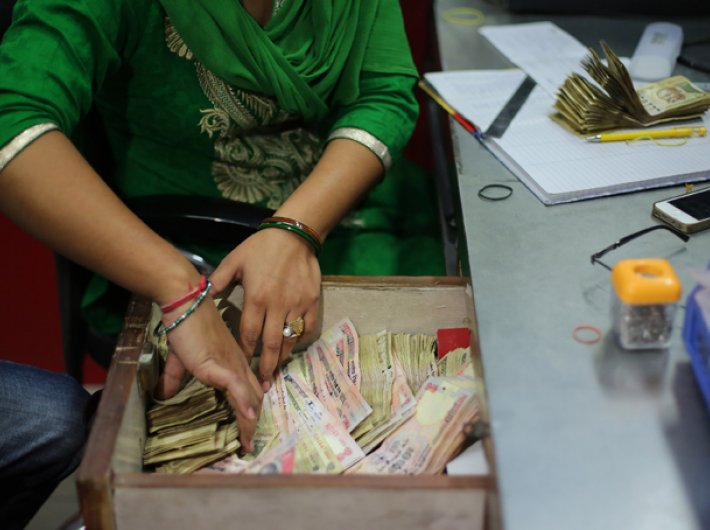
Representational image

Moody's Investors Service and its Indian affiliate, ICRA Limited, see subdued prospects for India's banks, with both identifying asset deterioration as a key challenge over the medium term.

"Asset quality will remain a negative driver of the credit profiles of most rated Indian banks and the stock of impaired loans. Non-performing loans (NPLs) and standard restructured loans will still rise during the horizon of our outlook," says Alka Anbarasu, Moody's vice president and senior analyst.

According to Moody's, such pressure on asset quality largely reflects the system's legacy problems, as relating to the strong credit growth seen in 2009-2012, when the investment plans of Indian corporates rose significantly.

Nevertheless, aside from these legacy issues, the underlying asset trend for Indian banks will be stable because of a generally supportive operating environment. While corporate balance sheets stay weak, a further deterioration in key credit metrics such as debt/equity and interest coverage ratios has been arrested, says a Moody’s statement issued in Singapore on Monday.

"We expect the pace of deterioration in asset quality over the next 12-18 months should be lower than what was seen over the last five years, and especially compared to FY2016, even as we consider those remaining problem loans which have not been recognized as such in several large accounts," says Anbarasu.

In this context, Moody's also considers the Reserve Bank of India's (RBI) asset quality review (AQR) in 2015 as a particularly important catalyst in pushing banks to recognize some large accounts as being impaired. As a result, Moody's now estimates that the "true" level of impaired loans for Indian banks to be around 1-1.5 percentage points higher than the latest reported numbers.

Given the magnitude of stressed assets in the system, Moody's expects the banks to increase their focus on resolving some of the large problem accounts.

"In this regard, we expect an increased pace of debt restructuring under the various schemes offered by the RBI, including the scheme for the sustainable structuring of stressed assets (S4A), strategic debt restructuring (SDR) and the 5:25 scheme," says Anbarasu.

"Nevertheless, weak reserving levels and continued pressure on profitability will limit the ability of the banks to proactively resolve problem assets under these schemes."

From ICRA's viewpoint, a muted level of credit off-take -- on the back of weak demand, increasing competition and greater disintermediation -- will continue to exert downward pressure on lending rates.

"Such a development will be partly offset by the fall in the cost of funds, but stubbornly high operating expense levels and elevated credit costs will continue to dent profitability matrices for the banks," says Karthik Srinivasan, ICRA senior vice president.

"And while bank profitability is not expected to be as weak as the levels seen in FY2016, the weakness in asset quality will continue to drag on profitability indicators, with return on equity remaining in the single digits for FY2017 and FY2018," says Srinivasan.

The Indian government's current plan of infusing Rs 450 billion during FY2017-FY2019 -- of which Rs 164.14 billion have been already infused in the current year -- is below ICRA's estimates of capital requirements of Rs 1,500-1,800 billion until FY2017-FY2019.

Comments


Other News

Import duty on major edible oils cut

The government has reduced the Basic Customs Duty (BCD) on major imported crude edible oils with a view to moderating domestic edible oil prices, providing relief to consumers and mitigating inflationary pressures arising from the sharp increase in international edible oil prices.  

From pyramid to platform: BRICS agenda for Global South

In his opening address at the 18th BRICS Summit in New Delhi on September 12, prime minister Narendra Modi did something India`s diplomacy has been building towards for three years: he moved the ‘Voice of the Global South’ from a slogan to a work plan. Addressing the leaders, he argued that t

How to realise the full transformative potential of PM-JAY

The Pradhan Mantri Jan Arogya Yojana (PM-JAY), a welfare scheme which covers approximately 45 crore beneficiaries across India, provides cashless health cover of Rs. 5 lakh per family per year. It is the largest health insurance scheme which helped crores of poor families by reducing out-of-pocket expend

The missing men in India`s family planning story

Every pregnancy requires two people. Yet India`s family planning programme continues to ask only one of them to bear almost all of its medical consequences. The newly released National Family Health Survey-6 (2023-24) confirms just how entrenched this asymmetry remains: 36.5% of currently married women a

`Development must be judged beyond GDP, with rights and justice at core`

Delivering the IXth Chief Justice M.C. Chagla Memorial Lecture on ‘Human Rights and Sustainable Development Goals’, in Mumbai Friday,  former Chief Justice of India Bhushan R. Gavai questioned whether conventional economic indicators such as gross domestic product (GDP), national income,

RTI exposes Rs 16,909 crore cost blowout on Mumbai-Goa Highway

Seventeen years after the centre first approved the widening of National Highway 66 between Mumbai and Goa into a four-lane highway, a fresh RTI reply has revealed a sharp escalation in the project`s sanctioned cost.   According to the RTI reply obtained by activist Jeetendra

Upcoming Conferences


-->

Archives

Current Issue

Opinion

Facebook Twitter Google Plus Linkedin Subscribe Newsletter

Twitter






