
Maharashtra adopts hybrid model for Census 2026 data collection

Online self-enumeration complemented by state-wide field visits from mid-May to mid-June

geetanjali

Geetanjali Minhas | May 2, 2026 | Mumbai

#Maharashtra   #Census  


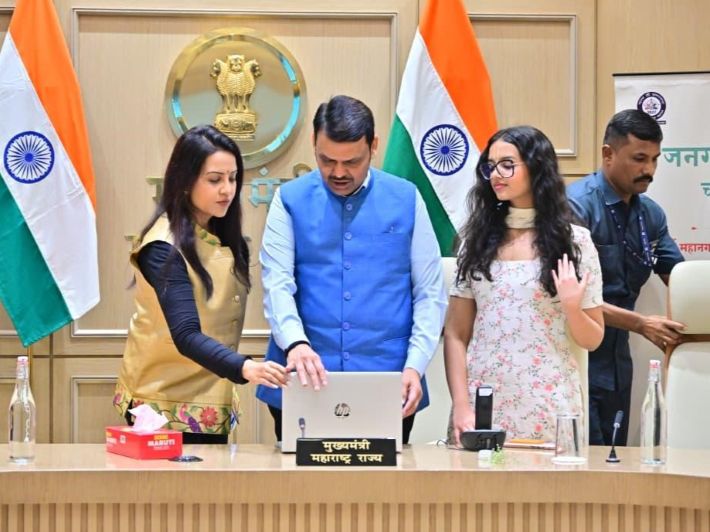
The government has initiated preparations for Census 2026 in Maharashtra, introducing a hybrid approach that combines optional self-enumeration with comprehensive door-to-door data collection to ensure complete coverage across the state.

 
According to senior officials, the Self-Enumeration (SE) portal will remain operational from May 1 to May 15. During this period, households may voluntarily submit their details online, with the process designed to be completed in approximately 15–20 minutes. Any adult member of the household can undertake the exercise. Upon successful submission, a Self-Enumeration Identification Number (SE ID) will be generated and shared via the registered mobile number or email. Officials clarified that no documents are required to be uploaded during this process.
 
Irrespective of participation in self-enumeration, enumerators will conduct physical visits to every household in Maharashtra between May 16 and June 14, as part of the house-listing phase.
 
Large-Scale Workforce Mobilisation and Training
To support the exercise, approximately 2.64 lakh field functionaries, including enumerators and supervisors, are being deployed across the state, with an additional 10 percent kept in reserve. A structured five-tier training mechanism has been implemented in accordance with guidelines issued by the Office of the Registrar General & Census Commissioner of India.
 
The training cascade began with National Trainers imparting instruction to 141 Master Trainers at YASHADA, Pune, between March 9 and March 17, 2026. These Master Trainers subsequently trained 3,850 Field Trainers at district and statutory town headquarters from April 6 to April 17. In the final phase, Field Trainers are currently training approximately 2.64 lakh enumerators and supervisors from April 23 to May 8. These personnel will undertake field operations using the designated HLO mobile application.
 
Robust Data Security Measures in Place
Officials have underscored the implementation of a comprehensive three-layer security framework to safeguard census data. The system encompasses security at the device level, encrypted data transmission, and secure server storage supported by multi-factor authentication protocols.
 
Access to the data will be strictly limited to authorized personnel through password and OTP-based authentication systems. All collected information will be stored in encrypted format to ensure confidentiality and integrity.
 
Citizens opting for self-enumeration have been advised to use only the official portal (https://se.census.gov.in) and to verify the authenticity of any communications related to the census process.
 
The Census 2026 exercise is expected to leverage digital tools and trained manpower to enhance efficiency, accuracy, and data security, marking a significant advancement in the conduct of large-scale demographic operations in Maharashtra.

Comments


Other News

The women India doesn`t count enough

She runs a tailoring shop from a single room in her house. Every morning she stitches school uniforms, answers queries on WhatsApp, collects payments through UPI and orders fabric online. Officially, she still belongs to India`s informal economy. Yet her enterprise is no longer disconnected from the formal

“Cancer is just a mind game”

Dr. Ananda Shankar Jayant, a Padma Shri awardee, inspired audiences for decades through her mastery of Bharatanatyam and Kuchipudi. But it was her journey through cancer that taught some of life`s most powerful lessons in courage and resilience.

Why Swami Vivekananda is the pathfinder for our times

Swami Vivekananda for Our Times  Edited and compiled by Rajiv Sikri, with Introduction by S. Gurumurthy Rupa Publications, 552 pages, Rs 695  

Five ways to realise the potential of India’s handicraft and handloom sector

India`s economic ambitions are increasingly defined by the industries of the future. Semiconductors, electronics, artificial intelligence and advanced manufacturing dominate policy conversations. Yet one of India`s largest employment-intensive sectors continues to occupy a surprisingly marginal place in ec

Beyond toilets: Why open defecation persists in rural India

Despite the awareness campaigns on sanitation across India, open defecation (OD) is practised openly and widely in both rural and urban areas. Research shows that rural respondents are well aware of the negative impacts of OD, yet this awareness does not lead to toilet construction or use. In rural North I

What unpaid nation builders want from policymakers

The Supreme Court recently described homemakers as “nation builders” and fixed a notional monthly income of Rs 30,000 for them in motor accident compensation cases. The judgment was not about wages. It was about compensation. Yet it inadvertently raised a larger economic question: If a homemake


Archives

Current Issue

Opinion

Facebook Twitter Google Plus Linkedin Subscribe Newsletter

Twitter






