
Recession is likely: Prof Arun Kumar on demonetisation

“The slowdown in demand will last for 1-2 years. Money supply will not be restored for another 7-8 months.”

jasleen

Jasleen Kaur | November 22, 2016 | New Delhi

#recession   #Demonetisation   #scrapped currency   #black money  


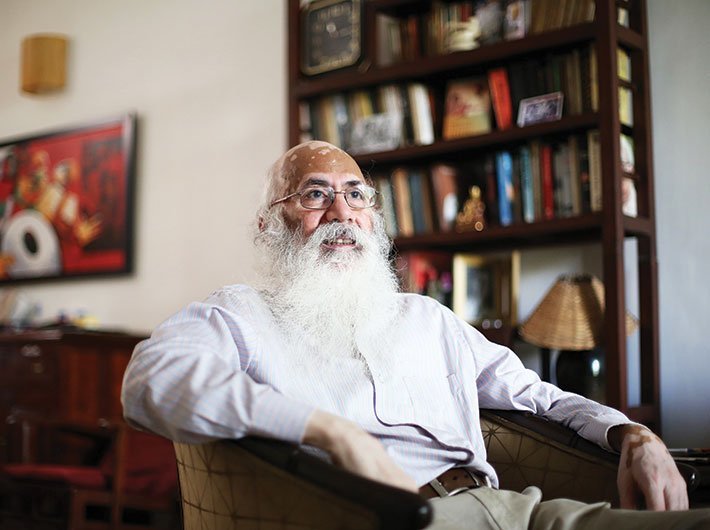
 Demonetisation is not the way to tackle black economy and it will in fact affect the white economy, believes Arun Kumar, a former professor of economics at the Jawaharlal Nehru University (JNU) who has authored The Black Economy in India (Penguin, 1999). 

Kumar says that the common people are adversely affected. And as demand falls, production falls and this would ultimately result in fall of employment. “This will affect people at large. And the slowdown in demand will last for 1-2 years. Money supply will not be restored for another 7-8 months. Because of this difficulty in circulation, the demand will slow down for the coming 8-10 months. And therefore recession is very likely.” 
 
He also adds that the move is affecting agriculture, industry and services. Black money would be just 1-2 percent of the total money and and most of this money would also be recycled. “So if you are able to demobilise this income, this would hardly create any difference,” he adds. 
 
Kumar says, “Black income is generated through a variety of means – in spurious drugs, in under or over invoicing in trade and business. There are as many ways of generating black income as there are number of sectors in the economy. So even if you are able to demobilise some amount of black money this year, it would be again generated next year.”
 
Instead of going for demonetisation, Kumar adds, that the government could have tracked the hawala houses, ended banking secrecy and formed the Lokpal to bring in accountability. He also says demonetisation of currency will not tackle the black economy problem and will just hurt the white economy and small traders and workers. 
 
“If this could have solved the black economy problem, then it does not matter even if we have to suffer some pain. If it is not solving the problem and causing a lot of problem to people who are innocent or workers who are not generating black income, then why do it?” 
 

Comments


Other News

India faces critical shortage of skin donors amid rising burn cases

India reports nearly 70 lakh burn injury cases every year, resulting in approximately 1.4 lakh deaths annually. Experts estimate that up to 50% of these lives could be saved with adequate access to skin donations.   A significant concern is that around 70% of burn victims fall wi

Not just politics, let`s discuss policies too

Why public policy matters Most days, India`s loudest debates stop at the ballot box. We can name every major leader and recall every campaign slogan. Still, far fewer of us can explain why a widow`s pension is delayed or how a government school`s budget is actually approved. That

When algorithms decide and children die

The images have not left me, of dead and wounded children being carried in the arms of the medics and relatives to the ambulances and hospitals. On February 28, at the start of Operation Epic Fury, cruise missiles struck the Shajareh Tayyebeh school – officially named a girls’ school, in Minab,

The economics of representation: Why women in power matter

India’s democracy has grown in scale, but not quite in balance. Women today are active participants in elections, influencing outcomes in ways that were not as visible earlier. Yet their presence in legislative institutions continues to lag behind. The Nari Shakti Vandan Adhiniyam was meant to addres

India will be powerful, not aggressive: Bhaiyyaji

India is poised to emerge as a global power but will remain rooted in its civilisational ethos of non-aggression and harmony, former RSS General Secretary Suresh `Bhaiyyaji` Joshi has said.   He was speaking at the launch of “Rashtrabhav,” a book by Ravindra Sathe

AI: Code, Control, Conquer

India today stands at a critical juncture in the area of artificial intelligence. While the country is among the fastest adopters of AI in the world, it remains heavily reliant on technologies developed elsewhere. This paradox, experts warn, cannot persist if India seeks technological sovereignty.


Archives

Current Issue

Opinion

Facebook Twitter Google Plus Linkedin Subscribe Newsletter

Twitter






