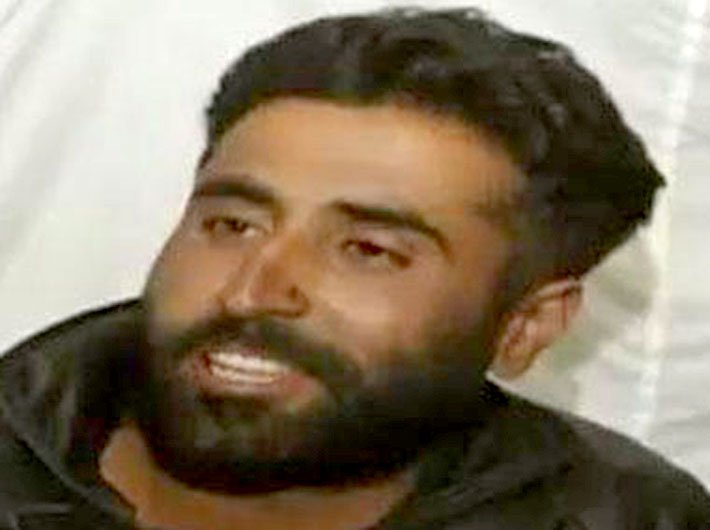
Last week I was watching Pradhanmantri – a political documentary series, hosted by actor-director Shekhar Kapur, when the image of a young soldier, with a full grown beard and an infectious smile, popped up on the screen. He instantly reminded me of what Ernest Hemingway once upon a time wrote: "Courage is grace under pressure". His demeanour in many ways, was inexplicable, at least for ordinary mortals like me.
The episode was documenting the Kargil war. Captain Vikram Batra was one among the thousands of young soldiers, who were fighting the enemies on a very difficult terrain. Still his speech was devoid of any jingoist angst and war-induced apprehension. He sounded unbelievably composed.
Kargil was the first war of the 'television' era. It gave us some 'celebrity journalists', who went to the war front to cover the conflict. Many of them went on to become top editors of big news channels. Many of them remain the icons of our generation. But sadly the heroes they wrote about, who became the symbols of our collective patriotism, seem to be fading out from the memory.
Captain Vikram Batra was only 25 years old when he died in the Kargil war while rescuing an injured officer in an enemy counterattack. Before his death, he had led one of the toughest operations in mountain warfare in Indian history. For his courage, he was called “Sher Shah” in the intercepted messages of the Pakistan army. Under his leadership, on June 19, 1999, the Indian army won back point 5140 from the intruders.
I often wonder what gives a 25 year old so much of unfettered pluck that he can utter such words of absolute courage, while going on a mission where life is more evasive than death. "I'll either come back after raising the Indian flag in victory or return wrapped in it, but I will come for sure." These were the last words by Vikram Batra.
He was awarded the Param Vir Chakra, India's highest and prestigious award for valour. The citation of the PVC read, "During ‘Operation Vijay’, on 20 June 1999, Captain Vikram Batra, Commander Delta Company was tasked to attack Point 5140. Captain Batra with his company skirted around the feature from the East and maintaining surprise reached within assaulting distance of the enemy. Captain Batra reorganized his column and motivated his men to physically assault the enemy positions. Leading from the front, he in a daredevil assault, pounced on the enemy and killed four of them in a hand-to hand fight. On 7 July 1999, in another operation in the area Pt 4875, his company was tasked to clear a narrow feature with sharp cuttings on either side and heavily fortified enemy defences that covered the only approach to it. For speedy operation, Captain Batra assaulted the enemy position along a narrow ridge and engaged the enemy in a fierce hand-to-hand fight and killed five enemy soldiers at point blank range. Despite sustaining grave injuries, he crawled towards the enemy and hurled grenades clearing the position with utter disregard to his personal safety, leading from the front, he rallied his men and pressed on the attack and achieved a near impossible military task in the face of heavy enemy fire. The officer, however, succumbed to his injuries. Inspired by his daredevil act, his troops fell upon the enemy with vengeance, annihilated them and captured Point 4875. Captain Vikram Batra, thus, displayed the most conspicuous personal bravery and leadership of the highest order in the face of the enemy, and made the supreme sacrifice in the highest traditions of the Indian Army."
On his death anniversary two months ago and on his birthday, I tried to find out how many people from my generation remember or knew about Batra. Sadly I could find very few.
Batra would have been a general in the army, if he would have been alive. Unfortunately he could not. While the leadership that helms a war continues to be part of the history, the sacrifices made by the foot soldiers starts fading from the collective conscience. In an era of social-media, a 140-characters tweet or small post can do enough to keep them alive in our memories. That is the least we can do for them, or perhaps, the most. They gave away their lives for us. What can redeem that sacrifice? Perhaps, nothing.