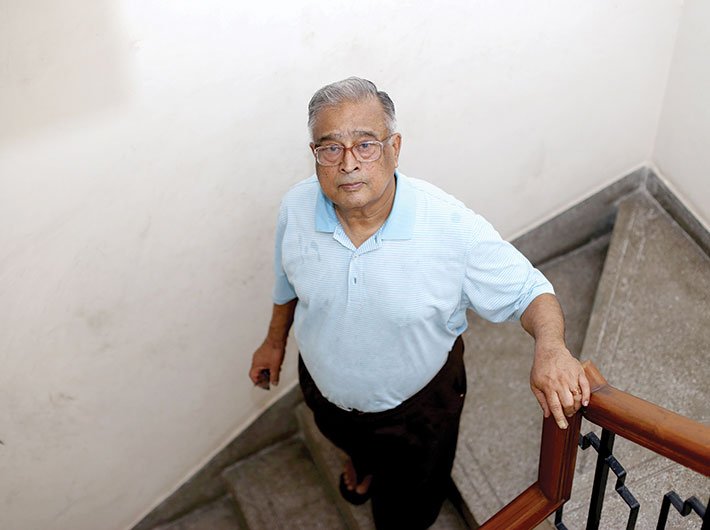
TSR, always humble and hopeful, fought tirelessly for governance reforms in service and in retirement
In a country where a sense of entitlement comes naturally for a bureaucrat, if a civil servant – especially a veteran – displays even little bit of humility it is sure enough to garner respect. If it is more than a little bit, it surely earns an admirer for life.
TSR Subramanian, former cabinet secretary who passed away Monday morning, was someone who will always be remembered as much for his professional integrity as for his humility and personal charm – the qualities that were palpable even in a brief interaction.
‘TSR’, in service as well as in retirement, fought vehemently against corruption in civils service and became a forceful advocate of governance reforms.
The public interest litigation (PIL), known as TSR Subramanian & Ors v Union of India, that he had and his like-minded colleagues had filed led to the 2013 supreme court decision, lauded for initiating genuine civil service reforms.
I first met him in 2015, as a reporter, for his inputs on a special issue on ‘governance reforms’ that we at Governance Now were working on. As I entered his house in Sector 15A of Noida, the first thing that struck me was an unassuming simplicity which came naturally for him and not from a wish to be seen as modest.
He talked with great energy, in spite of his persistent coughing. The interaction was full of anecdotes from the times of his tenure as chief secretary of Uttar Pradesh. The one I will always remember is about the two IAS officers of UP cadre, who in spite of being most corrupt (according to an informal in-house poll), rose to the highest ranks and became chief secretaries of the state.
Lamenting the rot in the system, the anguish in his voice was palpable. He told me, “In 1993 we identified them as corrupt. But they went on to become chief secretaries, one of them, Neera Yadav, was convicted 20 years later. In 1993 we understood that she was corrupt. But nothing happened to her for more than a decade. It is like they were encouraged to share the loot.”
He encouraged me to remain in touch, and I did. In my frequent interaction with him since then, one characteristic of his that struck me to the core was his unflinching desire to contribute constructively in any matter of national importance.
In June 2016, there was news of his differences with the then human resource development (HRD) minister Smriti Irani, over making public the ‘new education policy’ report prepared by a committee headed by him.
When I met him and asked about the alleged differences he told me that the quality of education and equal access to it still remain big challenges and since the report was no secret document it should be made public so that people can understand the challenges to our education system. Later, when I accessed the report from a source, I realised that his concern was right. The 230-page report prepared laboriously under his captainship was a document that every policymaker, student, teacher and citizen should read.
The report by all means was much more than a draft containing recommendations for the new education paradigm in the country, as it addressed the much wider pedagogical concerns.
Sadly, the government never officially made the report public nor did accept its recommendations.
Subramanian was a ‘statesman-bureaucrat’ and believed in the great potential that people of India possess. In his book, ‘India at the Turning Point’, he starts with an anecdote. He writes about a 13-year-old girl studying at Vidya Gyan school not far from Delhi. The school admits underprivileged meritorious students and gives them high-quality education. He writes that when a 13-year-old girl named Sudiksha first came to Vidya Gyan “she hardly knew English, was shy and diffident”.
“After just three years of exposure to trained teachers, resources and nutritious food, she can outperform the most privileged children from Delhi’s elite private school. It is a simple lesson: Indians have the ability to compete with the best, if only we given them opportunity.”
This hope and concern for the future of the country was something that made Subramanian, in the truest sense, a people’s bureaucrat.
He was someone who believed that young people should choose civil service and bring required reforms from within instead of rejecting it outright.
So, when in July last year, I wrote to him with a request for an article for a web portal that a few of my friends were about to launch; dedicated to help civil service aspirants, he readily agreed. And in five days he mailed me the brief but memorable essay. It has lasting advice not only for aspirants but also for serving administrators.