
Electoral bonds: Not quite anonymous

The purchaser would be allowed to buy electoral bonds only on due fulfillment of all the KYC norms and by making payment from a bank account

GN Bureau | January 3, 2018

#Arun Jaitley   #party fund   #election   #Electoral bonds  


Electoral bonds, which is yet another attempt to cleanse the system of political funding, is a classic case of something is better than nothing. In a way it is anonymous as it won’t carry the payee’s name, but the authorities concerned would know when you purchase those bonds.

 
What exactly is an electoral bond?

Electoral bond would be a bearer instrument in the nature of a Promissory Note and an interest free banking instrument. A citizen of India or a body incorporated in India will be eligible to purchase the bond.
 
Why electoral bonds?
 
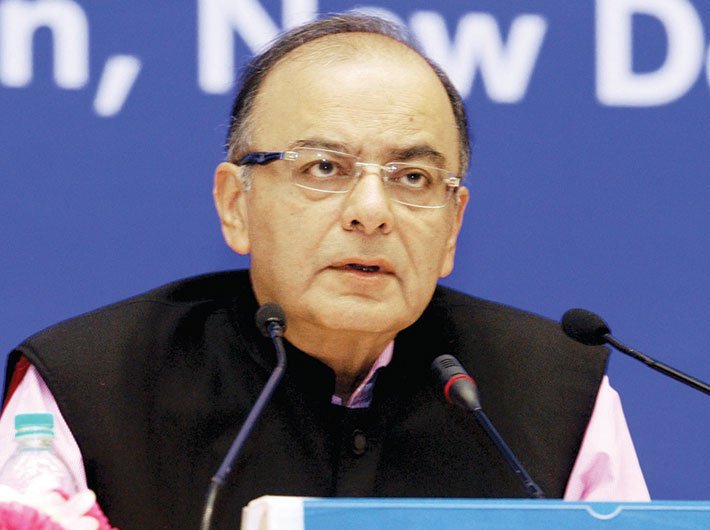
Finance minister Arun Jaitley in his budget speech 2017 said that there is a need to cleanse the system of political funding in India.
 
He spoke of amendment to the Reserve Bank of India Act to enable the issuance of electoral bonds in accordance with a scheme that the Government of India would frame in this regard.
 
Is it anonymous?
 
There’s a catch here. The purchaser would be allowed to buy electoral bond(s) only on due fulfilment of all the extant KYC norms and by making payment from a bank account. It will not carry the name of payee.
 
This essentially means that while the general public as well as the opposition parties may not know who bought the bonds, the government and the authorities concerned will know since KYC will have to be filled up. So, in a way it is anonymous.

But, why this secrecy?
 
Past experience had shown that once the names were disclosed, there was a tendency to shift to cash donations.

What about the shelf life of the bonds?
 
Electoral bonds would have a life of only 15 days during which it can be used for making donation only to the political parties registered under section 29A of the Representation of the Peoples Act, 1951 (43 of 1951) and which secured not less than one percent of the votes polled in the last general election to the House of the People or a Legislative Assembly.
 
The 15 day life has been done so that the electoral bonds do not turn into a parallel currency.

And where do you buy it from?
 
Electoral bond (s) would be issued/purchased for any value, in multiples of Rs.1,000, Rs.10,000, Rs.1,00,000, Rs.10,00,000 and Rs.1,00,00,000 from the specified branches of the State Bank of India (SBI).
 
When can you purchase these bonds?
 
The electoral bonds shall be available for purchase for a period of 10 days each in the months of January, April, July and October, as may be specified by the central government. An additional period of 30 days shall be specified by the central government in the year of the general election to the House of People. 


Comments


Other News

BMC: 207 officials in ACB net, 112 still on duty, 68 retire before justice catches up

There are significant delays in the handling of corruption cases involving officials of the Brihanmumbai Municipal Corporation (BMC), a Right to Information (RTI) response obtained by rights activist Jeetendra Ghadge has revealed. As of 30 April 2026, 207 BMC officials face Anti-Corruption Bureau (A

The transformation trap: Why efficiency is not innovation

Every company is transforming, or so it claims.   There was a time when the word ‘transformation’ carried weight. It signified bold strategic shifts, reinvention of business models, and breakthrough technologies that fundamentally changed how organizations created

The Sardar biography that throws light on our times

Patel: A Life By Rajmohan Gandhi Aleph Books, 568 pages, Rs 1,199   There are many biographi

Climate change, El Niño rewrite Indian monsoon

The month of July exceeded its rainfall target despite forecasts of a below-normal month under a strengthening El Niño. The reason could be that climate change is amplifying monsoon complexity: West Pacific warming, Western Disturbances and evolving ocean conditions increasingly interact with El Ni&

Mumbai has just 1.28 sq.m. of open space per person: Study

Mumbai`s public space crisis is as much about mismanagement as it is about scarcity, and offers a governance roadmap that can be implemented without new legislation, according to a new report by the Urban Design Research Institute (UDRI) and the NGO Alliance for Governance and Renewal (NAGAR).  

Lok Sabha passes amendment bill to improve public examination system

The Lok Sabha on Wednesday passed the Public Examinations (Prevention of Unfair Means) Amendment Bill, 2026 by a voice vote after an extensive discussion. Replying to the debate, minister of state (independent charge) for science & technology; earth sciences and MoS in the PMO, Dr. Jite

Upcoming Conferences


-->

Archives

Current Issue

Opinion

Facebook Twitter Google Plus Linkedin Subscribe Newsletter

Twitter






