
In a new work, the noted legal scholar shares a sweeping personal account of his engagements with over six decades of our modern history
GN Bureau | May 3, 2024
Of Law and Life
Upendra Baxi in Conversation with Arvind Narrain, Lawrence Liang, Sitharamam Kakarala, and Sruti Chaganti
Orient BlackSwan, Rs 2,310
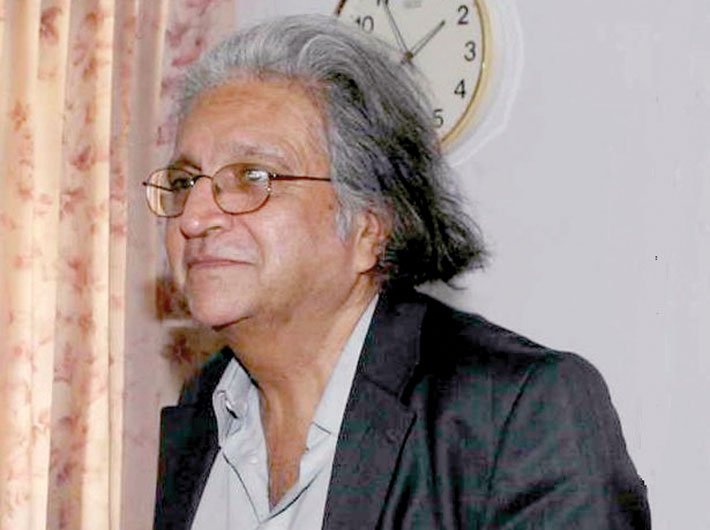
 Upendra Baxi is one of India’s leading legal scholars. His areas of expertise and his writings span the diverse areas of comparative constitutionalism, human rights and its futures, crises of the Indian legal system, and the sociology of Indian law and anthropogenic harm and justice.
In 2008, Professor Baxi spent time in Bangalore with the Centre for the Study of Culture and Society (CSCS) and the Alternative Law Forum (ALF) and spoke at length to a group of his former students, who are also among his closest interlocutors, on key issues affecting India and the world. This meeting was tape-recorded, transcribed and went on to become this monograph.
‘Of Law and Life’ produces a sweeping personal account of his engagements with over six decades of our modern history. The story moves from Baxi’s childhood and student years in Bombay, to his education and political activism in the anti-War movements in Berkeley to his years at Sydney, in Delhi at the Indian Law Institute, and later at the University of South Gujarat and Delhi as Vice-Chancellor.
He talks at length about several landmark interventions, including the open letter to judges on the Mathura rape case, which set a new precedent in both legal and social activism, the Bhopal gas tragedy, and his pioneering work on social action litigation in India. And much else.
Conversational in tone, deeply insightful, and occasionally light-hearted, this is the first book of its kind, covering Upendra Baxi’s remarkable career, highlighting facets of him as teacher, scholar, and activist.
About the Authors:
• Upendra Baxi is a legal scholar and Emeritus Professor at Warwick University, UK, and Delhi University. He was the Vice-Chancellor of Delhi University as well as the University of South Gujarat, Surat. He was awarded the Padma Shri in 2011 by the Government of India.
• Arvind Narrain is a Visiting Faculty at the School of Policy and Governance, Azim Premji University and the National Law School of India University. Lawrence Liang is Professor of Law, Ambedkar University. Sitharamam Kakarala is Director of School of Policy and Governance, Azim Premji University. Sruti Chaganti is a practicing lawyer in Bangalore
Here is an excerpt from the book in which Baxi talks about his reading habits during school years.
Impassioned Reading Habits
UB (contd): I must have read almost every book there was; and there were plenty in the then-named Laing Library at Rajkot. A kind librarian allowed even adolescents to read adult books; he thus contributed to the production of my bibliophile self. I started reading at the age of six or seven. I read a lot in English. I read Scott, Hardy, Wilde, the Brontës, a bit of Jane Austen (though I have never been able to relate to her fully). Not everything could I understand, yet I did very well in English literature studies because of this. Thanks to my father, who read constantly, I read almost all P. G. Wodehouse books—I still read these—and authors now forgotten, especially Hall Caine’s The Eternal City and Marie Corelli’s The Soul of Lilith. My introduction to Shakespeare was through Charles and Mary Lamb’s ‘Tales from Shakespeare’ (a great little book, indeed) and through his Sonnets, which for a strange reason I was able to read only furtively.
I began to read serious poetry only in my college days—mostly the romantic poets. I was introduced to Milton via his masque Comus (on which I wrote a long essay), and my quartet of wordsmiths was formed by Wordsworth, Tennyson, Arnold, and Pope—a curious juxtaposition, you would say, and so in some ways it is. In part, didactic poetry made a considerable impact on me, though it was Coleridge who remained, to use a quaint phrase from Rajkot college days, my ‘favouritest’. His phrase, ‘the willing suspension of belief ’, which has stayed with me all this long life, is important to understand not merely for poetry or literature, but every form of the enchantment with this life. Gayatri Chakraborty Spivak now talks in an interview about the ‘structures of engagement’ and ‘structures of postponement’. I do not know whether she had Coleridge in view, but the schoolboy in me still thinks of the poet, even as a postmodern self reads Gayatri. I often feel that a motley collage of selves shaped by habits of slow and careful reading is better than the development of a strong unified self. Some self-serving recall this, don’t you all think!
I read a bit of his essays and those of Shelley as well (and later, T. S. Eliot), and always wondered why so many fine distinctions were made between ‘poetry’ and ‘prose’. Shelly’s essay, ‘In Defence of Poetry’, would assume several meanings in my later life; he concluded that poets are the ‘unacknowledged legislators of [hu]mankind’. Later, I was able to grasp the category of ‘unacknowledged legislators’ more fully—people who have not just a will to power, but also who inspire us all to develop a will to justice.
It was thanks again to my father that I discovered the works of Shri Aurobindo, and especially the great epic ‘Savitri’, perhaps the only one of the last century CE? Do we live in the era of the end of the epic, as both Mikhail Bakhtin and Georg Lukacs differently forecast? Lukacs clearly stated (I rely on J. M. Bernstein’s analysis in ‘The Philosophy of the Novel: Lukacs, Marxism, and the Dialectics of Form’ [1984]), which concludes that the novel of today is the epic of yesterday. And what other forms of social loss are incurred, besides the death of a literary genre? But the loss is partly occasioned by our not knowing even the bare facts of cultural production. I had the great privilege of reading Umashankar Joshi’s great ‘Viswa Shanti’, which is considered a ‘long poem’, but can still be considered an epic. Unfortunately never translated in any international language, this poem/epic dwelling on the message of peace has not won international notice. There may be other examples from the Global South. Epic as a form may have existed in Europe; but Europe, as we now understand, at last, is not the entire world. A comparative concern is framed by a change of literary forms and fashions of law, which says: Is there any correspondence between the canons or fashions of thought that concern literary change and legal change?
There were no comics, save some in Gujarati, and I avidly read these, though rather stealthily. We had no sense then of people living with disability and I used to enjoy reading ‘Chakram’, which told us about the exploits of a ‘lunatic’ or an ‘idiot’! Now, we speak about people not of lunacy or unsound mind, but in terms of stigma-free medical illness.
[The excerpt reproduced with the permission of the publishers]
Mumbai’s real estate market keeps growing, yet homeownership remains out of reach for much of its population. Three experts – urban researcher Hussain Indorewala, urban planner Vidyadhar Phatak and developer Kamlesh Thakur of NAREDCO Maharashtra, agree that simply constructing more apartments
US secretary of state Marco Rubio has said he was unfamiliar with the Wall Street Journal report suggesting Elon Musk had decided to throttle Starlink services in Ukraine, but rejected claims that Washington had ordered the restrictions to pressure Kyiv. “There was no
Breast cancer has become a public-health challenge in India. The greatest opportunity is to find cancers earlier. Artificial intelligence (AI) is opening a new era in breast cancer detection. AI systems can analyse mammograms and other breast-imaging studies, identify subtle abnormalities and assist radi
Indian agriculture is experiencing significant climate volatility, while the world economy seems to be in a highly volatile situation. Economic indices from various countries show that they need to recalibrate their strategies to withstand economic headwinds. In such a challenging situation, a country li
India’s southwest monsoon ended with a 13% rainfall deficit in 2026, its weakest performance in a decade, raising concerns over agricultural production, water security and the upcoming rabi season. With El Niño expected to persist into early 2027, experts warn that declining soil moisture, dep
For over a decade, India’s e-commerce story has rested on a simple premise: platforms connect buyers and sellers, while data fuels efficiency, personalisation, and scale. However, as the market matured, its structure has revealed a growing imbalance. E-commerce platforms, especially marketplace ent










