
Ahmedabad-Mumbai bullet train will have some unreserved seats too

Lowest fare between Bandra Kurla Complex and Thane stations would be around Rs 250

GN Bureau | April 14, 2018

#Narendra Modi   #Japan   #Piyush Goyal   #Ahmedabad-Mumbai high-speed rail   #Bullet Trains   #Shinzo Abe   #Achal Khare   #National High Speed Rail Corporation  
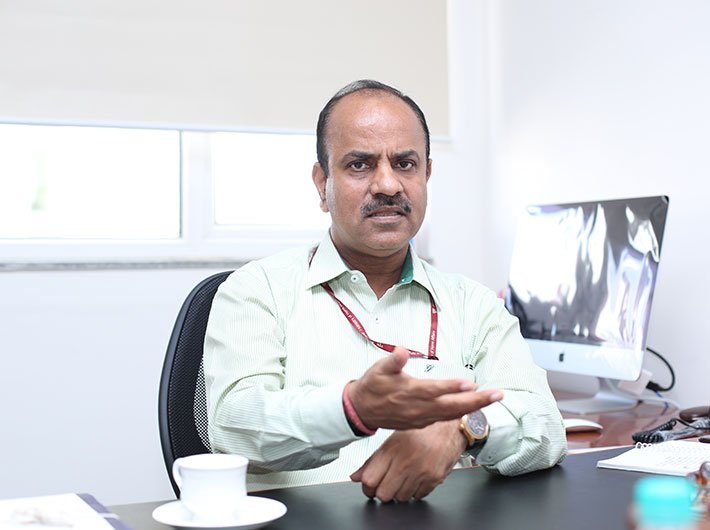
Achal Khare, MD, National High Speed Rail Corporation. (Photo: Arun Kumar)

The Ahmedabad-Mumbai bullet train will have a few general category seats in order to accommodate people who do not have reservation, says Achal Khare, managing director of the National High Speed Rail Corporation.

However, Khare clarified that the bullet train will not be as subsidised as the Indian Railways because of its operational costs and other factors.

The lowest fare between Bandra Kurla Complex (BKC) and Thane in Mumbai will be around Rs 250 and the comfort which the bullet train would offer would be far superior to the local train and cab services like Ola and Uber.

“Currently one has to shell out somewhere around Rs 600-800 to commute between BKC and Thane in the AC cabs but people who do not reserved tickets can undertake journey in the bullet train in the unreserved category,” Khare said.
The Mumbai-Ahmedabad bullet train would have 12 stations— i.e. Mumbai, Thane, Virar, Boisar, Vapi, Bilimora, Surat, Bharuch, Vadodara, Anand/Nadia, Ahmedabad and Sabarmati. Two depots have been proposed on either ends of the corridor one near Thane and one near Sabarmati Rail Depot.

The standard fare between Ahmedabad and Mumbai would be around 1.5 to 2 times of the existing fare of AC first class.
When asked whether the corporation would tender an apology to passengers if a train gets delayed or leaves early due to some reasons, Khare replied that the corporation is trying its best to emulate all the best practices of passenger services and culture of Japanese bullet train operator.

According to reports, a Japanese railway operator had to tender an apology for the after a high speed train departed 20 seconds early in November 2017. The Tsukuba Express train linking Tokyo and the capital’s northern suburbs left Minami Nagareyama station at 9:44:20 instead of 9:44:40.

“360 officials from operations department will go to Japan and will take training to mould our people into a different culture so that we can adopt and achieve the results which Shinkansen is achieving in Japan. The training will vary from 3 months to 9 months. About 80 out of these 360 officials will be given ‘on job’ training in Japan and we will utilise them along with Japanese experts to impart training on other Indian officials at Vadodara based institute which would come up in a few years,” Khare said.

He further said NHSRCL has requested Japanese counterparts to share their customer service manual to adopt for the proposed Indian bullet train.

He said the NHSRCL would be using E-5 series of Shinkansen bullet train which can run at a speed of 320 kmph and the average speed would be around 250 kmph.

The cost of land acquisition is around 10,000 crore which would be borne by Government of India. The corporations need around 1400 hectares of land in Maharashtra and Gujarat to execute the project.

The construction of the bullet train project would kick off by January 2019, Khare said, adding that it may begin soon depending on the acquisition of land.

There will be no free entry at the high speed railway stations and there will be optical reader enabled tickets which will have to be scanned to get an entry.

Khare also shared the design of Sabarmati station in Gujarat of the Ahmedabad-Mumbai bullet train, having the theme of Mahatma Gandhi’s Dandi March of 1930.
 

Comments


Other News

Machines communicate, humans connect

There is a moment every event professional knows—the kind that arrives without warning, usually an hour before the curtain rises. Months of meticulous planning are in place. And then comes the call: “We’ll also need a projector. For the slides.”   No email

Why India is entering a ‘stagflation lite’ phase

India’s macroeconomic narrative is quietly shifting—from a rare “Goldilocks” equilibrium of stable growth and contained inflation to a more fragile phase where external shocks are beginning to dominate domestic policy outcomes. The numbers still look reassuring at first glance: GDP

Labour law in India: A decade of transition

The story of labour law in India is not just about laws and codes, but also about how the nation has continued to negotiate the position of the workforce within its economic framework. The implementation of the Labour Codes across the country in November 2025 marks a definitive endpoint in the process. Yet

Time for India to build genuine resilience in energy security

There is a strip of water barely 33 kilometres wide between Iran and Oman that connects the Persian Gulf to the rest of the world`s oceans. For most of India`s history, it was a distant geographic fact. Since late February, it has been a kitchen problem.   The Strait of Hormuz. T

Will an oil price shock crash the global economy?

As tensions rise between Iran and Israel, the potential for ongoing disruption in the Strait of Hormuz has driven global energy markets very unstable. With crude prices climbing towards $140 per barrel, the world is facing its most significant oil shock since 1973.   However,

Monetary policy at a crossroads: Growth support vs currency stability

As the Reserve Bank of India (RBI)’s Monetary Policy Committee (MPC) meets from April 6–8 — its first review in FY26 — it confronts a complex and unusually conflicting macroeconomic backdrop. Inflation has eased more sharply than expected, opening the door for further rate cuts. Yet


Archives

Current Issue

Opinion

Facebook Twitter Google Plus Linkedin Subscribe Newsletter

Twitter







