
Bansal kin bribery: Why railway board post is so sought after

Enjoying complete autonomy, each railway board member has discretionary control over a minimum corpus of Rs 10,000 crore — a privilege enjoyed neither by any political executive nor any other babu in India
| May 4, 2013


A famous noting by a cabinet secretary aptly summed up the status of railways sometime back: “Indian Railways does not seem to be a part of the government.”

The cabinet secretary, though, must be ruing the inaccuracy of his remark in the present context, as the railways seems to be an integral part of the government given the breakneck speed with which cases of corruption and scandals are breaking out these days.

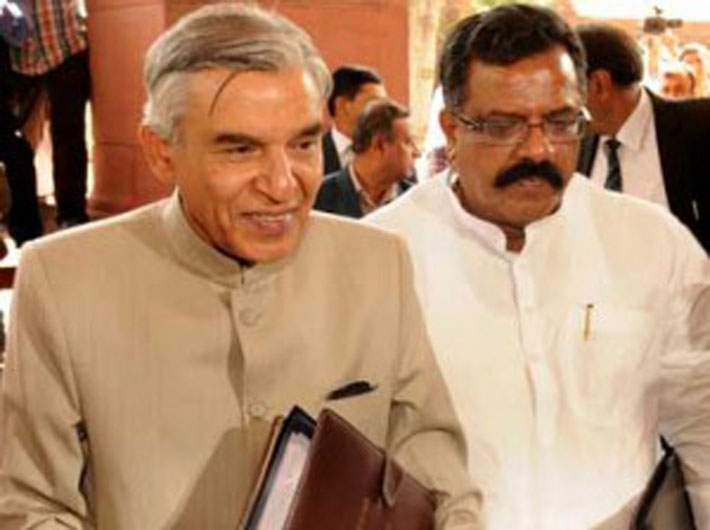
The manner in which the CBI nabbed union railway minister Pawan Bansal’s nephew Vijay Singla, caught accepting a bribe of Rs 90 lakh purportedly from a member of the railway board, Mahesh Kumar, is just a symptom of a deep-seated malaise that has been eroding Indian Railways. If stories are to be believed, the money that exchanged hands was the first tranche of the bribe, which was negotiated to be around Rs 4 crore.

Kumar is a senior railway officer and a frontrunner for the coveted post of the railway board chairman. His elevation to the member of the board conformed to the rulebook that set guidelines for promotion in the railways. Yet Kumar apparently chose to take no risk and is learnt to have approached Singla to ensure his place in the prestigious railway board.

Singla is believed to have played the role of a middleman to facilitate Kumar’s elevation.

By all means, it would be difficult to prove Bansal’s direct involvement. But there is little doubt that such practices exist in the railway board under his watch. Members of the board are allegedly buying their posts to run an organisation which practically runs a nation on the wheels.

So why exactly is a member’s post in the railway board so sought after?

The cabinet secretary’s cryptic note on the railway file partly provides an answer. The all-powerful railway board is accountable to none but the minister. And in most cases, the minister plays to tune of the board, which arrogates itself the power of understanding complexities of the railways and is the sole arbiter of its fate. Each member of the board has a discretionary control over a minimum corpus of Rs 10,000 crore, a unique privilege enjoyed neither by any political executive nor by any secretary to the government of India.

Unlike other government departments or agencies where the ministry of personnel is involved in recruitments, the railway board enjoys complete autonomy in building its own bureaucracy, which is entirely insulated from the rest of the bureaucracy. While this insulation is devised to enhance efficiency, insiders point out that it has instead infused complacency, sloth and corruption to such an extent that the government bureaucracy appears efficient in comparison.

Sam Pitroda, appointed technical adviser to the railway board, recently had a taste of this when his proposal to streamline communication on moving trains to minimise the possibility of accidents was successfully stonewalled by the board. After much running around in the Rail Bhavan, Pitroda found it convenient to abandon his project midway.

Apparently, the bribery scandal, which broke after the CBI arrested Pawan Bansal’s nephew Vijay Singla and railway board member Mahesh Kumar, is only a tip of the iceberg. There are many instances to prove that the situation is quite alarming in the Indian Railways, which is a crucial link to India’s integration.  Given the railways’ state of affairs, this link is now under serious threat.

Comments


Other News

Here’s an I.D.E.A. for career growth and success

Success in today’s professional organisation is no longer solely determined by academic qualifications, technical expertise or years of experience. While these attributes do matter, organisations increasingly value individuals who demonstrate the right mindset and behavioural qualities. The ability

PM interacts with CEOs, founders of space startups

Prime minister Narendra Modi interacted with CEOs and Founders of 20 Space Startups at Seva Teerth on Friday.   CEOs of leading companies in the space sector working in diverse fields ranging from building rockets and reusable semi-cryogenic launch vehicles, avionics, satelli

From one cow to a dairy business

In 2012, Anita Dash wasn`t dreaming of building a dairy brand. She wasn`t studying business models or planning market expansion. Like countless mothers across India, her focus was on something much simpler: giving her children a better future.   At the time, her most valuable

Ethanol blending: The two sides of a story

India`s crude oil consumption is estimated to be around 88.5% imported from abroad. This one single figure is also responsible for why ethanol has become both an economic strategy and fuel policy at the same time. In an economy like India, which depends so heavily on foreign oil, any increase in internat

Food inflation: Not a macroeconomic statistic but a developmental indicator

India`s retail inflation shows a reassuring picture at first glance. According to the latest data, Consumer Price Index (CPI) inflation edged up to 4.38% in June 2026 from 3.93% in May 2026, but continued to remain within the Reserve Bank of India`s (RBI) target band of 4% (+/- 2%). However, beneath this

Skin in the game or masterful market timing?

When a company founder opens their personal chequebook to buy shares in their own business, stock markets usually applaud. To the average retail investor, it feels like the ultimate vote of confidence, a sign that the people running the show have real skin in the game and believe brighter days are ahead.


Upcoming Conferences


-->

Archives

Current Issue

Opinion

Facebook Twitter Google Plus Linkedin Subscribe Newsletter

Twitter






