
BJP’s income highest among all national parties: ADR

BSP, Trinamool didn’t spend much of its total income

GN Bureau | May 9, 2017

#BJP   #ADR   #donations   #Political funding   #Political Parties   #Election Commission  
Representational illustration (Ashish Asthana)

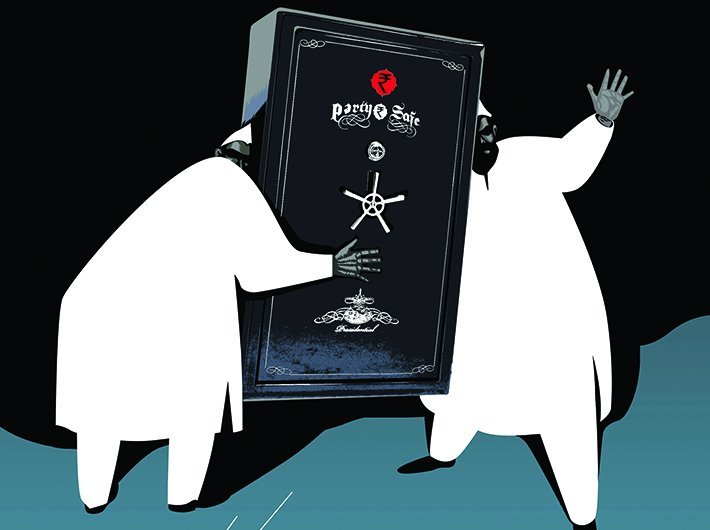
The income of the Bharatiya Janata Party (BJP) during 2014-15 was highest among all national parties. The party had declared a total income of Rs 970.43 crore but is yet to submit its copy of income tax returns for 2015-16 to the Election Commission of India, showed an analysis of income and expenditure of national political parties for 2015-2016.

The analysis carried out by the Association by Democratic Reforms (ADR) showed that between 2014-15 and 2015-16, the income of All India Trinamool Congress (AITC) increased by 180.68% (Rs 22.26 crore) from Rs 12.32 crore to Rs 34.58 crore while the income of NCP decreased by 86.49% (Rs 58.51 crore) from Rs 67.65 crore to Rs 9.14 crore.

The income of BSP decreased by 57.68% (Rs 64.58 crore) from Rs 111.96 crore during 2014-15 to Rs 47.38 crore during 2015-16.
With regard to the total income and expenditure, BSP declared a total income of Rs 47.385 crore during 2015-16, but spent only 25% (Rs 11.90 crore) of the total income.

AITC declared a total income of Rs 34.578 crore during 2015-16, but spent only 39% (Rs 13.35 crore) of the total income.

NCP is the only party which has spent 19% more than its total income during FY- 2015-16. While the party’s income was Rs 9.14 crore, it incurred a total expenditure of Rs 10.84 crore.

The analysis showed that 5 out of 7 National Parties (BSP, NCP, CPM, CPI and AITC) have declared a total income of Rs 200.76 crore, collected from all over India.

CPM has shown the highest income amongst the national parties with a total income of Rs 107.48 crore during 2015-16. This forms 53.34% of the total income national parties, together during 2015-16.

BSP declared the second highest income of Rs 47.385 crore which forms 23.60% of the total income of the 5 national parties.

The ADR recommended that full details of all donors should be made available for public scrutiny under the RTI. Some countries where this is done include Bhutan, Nepal, Germany, France, Italy, Brazil, Bulgaria, the US and Japan. In none of these countries is it possible for 75% of the source of funds to be unknown.

Any party which does not submit its IT returns or donation statement to the ECI on or before the due date, their income should not be tax-exempted and defaulting parties should be derecognized, it added.
 

Comments


Other News

Not just politics, let`s discuss policies too

Why public policy matters Most days, India`s loudest debates stop at the ballot box. We can name every major leader and recall every campaign slogan. Still, far fewer of us can explain why a widow`s pension is delayed or how a government school`s budget is actually approved. That

When algorithms decide and children die

The images have not left me, of dead and wounded children being carried in the arms of the medics and relatives to the ambulances and hospitals. On February 28, at the start of Operation Epic Fury, cruise missiles struck the Shajareh Tayyebeh school – officially named a girls’ school, in Minab,

The economics of representation: Why women in power matter

India’s democracy has grown in scale, but not quite in balance. Women today are active participants in elections, influencing outcomes in ways that were not as visible earlier. Yet their presence in legislative institutions continues to lag behind. The Nari Shakti Vandan Adhiniyam was meant to addres

India will be powerful, not aggressive: Bhaiyyaji

India is poised to emerge as a global power but will remain rooted in its civilisational ethos of non-aggression and harmony, former RSS General Secretary Suresh `Bhaiyyaji` Joshi has said.   He was speaking at the launch of “Rashtrabhav,” a book by Ravindra Sathe

AI: Code, Control, Conquer

India today stands at a critical juncture in the area of artificial intelligence. While the country is among the fastest adopters of AI in the world, it remains heavily reliant on technologies developed elsewhere. This paradox, experts warn, cannot persist if India seeks technological sovereignty.

RBI pauses to assess inflation risks, policy transmission

The Reserve Bank of India (RBI) has begun the new fiscal year with a calibrated pause, keeping the repo rate unchanged at 5.25 per cent in its April Monetary Policy Committee (MPC) meeting. The decision, taken unanimously, reflects a shift from aggressive policy action to cautious observation after a signi


Archives

Current Issue

Opinion

Facebook Twitter Google Plus Linkedin Subscribe Newsletter

Twitter






