

Budget is growth and employment oriented: Experts

geetanjali

Geetanjali Minhas | February 1, 2018 | Mumbai

#Budget 2018   #Arun Jaitley   #Narendra modi   #Health   #Employment  
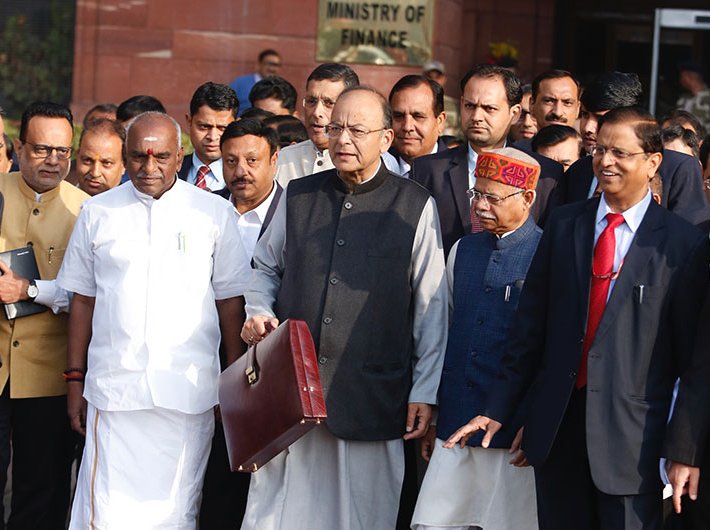
Photo: Arun Kumar
Photo: Arun Kumar

"It is a growth oriented budget. What we are doing now for the agriculture sector should have been done 20-30 years ago otherwise there will be food inflation and food crisis,” says Gaurang Shah, head investment strategist, Geojit Financial Services Limited.

He was, however, disappointed with reintroduction of capital gains tax and was clueless how the government will support MSP. He however adds that despite 10% long term capital gains, people will not sell their shares because they have nowhere to invest. "Investors will come into the equity market because as an asset class it has created long term returns compared to any other asset class. We are virtually only at the initial stages of stupendous growth."     

FM’s statement ‘People in Hawai Chappal can now fly in Hawai Jahaj’ will be a reality, he adds.

Pranay Vakil, retired founder chairman, Knight Frank India, says, this was the first budget he remembers where Rs 14.3 lakh crore out of total outlay of Rs 21.57 lakh crore has been assigned to rural areas. "Entire focus of the budget is on generating employment. With this allocation the FM has addressed the problem of migration from villages to cities on a daily basis looking for jobs. With 10 lakh employable people waiting for jobs every month, the FM aims to create jobs in villages so people don’t have to migrate,” he says.

However, Vakil points out that Arun Jaitley made no reference to where how the money for medical claims of 10 crore people will be raised keeping in mind 3.3% fiscal deficit. "This means he is assuming revenue from direct taxes, customs duty, and buoyant GST. Overall it’s a good budget with prospective effect" he says.

Giving his views on the allocations for senior citizens, Vakil said, exemptions on FD interests of up to Rs 80,000 per annum, doubling the investment limit of Rs 7.5 lakh with 8 percent returns to Rs 15 lakhs, and medical insurance deduction for senior citizens of Rs 50,000 are few good steps.

"Senior citizens who survive on Rs 10,000 a month can live with dignity,” he says and gives seven out of 10 marks to the budget.
Real estate builder and developer, Niranjan Hiranadani, too gave thumbs up to the budget.

“Bringing 10 crore people under insurance is a huge thing. eighty percent of the salaried taxpayers will benefit by standard deduction of Rs 40,000,” he says. 

Comments


Other News

Trump’s China setback pushes US to woo India

A week after Donald Trump’s visit to China – the first by an American president in nine years, US secretary of state Marco Rubio arrived in India on May 23 on a four-day visit aimed at resetting Washington DC’s relations with New Delhi and attending the third Quad ministerial meeting.

EU–India FTA 2026: A high‑stakes prescription for Indian pharma and healthcare

India’s pharmaceutical industry stands as one of the world’s market leaders of generic pharmacy with market valuation of USD 50 billion in 2026. Characterised by high volume, low-cost generic manufacturing, with an annual growth rate of 10-12% primarily propelled by exports and domestic demand,

Legends, vignettes and tales from the freedom movement

Robin Hood of Kathiawar and Other Extraordinary Stories from India’s Freedom Movement By The Paperclip  HarperCollins, 348 pages, Rs 499  

Solicitor General Tushar Mehta tells quirky tales from the world of law

The Lawful and the Awful: Quirky Tales from the World of Law By Tushar Mehta Rupa Publications, 336 pages, Rs 995  

Cabinet meet discussed `Ease of Living`, `Ease of Doing Business`

The Council of Ministers has deliberated upon valuable perspectives and best practices relating to boosting ‘Ease of Living’ and ‘Ease of Doing Business’, prime minister Narendra Modi said on Friday.   As he shared details of the Council meeting held the d

India should deepen energy partnerships with Africa

The vulnerability of Strait of Hormuz continues to influence energy politics globally. India is highly dependent on imported crude oil as a significant portion of its oil imports still come from the Gulf ultimately making such disruptions particularly consequential and has immediate economic ramifications


Archives

Current Issue

Opinion

Facebook Twitter Google Plus Linkedin Subscribe Newsletter

Twitter






