
Cabinet approves modified UDAN

For a period of ten years from FY 2026-27 to FY 2035-36 with a total outlay of Rs.28,840 crore

GN Bureau | March 25, 2026

#Aviation   #UDAN  
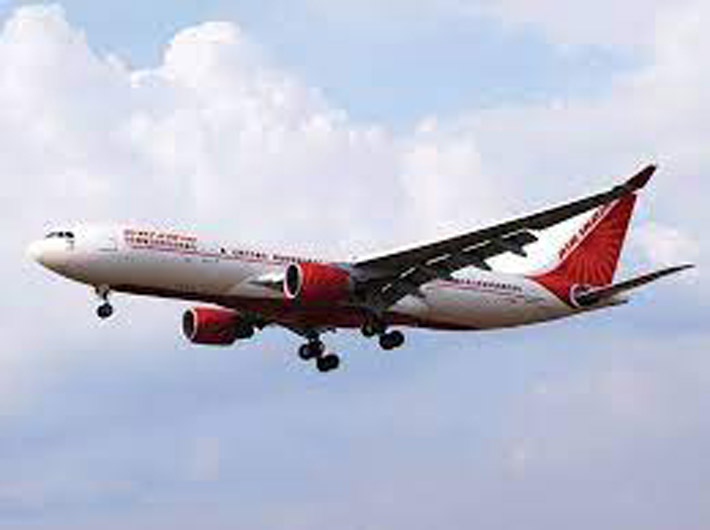
(File photo: Governance Now)

The union cabinet chaired by prime minister Narendra Modi has approved the launch and implementation of the Regional Connectivity Scheme – Modified UDAN for a period of ten years from FY 2026-27 to FY 2035-36 with a total outlay of Rs.28,840 crore with the budgetary support of the Government of India.
 
Impact:
Enhanced regional air connectivity to underserved and unserved areas.
Boost to economic growth, trade and tourism in Tier-2 and Tier-3 cities.
Support affordable air travel for common citizens.
Improved emergency response and healthcare access in remote and hilly regions.
Greater viability and sustainability for regional aerodromes and airline operators.
Promotion of the indigenous aerospace sector under Atmanirbhar Bharat.
Progress towards Viksit Bharat 2047 goal.

The key components of the scheme are as under:
 
(a) Development of Aerodromes (CAPEX)
Under the Modified UDAN Scheme, it is proposed to develop 100 airports from existing unserved airstrips to enhance regional connectivity, in line with the Viksit Bharat 2047 vision of infrastructure expansion and transforming India into a globally competitive aviation ecosystem with a total outlay of Rs.12,159 crore over the next eight years.
 
(b) Operation & Maintenance (O&M) of Aerodromes
Given the high recurring O&M costs and limited revenue streams for Regional Connectivity Scheme (RCS)-only aerodromes, the Scheme proposes to provide O&M support for three years capped at Rs.3.06 crore per annum per airport and Rs.0.90 crore per annum per heliport/water aerodrome, estimated at Rs.2,577 crore for around 441 aerodromes.
 
(c) Development of Modern Helipads
To address connectivity challenges in hilly, remote, island and aspirational regions, the Scheme proposes developing 200 modern helipads at Rs.15 crore each, amounting to a total requirement of Rs.3,661 crore over the next eight years (inflation-adjusted), focused on priority and aspirational districts to improve last-mile connectivity and emergency response.
 
(d) Viability Gap Funding (VGF)
Under the Regional Connectivity Scheme, airline operators receive financial support in the form of VGF for operating awarded routes. Recognising the need for longer market development, VGF support to airline operators is proposed amounting to Rs.10,043 crore over 10 years.
 
(e) Atmanirbhar Bharat Aircraft Acquisition
To address the shortage of small fixed-wing aircraft and helicopters required for operations in remote and difficult terrains and to advance the Atmanirbhar Bharat vision, the scheme also proposes to procure two HAL Dhruv helicopters for Pawan Hans and two HAL Dornier aircraft for Alliance Air.
 
Background:
The original UDAN Scheme was launched in October 2016 with the objective of making air travel affordable and strengthening connectivity to Tier-2 and Tier-3 cities.

Over nine years of implementation:
663 routes have been operationalised across 95 airports, heliports and water aerodromes (as on 28 February 2026).
More than 3.41 lakh flights have been operated, carrying 162.47 lakh passengers.
Connectivity has been established in remote, hilly and island regions, boosting tourism, healthcare access and emergency services.
The scheme has fostered growth in regional airlines and diverse fleet operations, laying a strong foundation for the Modified UDAN Scheme.

Comments


Other News

“Indians, yet treated like outsiders”

Moving to Delhi-NCR for education can be an exciting experience for students from Northeast India. It gives us a chance to meet new people, experience a different culture and become more independent. But living away from home also comes with challenges that people who have not experienced them may not al

Import duty on major edible oils cut

The government has reduced the Basic Customs Duty (BCD) on major imported crude edible oils with a view to moderating domestic edible oil prices, providing relief to consumers and mitigating inflationary pressures arising from the sharp increase in international edible oil prices.  

From pyramid to platform: BRICS agenda for Global South

In his opening address at the 18th BRICS Summit in New Delhi on September 12, prime minister Narendra Modi did something India`s diplomacy has been building towards for three years: he moved the ‘Voice of the Global South’ from a slogan to a work plan. Addressing the leaders, he argued that t

How to realise the full transformative potential of PM-JAY

The Pradhan Mantri Jan Arogya Yojana (PM-JAY), a welfare scheme which covers approximately 45 crore beneficiaries across India, provides cashless health cover of Rs. 5 lakh per family per year. It is the largest health insurance scheme which helped crores of poor families by reducing out-of-pocket expend

The missing men in India`s family planning story

Every pregnancy requires two people. Yet India`s family planning programme continues to ask only one of them to bear almost all of its medical consequences. The newly released National Family Health Survey-6 (2023-24) confirms just how entrenched this asymmetry remains: 36.5% of currently married women a

`Development must be judged beyond GDP, with rights and justice at core`

Delivering the IXth Chief Justice M.C. Chagla Memorial Lecture on ‘Human Rights and Sustainable Development Goals’, in Mumbai Friday,  former Chief Justice of India Bhushan R. Gavai questioned whether conventional economic indicators such as gross domestic product (GDP), national income,

Upcoming Conferences


-->

Archives

Current Issue

Opinion

Facebook Twitter Google Plus Linkedin Subscribe Newsletter

Twitter






