
Fourth GPFI G20 meeting pledges to work for universal financial inclusion

Plenary discussions to contribute towards culmination of three year FIAP 2020

geetanjali

Geetanjali Minhas | September 17, 2023 | Mumbai

#finance   #diplomacy   #G20   #financial inclusion  


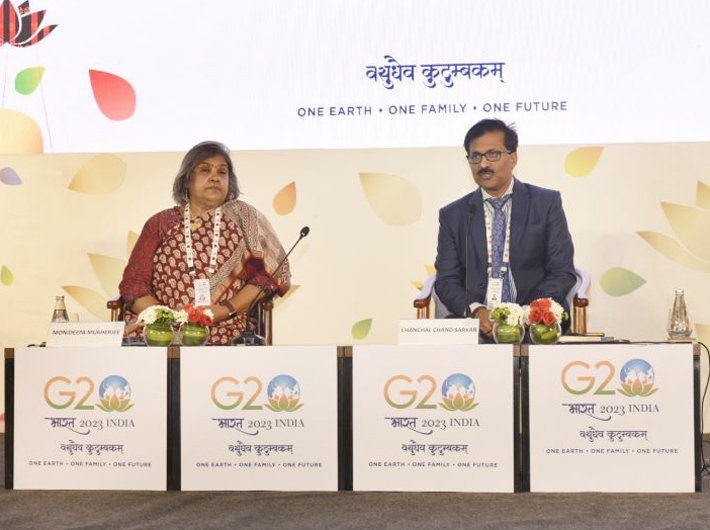
The fourth G20 Global Partnership for Financial Inclusion (GPFI) meeting held in Mumbai during September 14-16 concluded with members agreeing to work towards the vision of universal financial inclusion under the new G20 Financial Inclusion Action Plan.

Over the course of three days, discussions were held on energising growth for MSMEs, empowering consumers through digital financial literacy, consumer protection as well as key priority areas of GPFI -- digital financial inclusion and SME Finance.

Day 1 of the symposium was held around two key themes: Energising MSMEs for Higher Economic Growth through Digital Public Infrastructure and Credit Guarantees and SME ecosystem.

The Symposium was addressed by Ajay Seth, secretary (economic affairs), MoF, T Rabi Sankar, deputy governor (RBI), Mohamed Gouled, vice president (International Finance Corporation) and Dr Arjun Kumar Karki, global coordinator-LDC Watch and former ambassador of Nepal to USA.

Seth said that through the New Delhi Leaders Declaration, the G20 leaders have renewed their commitment to accelerate strong, sustainable, balanced and inclusive growth and full and effective implementation of the 2030 Agenda for Sustainable Development. He underscored that MSMEs will be central in fulfilling both the commitments.

Deliberations were held on approaches to bridge the challenges faced by MSMEs through innovative measures like DPI for bridging the credit gap, promoting transparency, enhancing affordability and driving innovations and productivity gains.

On days 2 and 3, the GPFI plenary meeting and discussions were held on implementation of G20 GPFI high level principles for digital financial inclusion, update of national remittance plans, SME best practices and innovative instruments to overcome common constraints in SME financing.

The discussions contributed towards culmination of remaining work of on-going three year FIAP 2020 which is in its terminal year and is being implemented by the GPFI.  

Additionally, a symposium on the topic 'Advancing Financial Inclusion through Digital Public Infrastructure: Empowering Consumers through Digital and Financial Literacy and Consumer Protection' was held on day three. It was addressed by Harsh Vardhan Shringla, chief coordinator (G20, India), Dr V Anantha Nageswaran (chief economic advisor, ministry of finance, GoI), K.V. Shaji Kumar (chairman, NABARD).

Comments


Other News

V. M. Tarkunde: A legal luminary par excellence

14 Lawyers: Portraits from The Bar By Raju Ramachandran  Juggernaut, 248 pages, Rs. 799  

The Cost of Obesity

The latest episode of Checks and Balances focuses on the ticking time bomb of obesity in India, and Geetanjali Minhas of Governance Now spoke with a panel of experts. You can watch the episode here: https://youtu.be/mH

US-Iran deal: Path to peace or prelude to deeper regional quagmire?

In the midst of deep mistrust, the US and Iran are reported to have reached a framework deal for ending the West Asian conflict. But whether it will result in any meaningful breakthrough or pave the way for any lasting peace in the region, is in the realm of speculation.   During

Lived life, philosophy, spirituality and other enigmas

The Ashes Are Warm: Memories of a Lifetime Spent with UG Krishnamurti By Mahesh Bhatt and Sunita Pant Bansal Rupa Publications, 384 pages, Rs 495  

In Varanasi, fringe expansion vs. core heritage

For centuries, the urban framework of Varanasi was defined not just by its relationship with the sacred Ganga but by its multifaceted network of urban commons. Historic kunds, seasonal talabs (ponds), and open maidans served as the city’s basic ecological infrastructure. Th

What ails India`s skill development ecosystem

India’s skill development programmes were designed with a goal to make the young population ready with market-required skills and competencies, and to provide them with better employment opportunities. Yet the outcomes have fallen short of that goal: though over 1.6 crore individuals were trained acr


Archives

Current Issue

Opinion

Facebook Twitter Google Plus Linkedin Subscribe Newsletter

Twitter






