Parliamentary panel too raps govt for doing little to check the menace, calls for a media council
While shocking revelations in the coal block allocation scam kept the supreme court and parliament in headlines over the past few days, two developments have taken place in these institutions that escaped wider notice. And the effect of these two will have equally stormy implications for India’s democracy.
One, a parliamentary panel headed by Rao Inderjit Singh has slammed the information and broadcasting ministry for its inaction in curbing paid news. It has recommended a review of the Representation of People Act, 1951 and has sought a statutory media council to check paid news. Notably, it has recommended that media owners should not be co-opted on this council.
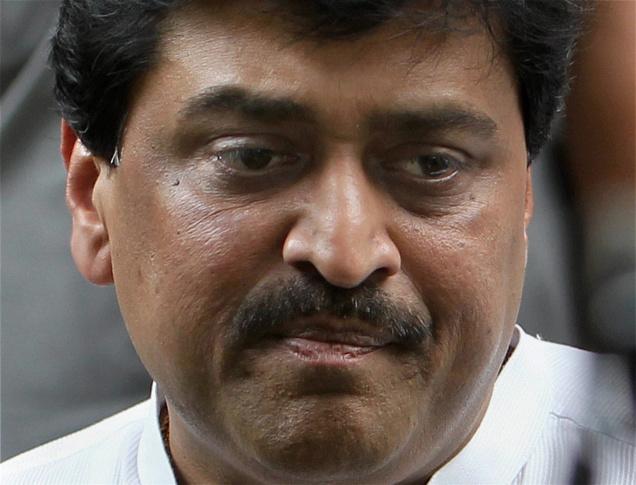
The other development is at the supreme court. Two former chief election commissioners (CECs), a former advisor to the election commission (EC), a prominent editor and seven activist groups have sought to intervene in the case of former Maharashtra chief minister Ashok Chavan allegedly having misstated his real expenditure in the election campaign of 2009, and indulged in paid news.
The two former CECs, N Gopalaswami and J M Lyngdoh, have cited the apex court’s three judge bench order in the case of LR Sivarama Gowda vs TM Chandrasekhar (AIR 1999 SC 252) to argue that the EC does indeed have the right to go into the veracity of the statement of expenditure of an electoral candidate.
The supreme court is to hear an appeal filed by Chavan against an order of the Delhi high court. The high court had rejected Chavan’s argument that the EC cannot go into the details of a statement of expenditure filed by a candidate to verify its truthfulness. Chavan had argued that this jurisdiction is given only to the high courts.
Chavan was under inquiry by the EC after his 2009 victory from the Bhokar assembly seat in Nanded district, when a national newspaper exposed him for practices that came to be described later as paid news. Since then, the print media has been mostly silent and sometimes laughably obtuse about the practice.
Journalists who dug a little deeper into the records of the 2009 campaign found that identical, verbatim newspaper reports praising Chavan had appeared in three publications, on the same date or roughly the same period. All the reports carried different bylines. Several publications carried full page 'news stories’ only about Chavan, without any mention of his rivals. It turned out that the total number of full pages devoted to Chavan were at least 47, some of these in colour and many of them in leading Marathi dailies in the state. Cannily, none of them carried the mandatory ‘advt’ tag in any corner.
Yet Chavan’s statement of expenditure showed that he had spent only Rs 5,379 on newspaper advertisements and Rs 6,000 on cable TV ads. His total expenditure in the election was less than Rs 7 lakh, even after running one of the most high-decibel campaigns – with a Bollywood actor canvassing him in public meetings, not to mention those full pages in newspapers.
The former CECs were provoked to move the SC because of an affidavit filed by the union government in Chavan’s appeal quite cryptically (in two pages) stating that the legal position is that “the power of the EC to disqualify a person arises only in the event of failure to lodge an account of expenses and not for any other reason, including the correctness or otherwise of such accounts”.
The law ministry told the apex court that this comes out of a plain reading of Section 10 A of the Representation of People Act and Rule 89 of the Election Conduct Rules. Section 10 A reads thus:
“10A. Disqualification for failure to lodge account of election expenses. If the EC is satisfied that a person-
(a) has failed to lodge an account of election expenses within the time and in the manner required by or under this Act and (b) has no good reason or justification for the failure, the EC shall, by order published in the Official Gazette, declare him to be disqualified and any such person shall be disqualified for a period of three years from the date of the order.”
Sections 77 and 78, and Rule 89 are also relevant:
“S. 77. Account of election expenses and maximum thereof. -
(1) Every candidate at an election shall, either by himself or by his election agent, keep a separate and correct account of all expenditure in connection with the election incurred or authorised by him or by his election agent between the date on which he has been nominated and the date of declaration of the result thereof, both dates inclusive.
“ S. 78. Lodging of account with the district election officer. -
(1) Every contesting candidate at an election shall, within thirty days from the date of election of the returned candidate or, if there are more than one returned candidate at the election and the dates of their election are different, the later of those two dates, lodge with the district election officer an account of his election expenses which shall be a true copy of the account kept by him or by his election agent under section 77."
“Rule 89. Report by the district election officer as to the lodging of the account of election expenses and the decision of the EC thereon. -
(1) As soon as may be after the expiration of the time specified in section 78 for the lodging of the accounts of election expenses at any election, the district election officer shall report to the EC -
(a) the name of each contesting candidate;
(b) whether such candidate has lodged his account of election expenses and if so, the date on which such account has been lodged; and
(c) whether in his opinion such account has been lodged within the time and in the manner required by the Act and these rules.”
Chavan’s lawyers and the law ministry seem to be arguing that the aforementioned clauses limit themselves to the form of a declaration of accounts and not its substance. They would have the EC be a mere postman.
They seem to be undoing what former CEC TN Seshan did and what journalists fighting paid news have achieved so far – one MLA in Uttar Pradesh disqualified by the EC for alleged paid news, and unrelenting EC inquiries against Chavan and former Jharkhand CM Madhu Koda. Besides, a senior income tax officer appointed on deputation to the EC, for the first time ever, to look into election expense issues of candidates.
The SC, in the case of Sivarama Gowda vs TM Chandrashekhar, unequivocally gave the EC an active role. The present SC bench will, hopefully, do the same.