
India faces critical shortage of skin donors amid rising burn cases

70 lakh burn cases annually put thousands of lives at risk

geetanjali

Geetanjali Minhas | April 24, 2026 | Mumbai

#Organ Donation   #Healthcare  
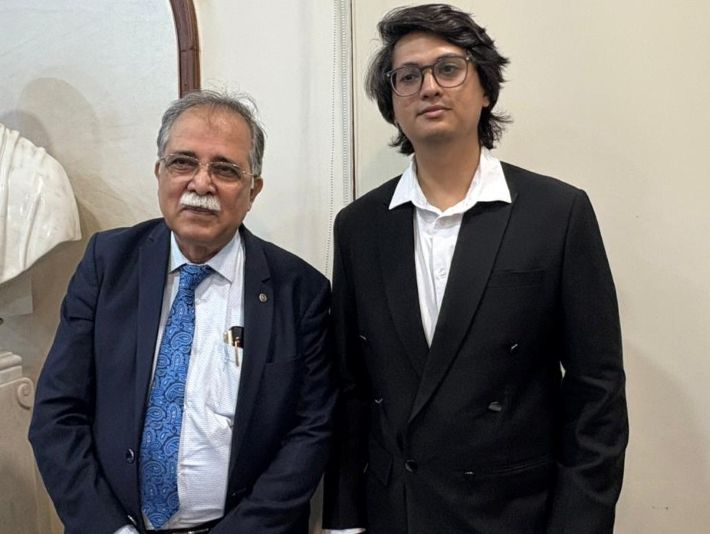
Dr Sunil Keswani and burn survivor Viraj Thakoor at the awareness meet

India reports nearly 70 lakh burn injury cases every year, resulting in approximately 1.4 lakh deaths annually. Experts estimate that up to 50% of these lives could be saved with adequate access to skin donations.

 
A significant concern is that around 70% of burn victims fall within the 15-35 age group, the most economically productive segment of the population. Women and children remain disproportionately affected, accounting for nearly 80% of cases, with kitchen-related accidents responsible for the majority of injuries.
 
Severe burn cases require immediate access to cadaveric skin (allografts), which can only be provided through skin banks. These grafts are often the difference between life and death for critically injured patients.Without adequate skin banks, survival chances drop drastically. While India initiated skin banking in 2002, the country currently has only 34 skin banks, far from sufficient for its population needs.
 
The National Burns Centre has raised serious concerns about the acute shortage of skin donations nationwide.
 
Speaking at an awareness drive, Dr. Sunil Keswani, director and plastic surgeon at the centre, said, “It is likely that only 1 in 10 people is aware of the option to donate skin. This lack of awareness means only a fraction of burn patients receive life-saving grafts.”
 
In Mumbai alone, skin banks receive just 25% of the required donations each month, highlighting a critical gap between demand and supply.
 
Limited awareness remains the biggest barrier to skin donation in India. Many people are unaware that:
 
* Skin must be donated within 6 hours of death
* The procedure involves no bleeding or disfigurement
* Only superficial layers are harvested from the legs, thighs, and back
* The process takes just 45 minutes
* No matching is required
* Timely access to skin grafts during the critical treatment window significantly reduces complications, mortality, and long-term disability, while also easing the emotional and financial burden on families.
 
Burn survivor Viraj Thakoor, treated at the National Burns Centre, said, “A workplace accident left me with 43% burns, and my survival depended on timely treatment. Skin donation saved my life. I urge more people to pledge skin donation-it can mean the difference between life and death.”
 
“Expanding the network of skin banks and increasing public awareness are critical to saving lives. With greater participation in skin donation, thousands of burn victims across India could receive timely treatment and a second chance at life. Skin donation is simple, dignified, and life-saving and awareness can turn silent potential into real impact,” added Dr Keswani.
 
The awareness initiative was supported by Rotary Club of Bombay North, Rotary Club of Deonar, Zonal Transplant Co-ordination Centre, Regional Organ and Tissue Transplant Organisation and included Sumati Group, Sunday Friends, Manavta Charitable Foundation, and the Federation of Body and Organ Donation. 

Comments


Other News

The women India doesn`t count enough

She runs a tailoring shop from a single room in her house. Every morning she stitches school uniforms, answers queries on WhatsApp, collects payments through UPI and orders fabric online. Officially, she still belongs to India`s informal economy. Yet her enterprise is no longer disconnected from the formal

“Cancer is just a mind game”

Dr. Ananda Shankar Jayant, a Padma Shri awardee, inspired audiences for decades through her mastery of Bharatanatyam and Kuchipudi. But it was her journey through cancer that taught some of life`s most powerful lessons in courage and resilience.

Why Swami Vivekananda is the pathfinder for our times

Swami Vivekananda for Our Times  Edited and compiled by Rajiv Sikri, with Introduction by S. Gurumurthy Rupa Publications, 552 pages, Rs 695  

Five ways to realise the potential of India’s handicraft and handloom sector

India`s economic ambitions are increasingly defined by the industries of the future. Semiconductors, electronics, artificial intelligence and advanced manufacturing dominate policy conversations. Yet one of India`s largest employment-intensive sectors continues to occupy a surprisingly marginal place in ec

Beyond toilets: Why open defecation persists in rural India

Despite the awareness campaigns on sanitation across India, open defecation (OD) is practised openly and widely in both rural and urban areas. Research shows that rural respondents are well aware of the negative impacts of OD, yet this awareness does not lead to toilet construction or use. In rural North I

What unpaid nation builders want from policymakers

The Supreme Court recently described homemakers as “nation builders” and fixed a notional monthly income of Rs 30,000 for them in motor accident compensation cases. The judgment was not about wages. It was about compensation. Yet it inadvertently raised a larger economic question: If a homemake





Archives

Current Issue

Opinion

Facebook Twitter Google Plus Linkedin Subscribe Newsletter

Twitter