India needs a forward looking foreign policy: C Raja Mohan

The leading policy expert suggested ways for India to adapt to shape its foreign policy

taru

Taru Bhatia | April 14, 2016


#C Raja Mohan   #India   #foreign policy  


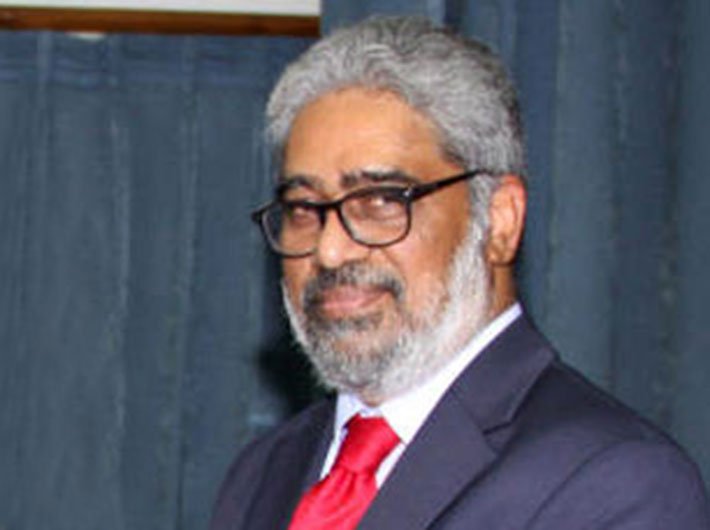
“We have never been so connected to the world. The scale of India’s external engagement today has become quite dramatic. And so, dealing with it is going to be a challenge. This cannot be done through traditional foreign policy,” C Raja Mohan, director of think tank Carnegie India, said while delivering a lecture on ‘India in a changing Asia: towards a forward policy’ in Delhi on April 13.

India today is the seventh largest economy in the world with its GDP at $2.2 trillion. Around 50 percent of this comes from the export and import of goods and services. However, “much of the discourse continues to be that we are weak”, Mohan said.

He added that India being an important member to Asia, it is now time for it to look into a forward looking policy, which would shape the future of the region.
Suggesting different ways that India could adapt for shaping its foreign policy, Mohan said one would be by accepting the “China-centered growth” for the Asian region. He, however, added that for America, it would be a big problem to accept.

Another way, he highlighted, is by exploring the accommodation for China and the United States, the two big powers of the world, by a way of “G2”. For this, “China says yes to it but on its own terms which is not acceptable to the Americans”.

Mohan stressed that India needs to look forward to a multi-structured balancing power policy in which three or four big powers of the region come together and set the rules. “But the problem with Asia is that there are too many big countries. Who is going be in the group is a real challenge to decide,” he said.
Hence, India could take a middle power coalition policy, forming a coalition with Japan and Australia, and not putting Asia’s destiny in the hands of the Chinese, he suggested. That way, India would have a “coalition of its own”, instead of waiting for the Chinese to define a way forward.

Another foreign policy India could think of is “collective security”, which Mohan termed as the “most beautiful of all solutions in which everybody can sit together and work out rules”.
 

Comments


Other News

R-Day: 10,000 special guests invited to witness the parade

Approximately 10,000 special guests from different walks of life have been invited to witness the 77th Republic Day Parade at Kartavya Path this year. The guests include those who have carried out exemplary work in income and employment generation, best innovators, researchers & start-ups, Self Help Gr

Why civilization is a precarious thing

The Decline of Hindu Civilization: Lessons from the Past By Shashi Ranjan Kumar Rupa Publications, 416 pages, Rs 995

End of an era: BJP poised to rule Mumbai after 25 years

The BJP-led Mahayuti alliance was set for a decisive victory in the Maharashtra municipal corporation elections, consolidating its dominance across Maharashtra’s urban landscape. As per the latest trends from the vote counting on Friday afternoon, the state`s ruling coalition was leading in 19 of the

Startup India initiative: A decade of building India’s innovation backbone

* With over 2 lakh DPIIT-recognised startups as of December 2025, India stands firmly as one of the world’s largest startup ecosystems. * A decade of Startup India has built a full-lifecycle support system spanning ideation, funding, mentorship, and scale-up. * Around 50% of DPIIT-r

How toll policies are redefining the highway journeys

With the phenomenal growth in National Highways, queues at toll plazas used to affect commuters. However, over the last decade, tolling has undergone a major technological transformation, bringing faster movement and significant ease for road users. Building on this progress, year 2025 saw further people-c

From vulnerabilities to empowerment: Building resilience for small and marginal farmers

India’s small and marginal farmers are at the centre of a paradox in agrarian economy. They are the backbone of the food economy, but they are the most vulnerable stakeholders within agricultural economy. Among the 126 million farmers in India today, nearly makes 86% operate on small and marginal hol


Archives

Current Issue

Opinion

Facebook Twitter Google Plus Linkedin Subscribe Newsletter

Twitter