
Indian army with guns and roses in Kashmir

15 Kashmiri students trained by Indian army crack JEE Mains

aasha

Aasha Khosa | May 5, 2016 | New Delhi

#IIT   #Indian army   #operation sadbhavana   #JEE Mains   #Kashmir   #Super 30  


If you believe that army in Kashmir is only for killing terrorists, then here is something that will change your perception. 15 out of 30 Kashmiri students are about to enter the prestigious Indian Institute of Technology (IIT), thanks to the coaching provided by the Indian army.

 
The lucky students received rigorous coaching for cracking the hard test under ‘Super 30’ scheme launched by the army, taking a cue from the pioneering effort in Bihar where a group of IIT graduates provide free coaching to the poor yet meritorious students.
 
As soon as the result of the Joint Entrance Examination (JEE) was out, the army felicitated students who had passed.  
 
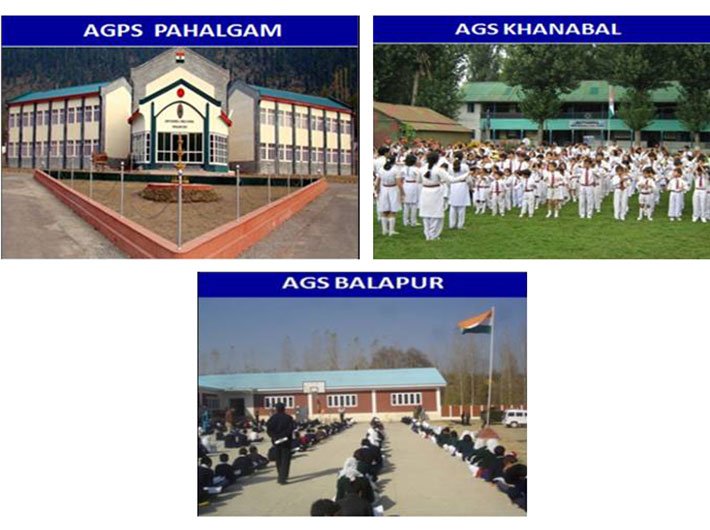
Most of these students belong to economically weaker sections and are from the border districts which have poor education facilities. So far the army has established 46 goodwill schools across the state, most of which are located in border and far flung areas.
 
These schools were set up realising that Pakistan-sponsored propaganda was targeted at young minds in Kashmir and unless something was done to blunt this, the physical elimination of terrorists alone would not change the situation.
 
The army decided to change its tactics and get involved in developmental activities in Kashmir. In 1998, it launched Operation Sadhbhavana (Operation Goodwill) with Rs 4 crore fund with an aim of creating opportunities for the young people, particularly in border and underdeveloped areas.
 
“The idea was to win the hearts and minds of people and to show them we care as against Pakistan’s scheme of unleashing violence and mayhem in the valley,” a retired army officer, who was involved in implementation of the operation told Governance Now.
 
With a clear vision to help students, the army has also helped in improving facilities at 1,900 state-run schools.
 
Separatist leader Sayed Ali Shah Geelani had opposed setting up of an army boarding school at Pahalgam. However, there were no takers for his fiat that people should not send their children to these schools.
 
Interestingly, while Pakistan sponsored terror outfits like Harkat-ul-ansar were responsible for burning hundreds of schools, particularly the girls schools, during peak of insurgency in Kashmir, Islamabad had also launched a propaganda against army schools and Operation Sadhbhavana through its media.
 
“Today, the popularity of army schools is so much that getting admission there is dream of many parents,” a senior Kashmir-based journalist said.
 
 At present 14,000 students are studying in these schools and about one lakh have already passed out.
 
Army says it has, so far, spent about Rs 500 crore on Operation Sadhbhavana, which is targeted to “improve the overall core social indices of education, women and youth empowerment, and health care with simultaneous thrust on capacity building through implementation of community/infrastructure development projects.”
 
The army says all developmental work under Operation Sadhbhavana is framed on the basis of people’s demand and is executed in association with state administration. “The core of Operation Sadhbhavana theme gyrates around aspirations of local populace and India’s national interest,” the army portal states.


Comments


Other News

RBI pauses to assess inflation risks, policy transmission

The Reserve Bank of India (RBI) has begun the new fiscal year with a calibrated pause, keeping the repo rate unchanged at 5.25 per cent in its April Monetary Policy Committee (MPC) meeting. The decision, taken unanimously, reflects a shift from aggressive policy action to cautious observation after a signi

New pathways for tourism growth

Traditionally, India’s tourism policy has been based on three main components: the number of visitors, building tourist attractions and providing facilities for tourists. Due to the increase in climate-related issues and environmental destruction that occurred over previous years, policymakers have b

Is the US a superpower anymore?

On April 8, hours after warning that “a whole civilisation will die tonight,” US president Donald Trump, exhibiting his unique style of retreating from high-voltage brinkmanship, announced that he agreed to a two-week ceasefire with Iran. The weekend talks in Islamabad have failed and the futur

Machines communicate, humans connect

There is a moment every event professional knows—the kind that arrives without warning, usually an hour before the curtain rises. Months of meticulous planning are in place. And then comes the call: “We’ll also need a projector. For the slides.”   No email

Why India is entering a ‘stagflation lite’ phase

India’s macroeconomic narrative is quietly shifting—from a rare “Goldilocks” equilibrium of stable growth and contained inflation to a more fragile phase where external shocks are beginning to dominate domestic policy outcomes. The numbers still look reassuring at first glance: GDP

Labour law in India: A decade of transition

The story of labour law in India is not just about laws and codes, but also about how the nation has continued to negotiate the position of the workforce within its economic framework. The implementation of the Labour Codes across the country in November 2025 marks a definitive endpoint in the process. Yet


Archives

Current Issue

Opinion

Facebook Twitter Google Plus Linkedin Subscribe Newsletter

Twitter






