
Israelis helped check infiltration in Kashmir

Israeli infrared NVDs changed the scenario of the large-scale infiltration of terrorists from Pakistan side and helped army get an upper hand on the border

aasha

Aasha Khosa | July 4, 2017 | New Delhi

#army   #night vision   #terrorism   #Kashmir   #Narendra Modi   #Israel   #border   #Pakistan  
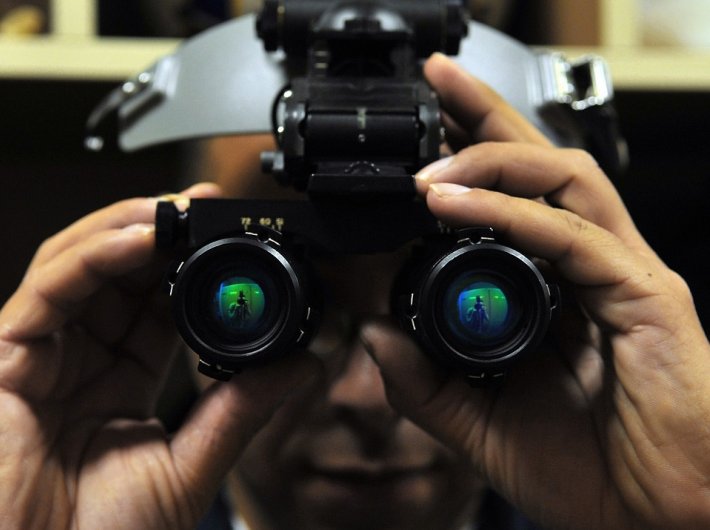
Night vision device (Representational image)

A small but sophisticated night vision device (NVD) that could track moving terrorists in the dark was the first gift from Israel to the Indian forces at a time when the latter was facing a huge challenge in the form of hordes of terrorists infiltrating from Pakistan through the alpine forests of the mountainous line of control.

The first consignment of the infrared NVDs changed the scenario on the border and LoC. The soldier manning a long and undulating LoC could now see thanks to infrared field (invisible to naked eye) around a moving infiltrator in the pitch dark from a distance and plan its elimination. The infrared NVD had thus given a cutting edge to the forces in tackling infiltration in Kashmir.
 
By the turn of the millennium, crossing border for terrorists and their Kashmiri guides was no longer easy. The army and the BSF had taken total control of the LoC and the International Border, thanks to the Israeli NVDs.
 
Israel not only provided India with NVDs, it also supplied defence equipment to manage the border. The Israeli equipments have gone a long way towards improving the vigil at the border with Pakistan.
 
Prime minister Narendra Modi on Tuesday left for Israel on a historic visit. He will be first the Indian prime minister to visit Israel. The July 4-6 visit is also important as it is for the first time that an Indian leader will be visiting Israel and not immediately following it up with a visit to Palestine.
 
The supply of ammunition by Tel Aviv during the Kargil war with Pakistan had helped India at a time when it was facing acute shortages and the US was exerting tremendous pressure on Israel not to supply the same to India.
 
Not only this, many experts from Israel had been quietly flown into Kashmir in the early years of insurgency erupting there. Although most of them had denounced the Indian side for being too indecisive and confused on tackling terrorism, their inputs had helped shape New Delhi’s policy of battling terrorism in Kashmir.
 
Israelis were particular that the Indian side must start covert operations against the supporters of terrorists and demolish their over the ground network; however, this sounded too brazen to their hosts at that time. Israeli diplomats and security experts would fly into Srinagar in MHA planes and minimise their interaction with security forces and the governor.
 
India was still shy of flaunting its growing relationship with the Jewish state.
 
Interestingly in the summer of 1991, Israeli tourists were involved in a most dramatic escape from the Kashmiri terrorists, which made headlines. A terrorist organisation had abducted ten Israeli tourists from a houseboat in Dal Lake and taken them to downtown Srinagar.
 
The terrorists had tied their hands in the back and were about to shoot them when one of the captives managed to free his hand and turned the table on his abductors. One Israeli was killed in the fight, rest got rescued and two terrorists were also killed in the fight in Srinagar's narrow lanes.
 
Later, Israeli said they could break free and fight terrorists because of their mandatory army training.
 
Kashmiri terrorists had then issued threats against Jewish tourists and alleged a lot of them coming to Kashmir were “Zionist agents”.
 

Comments


Other News

RBI pauses to assess inflation risks, policy transmission

The Reserve Bank of India (RBI) has begun the new fiscal year with a calibrated pause, keeping the repo rate unchanged at 5.25 per cent in its April Monetary Policy Committee (MPC) meeting. The decision, taken unanimously, reflects a shift from aggressive policy action to cautious observation after a signi

New pathways for tourism growth

Traditionally, India’s tourism policy has been based on three main components: the number of visitors, building tourist attractions and providing facilities for tourists. Due to the increase in climate-related issues and environmental destruction that occurred over previous years, policymakers have b

Is the US a superpower anymore?

On April 8, hours after warning that “a whole civilisation will die tonight,” US president Donald Trump, exhibiting his unique style of retreating from high-voltage brinkmanship, announced that he agreed to a two-week ceasefire with Iran. The weekend talks in Islamabad have failed and the futur

Machines communicate, humans connect

There is a moment every event professional knows—the kind that arrives without warning, usually an hour before the curtain rises. Months of meticulous planning are in place. And then comes the call: “We’ll also need a projector. For the slides.”   No email

Why India is entering a ‘stagflation lite’ phase

India’s macroeconomic narrative is quietly shifting—from a rare “Goldilocks” equilibrium of stable growth and contained inflation to a more fragile phase where external shocks are beginning to dominate domestic policy outcomes. The numbers still look reassuring at first glance: GDP

Labour law in India: A decade of transition

The story of labour law in India is not just about laws and codes, but also about how the nation has continued to negotiate the position of the workforce within its economic framework. The implementation of the Labour Codes across the country in November 2025 marks a definitive endpoint in the process. Yet


Archives

Current Issue

Opinion

Facebook Twitter Google Plus Linkedin Subscribe Newsletter

Twitter






