
Jaitley’s budget not going to increase India’s ratings

Higher country ratings are important to attract investment and raise investors’ confidence

GN Bureau | March 2, 2015

#budget   #arun jaitley   #standard and poor’s   #raing   #debt   #deficit   #reforms  


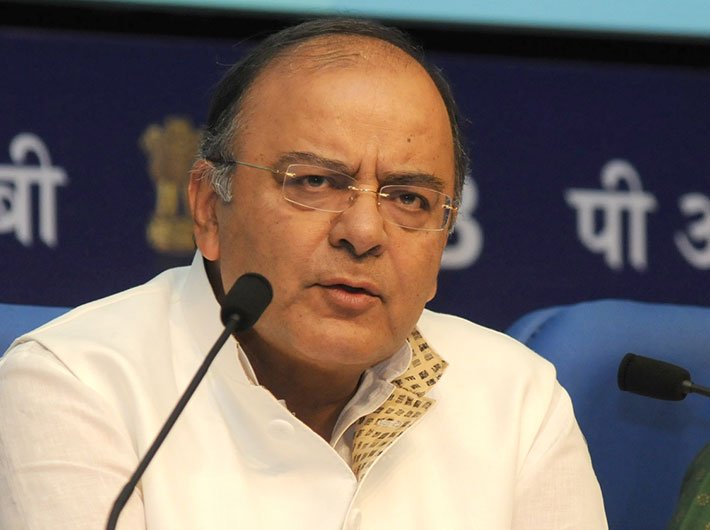
Despite finance minister Arun Jaitley’s good budget the country’s ratings are not likely to change due to subsidies, debt and missing reforms.The budget has in fact slowed the pace of fiscal consolidation.

International ratings agency Standard & Poor's does not expect an upgrade to India's sovereign debt rating in the next year in the absence of substantial, quality reforms.
"India's 2015-2016 budget highlights the government's commitment to keeping the fiscal deficit low despite lower-than-expected revenue growth," S&P said in a statement on Monday.

"This commitment moderates the drag on sovereign credit support posed by the relatively heavy general government debt burden in India," it added. "Nevertheless, the debt burden and large budgetary subsidies could constrain the speed of improvements in India's credit metrics."

The ratings agency said the quality of fiscal consolidation was not as good as it could have been on structural front, after a deadline for cutting the fiscal deficit to 3 percent by a year was put off to 2017/18.

S&P currently rates India at "BBB-minus", its lowest investment grade rating, with a "Stable" outlook.

The credit rating of a country gives investors insight into the level of risk associated with investment in a particular country. A good sovereign credit rating is usually essential for developing countries in order to access funding in international bond markets.

The credit ratings also impact bonds in external debt markets and foreign direct investment.
“India needs to at least strengthen two of its macroeconomic metrics on growth, inflation and fiscal health,” said Kim Eng Tan, Senior Director, Asia-Pacific Sovereign Ratings for Standard & Poor's.

"However, again, (a) very big improvement is unlikely to come through in next year or so. We don't see the rating going up in the next year or so," Tan felt.

Comments


Other News

Beyond toilets: Why open defecation persists in rural India

Despite the awareness campaigns on sanitation across India, open defecation (OD) is practised openly and widely in both rural and urban areas. Research shows that rural respondents are well aware of the negative impacts of OD, yet this awareness does not lead to toilet construction or use. In rural North I

What unpaid nation builders want from policymakers

The Supreme Court recently described homemakers as “nation builders” and fixed a notional monthly income of Rs 30,000 for them in motor accident compensation cases. The judgment was not about wages. It was about compensation. Yet it inadvertently raised a larger economic question: If a homemake

What the US–Iran peace deal means for India

After months of rising tensions, the United States and Iran have reached a memorandum of understanding called the "Islamabad Agreement." This agreement allows for the immediate reopening of the Strait of Hormuz without tolls and provides Iran with relief from sanctions, depending on its complianc

V. M. Tarkunde: A legal luminary par excellence

14 Lawyers: Portraits from The Bar By Raju Ramachandran  Juggernaut, 248 pages, Rs. 799  

The Cost of Obesity

The latest episode of Checks and Balances focuses on the ticking time bomb of obesity in India, and Geetanjali Minhas of Governance Now spoke with a panel of experts. You can watch the episode here: https://youtu.be/mH

US-Iran deal: Path to peace or prelude to deeper regional quagmire?

In the midst of deep mistrust, the US and Iran are reported to have reached a framework deal for ending the West Asian conflict. But whether it will result in any meaningful breakthrough or pave the way for any lasting peace in the region, is in the realm of speculation.   During


Archives

Current Issue

Opinion

Facebook Twitter Google Plus Linkedin Subscribe Newsletter

Twitter






