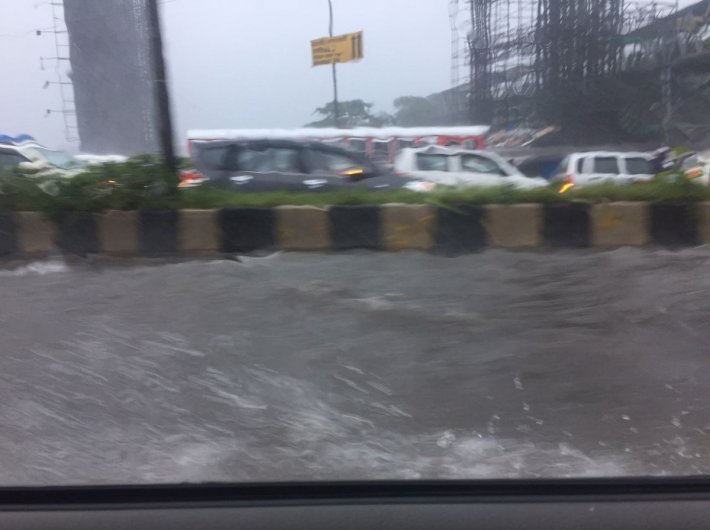
Urges Maharashtra CM, environment minister to consider findings and recommendations of its expert report
Raising concerns over rising seawater levels and climate change, Mumbai First, a 25-year-old public-private partnership policy think tank, has written letters to Maharashtra chief minister Uddhav Thackeray, minister for environment and climate change, tourism and protocol, Aditya Thackeray and Mumbai municipal commissioner Iqbal Singh Chahal, drawing their attention to recommendations of its report, ‘Climate Crisis: Action for Tropical Coastal Cities like Mumbai’.
The report compiles findings and recommendations of experts of the two-day International Conference which was held in early 2020. It was supported by the European Union and assisted by McKinsey and National Environmental Engineering Research Institute (NEERI).
In the conference, experts from the tropical coastal cities of Surat, Cochin, Thiruvananthapuram, London, Venice and others had shared proactive steps that are being taken to tackle adverse impacts of climate change, particularly urban flooding in the event in their regions.
In its letters, Mumbai First (https://mumbaifirst.org/) recommends a three-pronged strategy by way of infrastructure, resource and knowledge management to address the same.
It suggests constructing seawalls and managing and upgrading climate vulnerable transport infrastructure by way of infra management; protecting urban agriculture, allocating capital for climate change interventions and improving urban water use and management by way of resource management and building a data centre for climate data collection and monitoring, developing a city evacuation plan, estimating and reducing GHG emissions in real time, building local capacity for disaster management along with flood management and forecasting systems for knowledge management.
The policy think tank recommends setting up of a special task force (STF) for all climate change initiatives where the STF for MMR (Mumbai metropolitan region) should be chaired by the principal secretary for environment and climate change with multidisciplinary members including global and regional climate change experts, policy experts, financial services and business experts and experts from environment science.
The task force will develop and oversee climate related project implementation, monitoring and financing across relevant departments, create knowledge data and policy management systems related to climate change, disaster management and land and water use and build bridges between local, regional and international stakeholders in environment, policy and business.
These will result in an MMR-specific climate change policy, regulations and guidelines for aligning initiatives for environment and climate change, research and derive lessons from international best practices, integrate a data collection and management centre on environment and climate change and timely interpretation and monitoring of environment/ climate change projects in the city.
Mumbai First promises to bring together experts from the European Union, World Bank, London First, Singapore, Netherlands, Italy, Citynet and others if required in addition to forming a close network of government, business groups and civil society to evolve suitable agenda for climate change.
In the conference, besides participating experts, government officials, scientific experts, social workers, students and citizens were also present. The environment minister last month launched the Climate Action Plan and also the Mumbai Climate Action Plan (MCAP) website to seek suggestions and inputs from experts and citizens from the megacity. With citizens' suggestions already forming part of the ‘Climate Crisis: Action for Tropical Coastal Cities like Mumbai’ report, Mumbai First feels the government must consider the recommendations. The city of Mumbai at present has several major infrastructure projects underway including the Coastal Road, underground metro line that need to factor rising sea levels and flooding.
Former BMC commissioner Parveen Pardeshi, who had delivered a presentation on climate change related challenges faced by Mumbai and its plans to address the same, had said that as BMC was still not qualitatively factoring climate into infrastructure projects the city was till unprepared to face the challenges in the future.
Shirish Sankhe from McKinsey India, which published its report, ‘Impact of Climate Change on Coastal Cities’, had highlighted adverse impacts of climate change expected in Mumbai by 2030 and 2050. He had said that by 2050, rising temperatures will put at risk 800 million people across 570 coastal cities. India may get too hot to work specially for people who work outdoors exposing around 1 billion people to heat waves.
The think tank also drew the attention to the Nicholas Stern Study of 2006 called ‘The Economics of Climate Change: The Stern Review’ for the UK government that warned that tropical coastal cities like Mumbai are critically vulnerable to seawater rises and climate change and confirmed by subsequent reports by national and international organisations. Additionally, it also points to the Intergovernmental Panel on Climate Change (IPCC)’s recently released Sixth Assessment Report that says sea level will continue to rise during the 21st century and India with its 7,517 km of coastline, will face significant threats from rising seas. Cities like Mumbai will be most vulnerable — 28.6 million people and assets worth $4 trillion could be exposed to coastal flooding.