
No scientific evidence of efficacy and costly too: Parisar urges MPCB to evolve guidelines

Geetanjali Minhas | November 9, 2023 | Mumbai
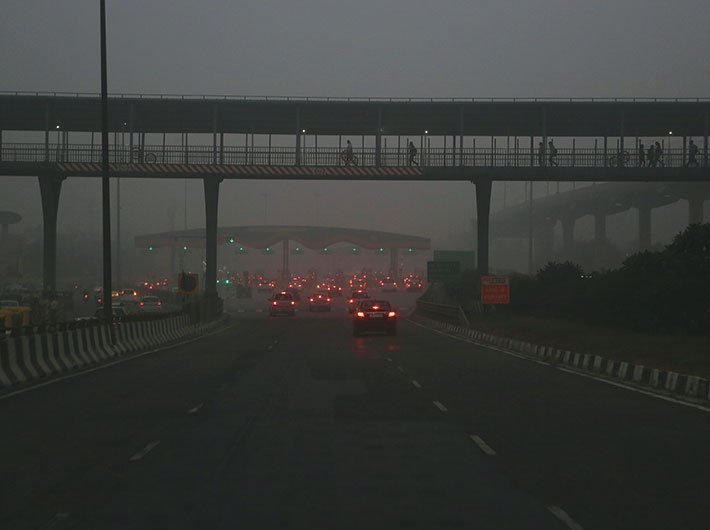
With air pollutions levels shooting up over the last few days and the city of Pune recording a PM 2.5 concentration currently, 6.4 times the WHO annual air quality guideline value, Parisar, a Pune-based environmental organisation, has raised concerns over installation of dry mist fountains in the city to address air pollution.
In a letter addressed to the Maharashtra Pollution Control Board (MPCB), Parisar has urged authorities to set guidelines before deciding on any such measures to tackle the growing problem of air pollution.
According to Parisar, without any hard evidence on its efficacy or cost effectiveness in reducing pollution, an installation of 10 mist-based fountains was carried out in June 2023.

The civil society organisation, through its RTI application, had sought information on locations, selection criteria, pollution reduction documents and cost involved in setting up the proposed mist fountains. However, the responses received have not cited any evidence on the efficacy of the mist fountains. “Unless a proper study is done, there is no justification for installing more fountains. The response also shows that there are no set guidelines for installing mist fountains,” says Parisar.
The Pune Municipal Corporation (PMC), meanwhile, has floated a tender amounting to a sum of Rs 2 crore to install more such mist fountains in various parts of the city.
Parisar has asked MPCB to prepare guidelines that include hard data on pollution reduction, cost-effectiveness, site selection, monitoring and evaluation, sustainability and alignment with existing policies. Until such guidelines are developed, Parisar has urged the authorities to put such decisions on hold, including the current tender floated by PMC.
“Scientifically, mist fountains are capable of settling dust particles within a limited area, primarily originating from sources like construction and demolition activities. However they do not completely eliminate these particles from the atmosphere,” says Dr Sachin Ghude, Scientist F at Indian Institute of Tropical Meteorology (IITM). He adds that mist fountains are ineffective against non-water-soluble particles and gaseous pollutants. When the mist evaporates or is blown away especially in dry and windy conditions like those in Pune, the pollutants return to the atmosphere with the same intensity. Consequently, mist fountains do not offer a lasting or sustainable solution to air pollution.
"These devices may find practical applications in specific environments, such as indoor spaces or confined outdoor areas. However, their effectiveness diminishes in highly polluted urban areas where pollutant concentrations are significantly high," adds Dr. Ghude.
Shweta Vernekar, Senior Programme Associate at Parisar, says, “With the AQI levels soaring in Pune, we can no longer experiment with gadgets on citizens. People are falling sick and short term, temporary solutions are not going to help. The city has to act on evidence and data backed solutions, not give knee jerk reactions.”
Ravindra Sinha, member of the Pune Air Action Hub, adds, The Pune Air Action Plan submitted to the Pollution Control Board, mandated under the National Clean Air Programme (NCAP) makes no mention of mist fountains. He questions the justification to install more fountains without even testing the efficacy of already installed 10 fountains and says, “This would be a sheer waste of public funds.”
With air pollution continuing to be a major concern in the city, Pune Air Action Hub, a network of CSOs, researchers, medical fraternity and citizens have written to the PMC not to proceed with the tendering process until MPCB issues guidelines and a report on the pilot installation of 10 fountains is published vetted by experts.
India’s southwest monsoon ended with a 13% rainfall deficit in 2026, its weakest performance in a decade, raising concerns over agricultural production, water security and the upcoming rabi season. With El Niño expected to persist into early 2027, experts warn that declining soil moisture, dep
For over a decade, India’s e-commerce story has rested on a simple premise: platforms connect buyers and sellers, while data fuels efficiency, personalisation, and scale. However, as the market matured, its structure has revealed a growing imbalance. E-commerce platforms, especially marketplace ent
The interaction between active Western Disturbances, increased atmospheric moisture and the region’s complex topography aswell as global warming are important factors behind intense rainfall in the Himalayas, leading to flash floods in Nepal, according to meteorologists. Nepal
Last summer, the two of us spent several weeks in rural Madhya Pradesh with a non-profit that works on gender justice through women’s self-help groups. We went in with a notebook full of laws. The Protection of Women from Domestic Violence Act. The Dowry Prohibition Act. Free legal aid for every wo
Digital payments have become a reflex for urban India, but the confidence earned in paying has not yet carried over to borrowing. That is the central finding of `How Urban India Pays Report 2026`, released by Pahlé India Foundation in collaboration with Amazon Pay. Based on a survey of 5,149 consu
Commerce and industry minister Piyush Goyal has called upon businesses in India and the United Kingdom to translate the opportunities created by the India-UK Comprehensive Economic and Trade Agreement (CETA) into expanded trade, investment, partnerships and job creation. Addressing the Bu










