
Private sector hiring may look up in next fiscal: ASSOCHAM

Fresh hiring prospects do not look bright maybe, for the two quarters, said a paper

GN Bureau | November 20, 2017

#Labour Ministry   #Jobless Growth   #Employment Exchange   #Unemployment   #Jobs   #ASSOCHAM  
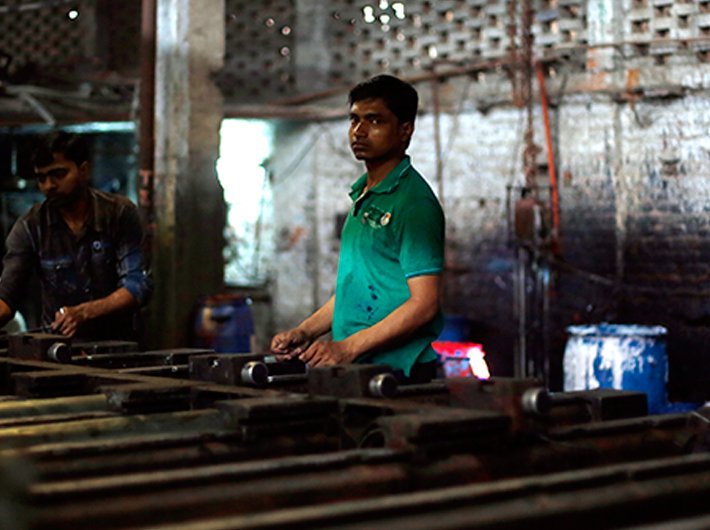
Representational image

The hiring outlook in the private sector is expected to stay muted till beginning of fiscal 2018-19, an ASSOCHAM assessment based on its feedback from members has indicated.

"The focus, right now is how to deleverage, consolidate, exit from non-core businesses and achieve a lean and mean balance sheet. Going forward at least in the next quarter and a half, the corporates would be busy improving their margins and reducing their debt costs, even as the top line growth may take a back seat," said a paper.

READ: 4.83 crore job-seekers registered. Only 3.39 lakh placed.

"Under these circumstance, the fresh hiring prospects do not look bright maybe, for the two quarters; however, things should look up in the next fiscal," said a press note citing the paper. The wage cost control would remain a key area of priority in the short term.  

It noted that most of the churning is taking place in telecom, financials (including private sector banks, non-banking finance companies), Information Technology, realty and infrastructure.  "Significantly, as  the PSU banks would also bring down their employee cost to their operation ratio, post re-capitalisation by the government, the fresh hiring may also come down there as well."

ASSOCHAM secretary general DS Rawat said, "Though the Moody's upgrade has given a sentiment boost, the next two quarters would be challenging for the private sector.  But things would then improve and some of the pain points of the present like high debt, slow consumer demand, should ease from April, 2018. In any case, barring any untoward event, the fiscal 2018-19 would be better than the current financial year.”

In fact, the boom in the stock market, though being triggered by a huge liquidity play, is also reflective of the uptick in the economic growth going forward. The market is at ease even with higher valuations, riding on the hopes of a pickup. The GST related problems should be settled in the next few months, the press note added.

The optimism also stems from India' s sound macro indicators like moderate inflation, stability in foreign exchange, robust foreign exchange reserves and an improving trend line in exports. "However, a thing to watch would be crude oil prices which could be a spoiler if they move up significantly from the present level.”

Some of the issues relating to agriculture like price fluctuations for the crops and farmers' vulnerability are likely to be addressed in the coming Budget with a focus on the rural landscape. 


Comments


Other News

How Rafi, Raj Kapoor helped pave the way for a great uranium deal

There`s a certain moment in diplomacy that`s too personal to be captured in a communiqué, too small to make the front page, but more revealing than the front page. This week, prime minister Narendra Modi reached Tashkent and, amid the pomp of state visits, managed to evoke the old Bollywood tunes

Distinguishing Fish 1 and Fish 2: The pragmatism behind India’s WTO ratification

 India became the 123rd WTO member to ratify the multilateral Agreement on Fisheries subsidies (AoFS) when it deposited the Instrument of Acceptance for Phase 1 on July 20, 2026. The ratification is restricted to disciplining Illegal, Unreported and Unregulated fishing (IUU), protection for overfished

The 7% growth problem: Why the next 7% will be harder

India has become accustomed to hearing the 7% growth number. It is now less a milestone than an expectation. Yet the paradox is becoming clearer: maintaining 7% growth may be considerably harder than achieving it once. India’s real GDP grew 7.7% in FY2025–26, following growth of 6.5% in FY202

The Constitution cannot be altered: Justice Abhay Oka

Justice Abhay Oka, who retired from the Supreme Court in May 2025, has said that the Constitution of India cannot be altered. Explaining the landmark Kesavananda Bharati judgment (1973) on the basic structure of the Constitution, he said, “This is one judgment that has saved democracy in India.&rdq

How the flora and fauna evolved in the Indian subcontinent

Mammals of India  By A.J.T. Johnsingh and P.O. Nameer HarperCollins India in association with Bombay Natural History Society  

India`s renewable race is moving beyond megawatts

When Shell bought Sprng Energy in 2022, India`s renewable energy market appeared to offer precisely what global energy majors were seeking: scale, growth and a place in one of the world`s largest energy transitions. Four years later, Shell is selling the same business to Aditya Birla Group for an enterpris

Upcoming Conferences


-->

Archives

Current Issue

Opinion

Facebook Twitter Google Plus Linkedin Subscribe Newsletter

Twitter






