
Rajan goes halfway, cuts repo rate

Encouraged by low inflation, crude prices and the govt’s commitment to adhering to fiscal deficit target

GN Bureau | January 15, 2015
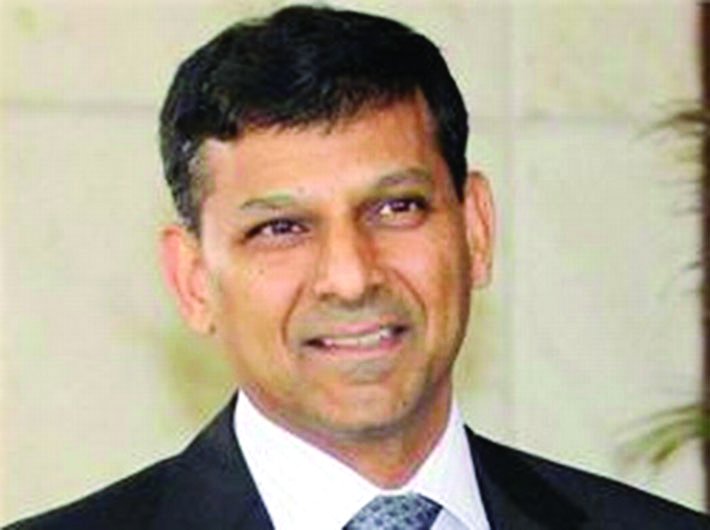


Two weeks after bankers meet and few days after encouraging IIP (index of industrial production) at 3.8% in November, the Reserve Bank of India suprised many on Thursday by making an unscheduled announcement on cut in repo rate by 25 basis point.

Recalling its assurance made during fifth bi-monthly monetary policy statement of December which stated that “if the current inflation momentum and changes in inflation expectations continue, and fiscal developments are encouraging, a change in the monetary policy stance is likely early next year”, RBI on Thursday finally made changes in the repo rate by slashing it by  25 basis points to 7.75 per cent from 8 percent.


However, the RBI decided keep cash reserve ratio (CRR) of scheduled banks unchanged at four per cent of net demand and time liabilities (NDTL). A change in monetary policy was not expeted as the central bank has a scheduled policy review meeting on February 3.

With visible signs of inflation slowing down in last few months and government coping to control fiscal deficit, the move was much desired. Post announcement RBI governor Raghuram Rajan in a statement said “Since July 2014, inflationary pressures (measured by changes in the consumer price index) have been easing. The path of inflation, while below the expected trajectory, has been consistent with the assessment of the balance of risks in the Reserve Bank’s bi-monthly monetary policy statements.”

 “To some extent, lower than expected inflation has been enabled by the sharper than expected decline in prices of vegetables and fruits since September, ebbing price pressures in respect of cereals and the large fall in international commodity prices, particularly crude oil. Crude prices, barring geo-political shocks, are expected to remain low over the year. Weak demand conditions have also moderated inflation excluding food and fuel, especially in the reading for December. Finally, the government has reiterated its commitment to adhering to its fiscal deficit target,” the statement said.


“These factors have significantly reduced the momentum of inflation, compensating for the widely anticipated ending of favourable base effects. Households' inflation expectations have adapted, and both near-term and longer-term inflation expectations have eased to single digits for the first time since September 2009. Inflation outcomes have fallen significantly below the 8 per cent targeted by January 2015. On current policy settings, inflation is likely to be below 6 per cent by January 2016,” the RBI said.

What is Repo Rate?
Repo rate or repurchase rate is the rate at which banks borrow money from the central bank (RBI for India) for a short period by selling their securities (financial assets) to the central bank with an agreement to repurchase it at a future date at predetermined price. It is similar to borrowing money from a money-lender by selling him something, and later buying it back at a pre-fixed price. The reduction in the repo rate makes the borrowing for the banks cheaper and banks have more money which they can use for lending.


Mood lifter, says CII

Commenting on policy announcement  Chandrajit Banerjee, Director General, CII said that the 25 bps reduction in repo rate has come as a positive surprise in the new year and would be a huge mood lifter for investors who have been grappling with subdued demand conditions.

“Going forward, CII hopes that while maintaining a delicate balance between growth and inflation, the RBI would shift its stance in favour of growth, given that the trend in inflation is clearly subdued. CII would call for a further cut in policy rates by at least 25 basis points in the forthcoming monetary policy,” added Banerjee.

Comments


Other News

India’s freedom struggle was shaped by wider Asian political thought

As we mark 80th anniversary of independence, ‘Asianism and the Fall of Empire’ (HarperCollins India) by historian Mithi Mukherjee offers a new perspective on Ind

What is colonialism? A relook at modern history

The Chromatic World Order: The Fiction That Rules Our World  By Sajid Mohamed Aakar Books  

Monsoon session of parliament adjourns sine die

The Monsoon Session, 2026 of Parliament which commenced on July 20 was adjourned sine die on Thursday. The session provided 19 sittings spread over a period of 25 days.   During the session 11 Bills were introduced in Lok Sabha and 2 Bills were introduced in Rajya Sabha. 12 B

Consumer Justice at a Crossroads

Over the past four decades, India`s consumer protection landscape has undergone a remarkable transformation. What began with the Consumer Protection Act, 1986 as a simple mechanism to empower ordinary citizens has evolved into a comprehensive framework capable of addressing challenges ranging from mislea

Doctors, experts call for ban on junk food ads, mandate warning labels

More than 30 doctors, medical scientists and public health professionals have urged the government to take decisive action against the aggressive advertising and marketing of junk food, calling for a watershed ban on advertisements for foods high in fat, sugar and salt (HFSS) and ultra-processed foods (UPF

Asiatic Lion population rises from 523 in 2015 to 891 in 2025

On World Lion Day 2026, environment, forest and climate change Minister  Bhupender Yadav celebrated India’s remarkable journey in lion conservation and reaffirmed the country’s unwavering commitment to protecting wildlife and biodiversity.   In a post on soc

Upcoming Conferences


-->

Archives

Current Issue

Opinion

Facebook Twitter Google Plus Linkedin Subscribe Newsletter

Twitter






