Activists gather in NY for ‘Global People’s Assembly’ to take stock of SDGs at midpoint
As politicians and policymakers make speeches at the United Nations during a high-level summit next week to assess the lack of progress on the 2030 Agenda and the Sustainable Development Goals (SDGs), people’s leaders representing some of the world’s most marginalised communities have come together just across the UN Headquarters in New York to highlight the governments’ failings and present solutions to the poverty and environmental catastrophes afflicting the planet.
More than 500 activists are participating in the Global People’s Assembly, which is the culmination of 40 national-level assemblies, four regional assemblies and thousands of decentralised, local actions. The Global Call to Action Against Poverty (GCAP) is coordinating the event on September 17-18 with the support of more than 60 organisations, including Amnesty International, CIVICUS, Greenpeace, Oxfam International and Save the Children. Issues being addressed include social protection, human rights, the feminist economy, peace and conflicts, biodiversity loss and climate financing.
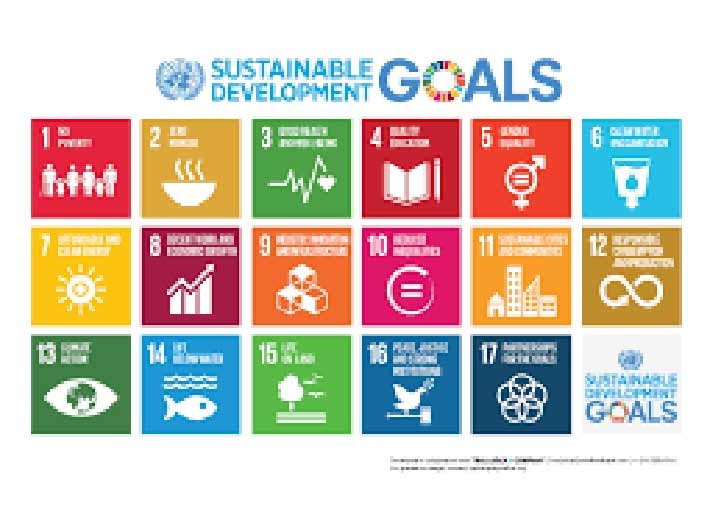
As the world marks the halfway point for the SDGs – adopted in 2015 to end poverty, reduce inequalities and ensure action on the environment – the UN estimates that only 12 percent of the targets are currently on track. Thirty percent of the indicators are actually worse now than they were eight years ago.
“The debt crisis is killing the SDGs,” says GCAP director Ingo Ritz. “Financial systems, dominated by rich western nations, are not creating global prosperity.We need new solutions, starting with debt cancelation and new funding that enable communities to achieve the Sustainable Development Goals, without creating new debt traps.” “We strongly believe that the world can change for the better if leaders listen to people’s voices and concerns, rather than racing to protect the interests of the affluent. We must move beyond empty rhetoric and prioritize concrete actions to implement the SDGs,” he adds.
Sixty countries are currently facing debt crises, amid skyrocketing interest rate charges. Austerity programmes, which hit impoverished and marginalised communities hardest, have been implemented in many countries, as they struggle to pay international debts.
“The world is facing massive challenges, but too many governments are choosing to crack down on the rights of their people and civil society rather than bringing about meaningful change,” CIVICUS Secretary-General Lysa John. “It is essential to hear diverse voices and ensure that the concerns of those who face discrimination are addressed. The world is way off track. Alarm bells are sounding. Now is the time for a new generation of leaders to step up and turn the tide of action to achieve the promise of the SDGs.”
A blueprint for global justice
In the face of these pressing challenges, the Global People's Assembly issues a call to action to global leaders to set a clear path to achieve Agenda 2030 and the Sustainable Development Goals, starting with a solution for the debt crisis including a reform of the international financial architecture, and a concrete agreement to establish social protection floors for all by 2030.
Development and climate financing must be implemented in a manner that does not increase the debts of countries and communities struggling to achieve the SDGs.
“As part of the Global People’s Assembly, we stand with those on the frontlines of the climate emergency and demand a new deal that delivers justice for people and planet,” says Mads Flarup Christensen, Executive Director of Greenpeace International. “The fossil fuel industry is keeping the world dependent on a failed energy system. Climate justice means an urgent fossil fuel phase out and making polluters pay for the loss and damage their decisions have caused.” He added.
Local participation and the inclusion of communities that have traditionally been left at the periphery — including indigenous groups, LGBTQI+, communities discriminated by work and descent (CDWD) and people with disabilities — is essential to any development effort.
“Intimidation, inequalities and marginalisation is silencing key voices, rendering sustainable development impossible,” says Mavalow Christelle Kalhoule, the chair of Forus, an innovative global network supporting civil society for effective social change.“Sustainable development is a collective effort.Everyone, from grassroots organizations to community leaders, contributes to societal progress. There is no development without civil society, local actors, social movements and citizen expression.”
Baisakh is the Asia Coordinator of Global Call to Action Against Poverty (GCAP), which organises the Global People’s Assembly along with 60 more CSO networks. This write-up is based on the press release issued by the organisers.