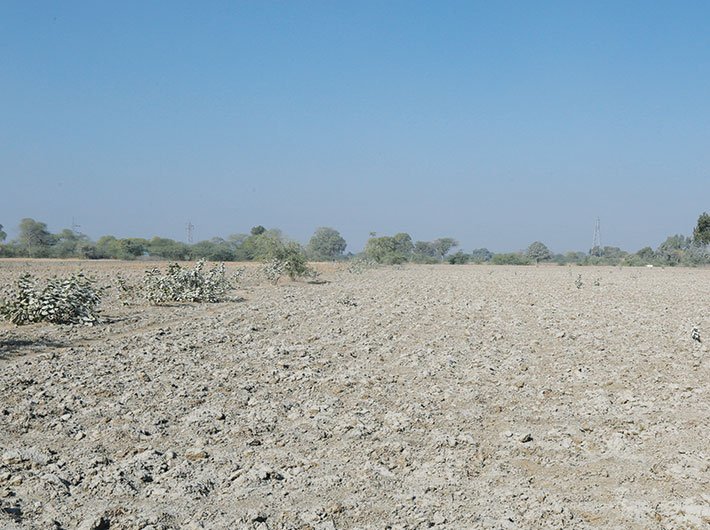
Water scarcity, exacerbated by climate change, can cost some regions up to 6 percent of GDP, spur migration and spark conflict, says a World Bank report
India along with the rest of the world is facing an acute water scarcity, a crisis that is deepening with each passing year and now posing a threat to the world economy.
A World Bank report, ‘High and dry: Climate change, water and the economy’, says that economic growth is a surprisingly thirsty business and water is a vital factor of production, so diminishing water supplies can translate into slower growth that cloud economic prospects.
“Some regions could see their growth rates decline by as much as 6 percent of GDP by 2050 as a result of water-related losses in agriculture, health, income, and property – sending them into sustained negative growth,” it said.
It warned that changes in water availability and variability can induce migration and ignite civil conflict. Food price spikes caused by droughts can inflame latent conflicts and drive migration. Where economic growth is impacted by rainfall, episodes of droughts and floods have generated waves of migration and statistical spikes in violence within countries. In a globalised and connected world, such problems are impossible to quarantine. And where large inequities prevail, people move from zones of poverty to regions of prosperity which can lead to increased social tensions.
The report suggested that bad water-management policies can exacerbate the adverse growth impacts of climate change, while good policies can go a long way towards neutralising them. Some regions stand to see growth accelerate as much as 6 percent with better water resource management.
It noted that the impacts of water mismanagement are felt disproportionately by the poor, who are more likely to rely on rain-fed agriculture to feed their families, live on the most marginal lands which are more prone to floods, and are most at risk from contaminated water and inadequate sanitation. Ensuring a sufficient and constant supply of water under increasing scarcity will be essential to achieving global poverty alleviation goals.
The report cited the example of Vietnam where income is heavily dependent on favourable rainfall conditions, and rainfall shocks often lead to significant income reductions for families. These income shocks can lead to nutritional deficits for developing foetuses and infants, which has dramatic consequences later in life. Children in Vietnam who experienced these shocks were shown to have delayed school entry, slowed progress in school, and lower height than their peers that did not experience this shock.
“Similar effects have also been observed in rural India and Mexico.”
The report said that while resource wars between countries may be uncommon today, tensions over water resources within countries are much more widespread. Episodes of drought and floods are often followed by spikes in violence, civil war, and regime change in developing countries.
“In India property-related violence increases by about 4 percent when there is below-average rainfall and communal riots become more frequent following episodes of floods.”
The report went on to say that the impact is particularly strong in Sub-Saharan Africa where a 1 percent reduction in precipitation is associated with a 0.59 percent increase in the urbanisation rate. The effects are more pronounced in cities with a manufacturing base that can absorb economic migrants seeking employment. Similar trends have been observed elsewhere.
“In the Indian state of Gujarat when groundwater irrigation became less available or more expensive due to a declining water table, farmers migrated to cities instead of seeking alternative adaptation strategies such as shifts in cropping patterns or more efficient irrigation technologies,” it added.
The increases in water variability and expanding water deficits that are predicted to occur due to climate change, the report warns, have the potential to increase the propensity for conflict. Where surface water supplies are unavailable, irrigators have turned to groundwater, where it is available. Globally, groundwater accounts for approximately one-third of total water withdrawals, and approximately 50 percent of irrigation water withdrawals. However, much like surface water flows, much of the world’s groundwater aquifers are already heavily exploited. Critically, from an integrated nexus perspective, groundwater abstraction requires approximately 30 percent more energy than surface water irrigation, resulting in significantly higher greenhouse gas emissions.
“According to one estimate, groundwater pumping accounts for no less than 4 to 6 percent of India’s total carbon emissions.”
The report says that the water-related climate risks cascade through food, energy, urban, and environmental systems. Growing populations, rising incomes, and expanding cities will converge upon a world where the demand for water rises exponentially, while supply becomes more erratic and uncertain.
“If current water management policies persist, and climate models prove correct, water scarcity will proliferate to regions where it currently does not exist, and will greatly worsen in regions where water is already scarce. Simultaneously, rainfall is projected to become more variable and less predictable, while warmer seas will fuel more violent floods and storm surges. Climate change will increase water-related shocks on top of already demanding trends in water use. Reduced freshwater availability and competition from other uses – such as energy and agriculture – could reduce water availability in cities by as much as two thirds by 2050, compared to 2015 levels.” n
[email protected]
(The article appears in the May 16-31, 2016 issue)